NEHA BORA Political Short: Is Speaking Against the System a Risk in India?
NEHA BORA challenges the limits of peaceful protest after Delhi High Court rejects her plea against a ₹10,000 peace bond notice.

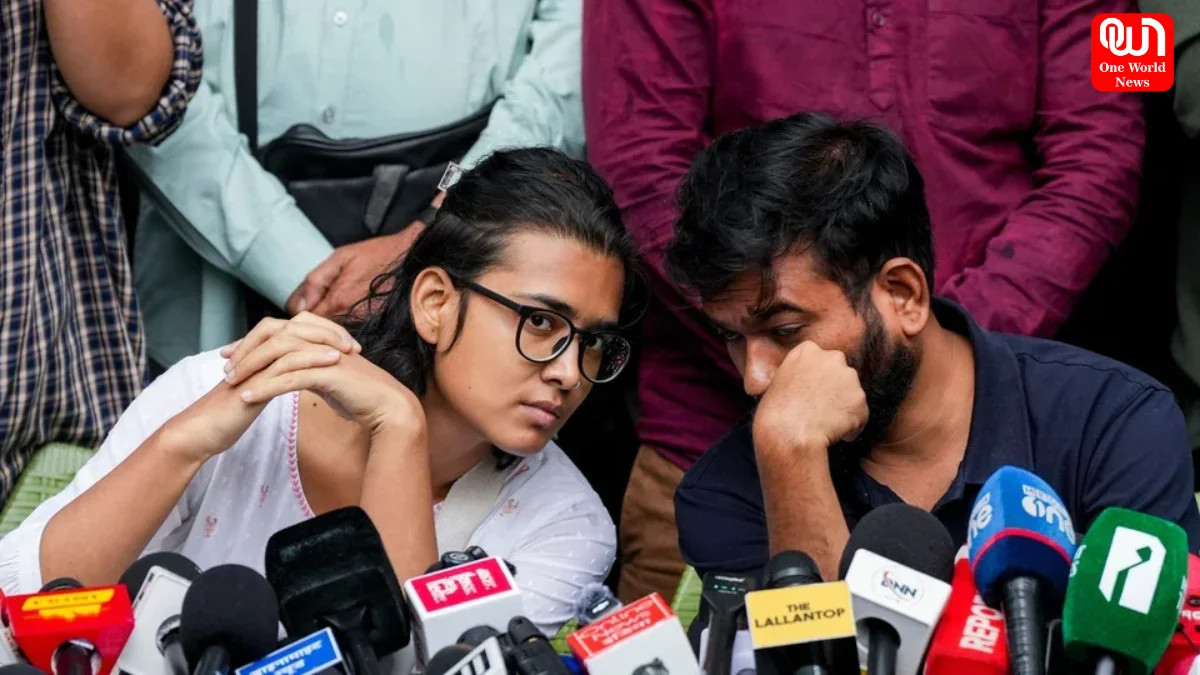
NEHA BORA Political Short | Delhi High Court Rejects Peace Bond Plea After Detention During Protest: Is Speaking Against the System a Risk?
What happens when a young woman raises her voice against the system? Can participating in a protest lead to legal proceedings, even when the person claims to be exercising democratic rights? The case involving NEHA BORA, president of the All India Students’ Association (AISA), has brought these questions into focus and reignited the debate over peaceful dissent, public order and freedom of expression in India.
On October 16, 2026, Neha Bora was detained by Delhi Police while heading towards a protest march. The incident was followed by a notice from a Special Executive Magistrate asking her to explain why she should not furnish a personal bond of ₹10,000, along with one surety, to maintain peace during an inquiry. On October 23, the Delhi High Court dismissed her challenge to the notice but directed authorities to provide the material supporting the proceedings.
Who Is Neha Bora and Why Is She in the News?
Neha Bora is the national president of AISA, a student organisation known for its involvement in student issues and political activism. She came into the spotlight following her detention during the “Lehra Do Tiranga” march on October 16.
The march took place amid heightened tensions surrounding protests linked to the Cockroach Janta Party (CJP). Bora was detained at Mandi House while proceeding towards the demonstration. She was released the following day.
The incident soon moved beyond the immediate protest and became a legal dispute over the use of preventive powers by the authorities.
Why Did Delhi Police Issue a Peace Bond Notice?
Following her detention, a Special Executive Magistrate issued a notice on October 17 under provisions of the Bharatiya Nagarik Suraksha Sanhita (BNSS). The notice required Bora to explain why she should not furnish a personal bond of ₹10,000 with one surety to maintain peace during the inquiry.
According to reports, the proceedings referred to alleged sloganeering at Mandi House, repeated protests near Jantar Mantar despite prohibitory orders, and allegations that she encouraged people to participate in a demonstration at Connaught Place.
These allegations formed the basis of preventive proceedings. They should not be confused with a conviction for a criminal offence.
What Did Neha Bora Argue Before the Delhi High Court?
Neha Bora challenged the notice before the Delhi High Court, arguing that the proceedings amounted to an attempt to suppress peaceful dissent through preventive legal powers.
Her legal team maintained that the notice was vague and factually incorrect. Her counsel also argued that Bora had called for a peaceful gathering at Mandi House and denied that she was responsible for a separate protest call at Connaught Place.
The petition invoked constitutional protections, including Article 19(1)(a), which guarantees freedom of speech and expression, and Article 19(1)(b), which protects the right to assemble peacefully and without arms, subject to constitutionally permitted restrictions.
At the heart of her challenge was a fundamental question: should participation in a protest be treated as a potential threat to public peace without sufficient supporting material?
What Did the Delhi High Court Decide on October 23?
On October 23, 2026, the Delhi High Court dismissed Bora’s petition challenging the peace bond notice. Justice Subramonium Prasad found sufficient material to support the initiation of the preventive proceedings at this stage.
However, the court also directed the authorities to provide Bora with the material relied upon in issuing the notice. The Special Executive Magistrate was instructed to ensure that the principles of natural justice were followed before passing an order requiring her to furnish a bond.
This distinction is important. The court’s decision did not amount to a conviction for a criminal offence. Instead, it allowed the preventive proceedings to continue while requiring procedural safeguards to be observed.
Freedom of Speech vs Public Order: Where Is the Line?
The Neha Bora case raises an important question for Indian democracy: how can authorities maintain public order without unnecessarily restricting peaceful political expression?
The Constitution protects the right to speak, question authority and assemble peacefully. However, these rights are subject to reasonable restrictions under the law. Authorities can take preventive measures when the relevant legal conditions are met, but such powers must be exercised fairly and supported by appropriate material.
For citizens, the concern is whether preventive proceedings could discourage people from participating in peaceful demonstrations. For the administration, the responsibility is to prevent genuine disturbances while respecting constitutional freedoms.
Reead more: Himanshu Bhau, India’s Most-Wanted Gangster From Haryana, Arrested In US
Both public order and civil liberties matter. The challenge is ensuring that neither is used as an excuse to disregard the other.
Is Speaking Against the System a Risk?
The case involving NEHA BORA has become part of a wider discussion about political dissent, student activism and the boundaries of democratic protest.
Criticising the government or demanding political change should not, by itself, be treated as evidence of wrongdoing. Equally, participation in a protest does not automatically exempt anyone from laws that apply to public assemblies.
The key questions are whether the legal requirements have been met, whether the allegations are supported by evidence and whether the person concerned receives a fair opportunity to respond.
As the proceedings continue, the case will remain relevant to discussions about how democratic institutions balance individual rights with public safety.
Conclusion
The NEHA BORA controversy is about more than a ₹10,000 peace bond notice. It highlights the difficult balance between maintaining public tranquillity and protecting the right to peaceful dissent.
The Delhi High Court has rejected her challenge at this stage while directing authorities to provide the supporting material and observe procedural fairness. The legal proceedings should therefore be understood in their proper context, without treating the allegations as proof of guilt.
In a democracy, accountability requires both citizens and authorities to operate within the law. The right to question those in power is an essential part of public life, and the enforcement of law must remain fair, transparent and accountable.
We’re now on WhatsApp. Click to join.
Like this post?
Register at One World News to never miss out on videos, celeb interviews, and best reads.