Kaam Ki Baat: Instagram Video Blocked in India and Journalist Safety Raise Questions About Freedom of Expression
Kaam Ki Baat examines an Instagram video blocked in India and alleged journalist harassment, raising questions about free speech and press freedom.


Kaam Ki Baat by Tanisha Bhardwaj: Instagram Blocks Video About National Anthem and Delhi Police in India as Alleged Journalist Harassment at Press Club of India Raises Questions About Press Freedom
Can a video about the national anthem and a police detention become unavailable in India without raising questions? And what happens when journalists allegedly face pushing and mistreatment while trying to report an event?
These are the questions explored in Kaam Ki Baat, presented by Tanisha Bhardwaj on One World News. The discussion examines two separate incidents involving social media restrictions and the treatment of journalists, bringing freedom of expression, transparency and press freedom into focus.
At the heart of the debate is a fundamental question: who decides the limits of free speech in a democracy, and how should authorities be held accountable?
Instagram Video Blocked in India Raises Questions
The first issue concerns an Instagram video that reportedly displayed the message “Video not available in India” in a screenshot dated October 22, 2026.
According to the screenshot described in the programme, Meta’s notification referred to India’s Information Technology Rules, 2021, and a legal request. The post associated with the video reportedly carried the Hindi caption, “Delhi Police detained people for singing the national anthem.”
However, the screenshot alone does not establish that the video was blocked specifically because it featured the Indian national flag or mentioned the national anthem. The full legal request, the identity of the requesting authority and the precise reasons for restricting the content were not available in the material examined for this report.
The distinction matters. A platform restriction based on a legal request should be examined through the actual notice and the applicable law rather than assumptions about the content.
Recent reporting has documented other restrictions on social media posts covering protests and police action in Delhi, including videos published by journalists and news organisations. These developments have intensified public debate about transparency in online content moderation. <Cite refs={[“turn382760search2″,”turn382760search6”]}/>
What Do India’s IT Rules Say About Content Restrictions?
India’s Information Technology (Intermediary Guidelines and Digital Media Ethics Code) Rules, 2021, establish obligations for social media intermediaries and provide mechanisms for handling unlawful content and government directions.
Rule 4(4), specifically, concerns technology-based measures used by significant social media intermediaries to identify certain categories of content. It also refers to proportionality and safeguards relating to freedom of speech, privacy and human oversight.
Content-blocking procedures are also addressed under other provisions, including Rule 16 for emergency cases. The precise legal basis for a particular restriction depends on the notice or order issued in that case. <Cite refs={[“turn142331search3″,”turn142331search6”]}/>
This is why transparency is essential. Users should be able to understand, to the extent permitted by law, why their content has been restricted and what review or grievance mechanisms may be available.
Read more: Mussoorie To Kasauli: Most Romantic Winter Getaways Near Delhi For Couples
The central question is not whether every post must remain online regardless of the law. It is whether restrictions are legally justified, proportionate and accompanied by sufficient accountability.
Alleged Journalist Harassment at Press Club of India
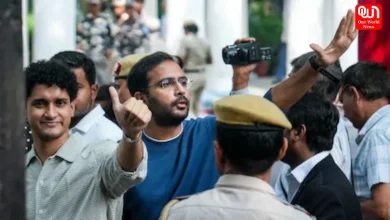
The second incident discussed in Kaam Ki Baat concerns a video reportedly showing independent journalists facing pushing and alleged mistreatment during a CJP conference at the Press Club of India.
The footage, as described in the programme, raises concerns about the conditions in which journalists work while covering politically sensitive events. Reporters must be able to ask questions and document proceedings without facing intimidation or physical interference.
However, the available video description does not independently establish how the confrontation began, who was responsible or the complete circumstances surrounding the incident. Those details require verification before responsibility can be assigned.
If journalists were subjected to physical intimidation, an impartial investigation would be necessary. Any findings should be based on the full footage, eyewitness accounts and other relevant evidence.
A press conference is a space for exchanging information and answering questions. Disagreement with a journalist’s reporting or questions should not become a justification for physical aggression.
Why Press Freedom Matters in a Democracy
Freedom of expression and the freedom of the press are essential to public accountability. Journalists investigate decisions, question authorities and bring information to citizens that might otherwise remain unavailable.
These freedoms are protected within India’s constitutional framework, particularly Article 19(1)(a), which guarantees freedom of speech and expression. The right is subject to reasonable restrictions under Article 19(2), meaning it is not absolute.
A healthy democracy therefore requires both lawful limits and safeguards against arbitrary restrictions. Authorities must follow due process, social media platforms should communicate meaningful explanations where possible, and journalists must be able to work safely.
When online content becomes inaccessible or journalists report intimidation, the public deserves clear information rather than speculation.
Conclusion: Who Is Accountable When Voices Are Restricted?
The two incidents discussed in Kaam Ki Baat highlight different but connected challenges: the transparency of social media restrictions and the safety of journalists reporting on controversial events.
The Instagram screenshot does not prove why the video was blocked, just as the reported footage from the Press Club of India does not, by itself, establish the full circumstances of the alleged confrontation. Both situations require evidence, verification and accountability.
Read more: Train vs Flight Travel in India: Which One’s Better for You?
The larger question remains relevant: should questions about public affairs be answered with unexplained restrictions or physical intimidation?
Respect for the national flag, respect for the Constitution and protection for journalists are not mutually exclusive principles. A democracy is strengthened when legal decisions can be scrutinised, allegations are investigated fairly and people can express their views within the law.
For more discussions on current affairs, public accountability and democratic rights, stay connected with Kaam Ki Baat by Tanisha Bhardwaj on One World News.
We’re now on WhatsApp. Click to join.
Like this post?
Register at One World News to never miss out on videos, celeb interviews, and best reads.