Nepal Floods, India Shows Up: How PM Modi’s ‘Neighbourhood First’ Policy Works When Disaster Strikes
India Nepal flood relief shows PM Modi’s Neighbourhood First policy in action as humanitarian aid reaches Nepal after deadly flash floods.

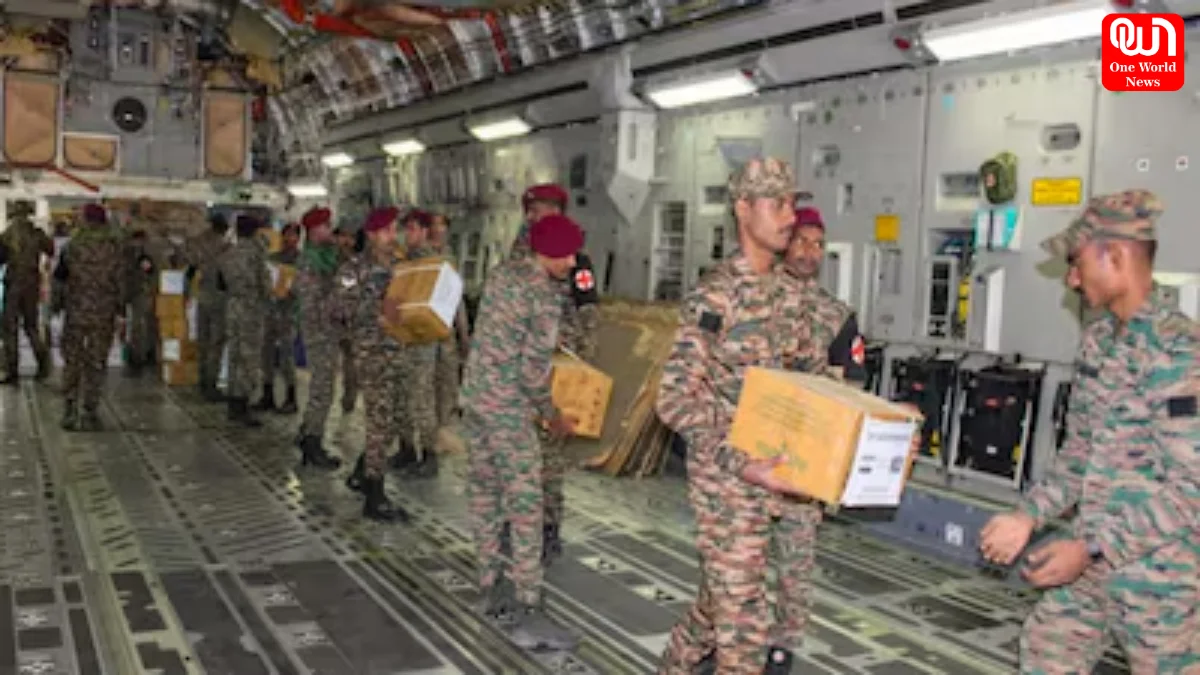
Nepal Floods, India Shows Up: How PM Modi’s Neighbourhood First Policy Delivers India Nepal Flood Relief, Humanitarian Aid and Disaster Response
A devastating flash flood along the Nepal-Tibet border has triggered a major humanitarian crisis, with widespread destruction, fatalities and hundreds of people reported missing. The disaster has tested Nepal’s emergency-response capacity while also highlighting the importance of regional cooperation in the Himalayan neighbourhood.
For India, the crisis has become another example of how the Neighbourhood First policy can move from diplomatic messaging to practical action. Prime Minister Narendra Modi spoke with Nepalese Prime Minister Balendra Shah, expressed condolences and assured India’s support for rescue and relief operations.
The speed of India’s response is significant because disasters often create an immediate need for medicines, shelter, food and emergency equipment. In such circumstances, geographical proximity can make a major difference.
India Nepal Flood Relief Begins With Rapid Humanitarian Aid
India quickly moved to provide India Nepal flood relief after the disaster. The first tranche included 10 tonnes of Humanitarian Assistance and Disaster Relief (HADR) supplies and essential medicines. The material was transported to Kathmandu by an Indian Air Force C-130J aircraft, demonstrating how military logistics can be used for humanitarian purposes during emergencies.
The C-130J is particularly valuable in disaster situations because rapid airlift capability can help overcome damaged roads, disrupted bridges and difficult mountainous terrain. In Nepal, where the floods damaged infrastructure and isolated affected communities, air transportation can become a crucial part of the relief chain.
Reports also indicated preparations for additional assistance, including the possible deployment of a larger C-17 aircraft.
What The Neighbourhood First Policy Means During A Crisis
The Neighbourhood First policy is generally associated with India’s effort to maintain close relations with neighbouring countries through connectivity, development cooperation, diplomacy and people-to-people ties. Natural disasters provide one of the clearest tests of whether such a policy can deliver tangible benefits.
A disaster does not wait for lengthy diplomatic processes. Relief has to reach affected communities quickly. India’s response to Nepal demonstrates a model in which political communication, government coordination and military logistics can work together.
PM Modi’s conversation with Balendra Shah established political reassurance, while the subsequent movement of relief supplies translated that assurance into concrete assistance.
This combination of diplomacy and operational capacity is what can make neighbourhood cooperation meaningful during emergencies.
Why Speed Matters In Disaster Response
The Nepal disaster illustrates why speed is one of the most important factors in disaster response. Flash floods can destroy roads and bridges within minutes, cut electricity and communications, and leave communities inaccessible.
The recent floods were linked to a massive ice and rock collapse in the Himalayan region, producing an exceptionally destructive surge. Rescue operations have been complicated by damaged infrastructure and difficult terrain.
In such circumstances, neighbouring countries can potentially respond faster than distant international partners because of shorter transportation routes and established institutional relationships.
India’s ability to mobilise an IAF transport aircraft and send essential supplies within hours illustrates the practical advantage of geographic proximity.
PM Modi And Balendra Shah: Diplomacy With A Humanitarian Focus
The communication between PM Modi and Balendra Shah also carries diplomatic significance. Beyond formal bilateral relations, moments of crisis create opportunities for governments to demonstrate solidarity with affected populations.
PM Modi conveyed condolences and assured Nepal of India’s willingness to provide all possible humanitarian assistance.
For Nepal, the immediate priority remains saving lives, locating missing people and restoring essential services. For India, supporting those efforts reinforces the principle that regional partnerships should remain functional when neighbouring countries face emergencies.
India’s Wider Disaster-Relief Role
India’s response to Nepal is part of a broader pattern in which the country has increasingly used its armed forces and disaster-management capabilities for humanitarian missions beyond its borders.
The deployment of the C-130J aircraft is a useful example. Rather than representing military power in the traditional sense, the aircraft becomes a logistical tool capable of delivering supplies where conventional transportation may be disrupted.
At the same time, India’s domestic agencies have also remained alert because the Nepal floods could have consequences downstream. The Indian government placed authorities and rescue teams in border areas on high alert, while monitoring the situation in Bihar and Uttar Pradesh.
Read more: Gold And Silver Prices Today: Gold Dips Marginally While Silver Gains
Humanitarian Aid Beyond Geopolitics
The most important aspect of the response is ultimately humanitarian. Political relationships matter, but disaster relief is measured by whether assistance reaches people who need it.
The Nepal crisis has already attracted international attention, with countries and organisations offering emergency assistance. India’s early contribution of relief materials and medicines therefore forms part of a wider international humanitarian response.
For India, however, responding quickly to a neighbouring country’s emergency has an additional strategic value: it demonstrates that regional cooperation can produce practical results.
What The Nepal Floods Reveal About Neighbourhood First
The Nepal floods show that the Neighbourhood First policy is not limited to diplomatic meetings, infrastructure projects or political engagement. Its effectiveness can also be judged by how quickly India can respond when a neighbour faces a crisis.
The sequence is straightforward: PM Modi communicates with Nepal’s leadership, India assures support, relief supplies are mobilised, and an IAF C-130J aircraft carries essential assistance to Kathmandu.
That combination of diplomacy, logistics and humanitarian aid is precisely where foreign policy meets real-world disaster management.
Read more: B Nagendra Offers To Resign From DK Shivakumar Cabinet Over Valmiki Corruption Charges
Conclusion: From Policy To Action
The Nepal floods have produced enormous human suffering and an urgent need for rescue and recovery. India’s response shows how proximity, institutional coordination and political commitment can turn the Neighbourhood First policy into immediate action.
From PM Modi’s outreach to Balendra Shah to the dispatch of 10 tonnes of relief supplies aboard a C-130J aircraft, India Nepal flood relief efforts demonstrate the value of being a capable first responder in the region.
As Himalayan disasters become increasingly challenging, effective disaster response will require not only national preparedness but also strong cross-border cooperation. In that sense, India’s assistance to Nepal is more than an emergency shipment—it is a practical demonstration of what neighbourhood solidarity can look like when disaster strikes.
We’re now on WhatsApp. Click to join.
Like this post?
Register at One World News to never miss out on videos, celeb interviews, and best reads.