Indian Navy Rescues 20 Crew Members From Hijacked Iranian Fishing Vessel After 48-Hour Operation
Indian Navy rescues 20 crew members from hijacked Azini vessel in the Arabian Sea after a 48-hour operation against Somali pirates.

Indian Navy Rescues 20 Crew Members From Hijacked Iranian Fishing Vessel After 48-Hour Operation
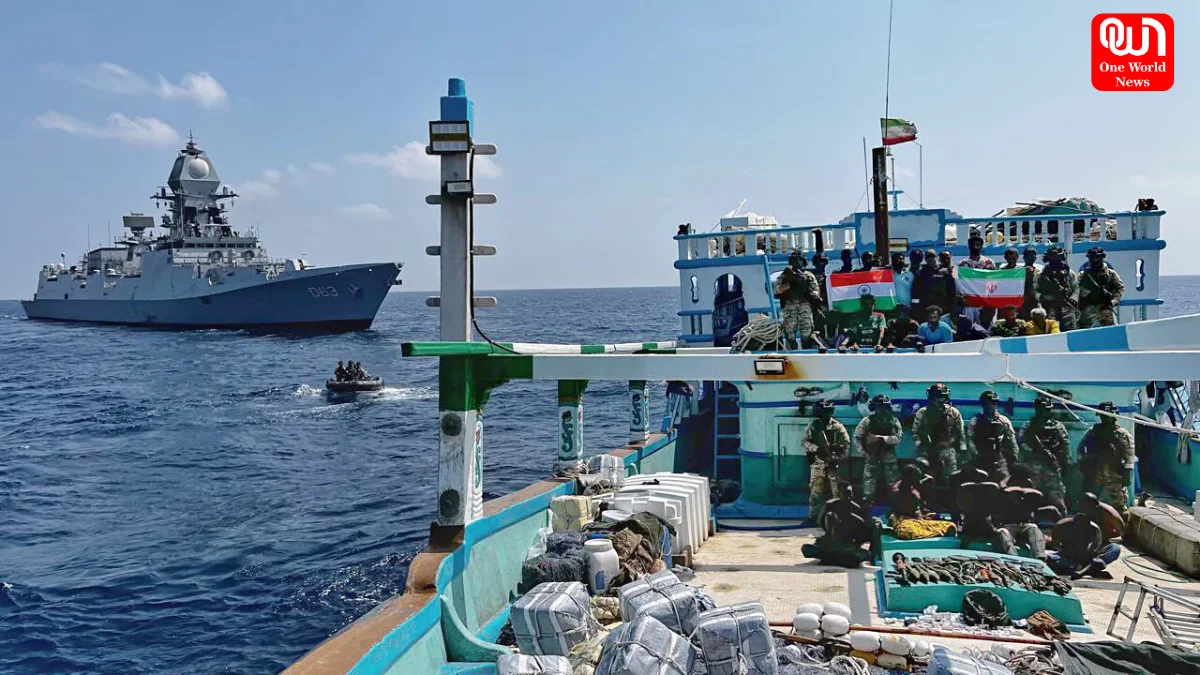
The Indian Navy has successfully rescued all 20 crew members of the Iranian fishing vessel Azini after an intensive 48-hour operation against armed Somali pirates in the Arabian Sea. The successful mission, completed on November 2, 2026, more than 3,000 kilometres from Mumbai, highlights India’s growing maritime capabilities and commitment to protecting lives at sea.
The operation involved close coordination between the Indian Navy and the Indian Air Force (IAF). Defence Minister Rajnath Singh congratulated the naval personnel for their swift response and praised their ability to handle complex maritime security challenges. All 20 crew members were rescued safely, with no casualties or injuries reported.
Indian Navy Launches Rescue Operation After Azini Hijacking
The Iranian fishing vessel Azini was hijacked by an armed group of Somali pirates off the northeastern coast of Somalia on October 29, 2026. The incident occurred between the coastal towns of Bandar Bayla and Hafun, raising serious concerns about the safety of the people aboard.
The hijacking also created a potential threat to international shipping routes. Security agencies feared that the pirates could use the Azini fishing vessel as a mother ship to launch further attacks on commercial cargo ships operating in the region.
Following reports of the incident, the Indian Navy initiated a coordinated response to locate the vessel, monitor its movements and ensure the safe release of the crew members.
How the 48-Hour Arabian Sea Rescue Operation Was Conducted
The Arabian Sea rescue operation involved a mission-deployed Indian Navy warship supported by maritime reconnaissance aircraft. According to reports, INS Kolkata played a key role in the mission, while aerial surveillance helped track the hijacked vessel.
The Navy maintained continuous surveillance and monitored the movements of the fishing vessel to prevent the pirates from escaping. Special measures were also employed to restrict the vessel’s movement without immediately resorting to lethal force.
The operation required careful planning because the vessel was under the control of armed pirates. The safety of the hostages remained a major priority throughout the mission.
After tracking and intercepting the vessel, Indian forces launched a tactical intervention to overcome the pirate threat and secure the fishing boat.
Indian Air Force Supports Navy With Special Commandos
One of the significant aspects of the rescue mission was the involvement of the Indian Air Force. An IAF C-17 aircraft carried out a precision airdrop to reinforce the Indian Navy’s elite Marine Commandos, also known as MARCOS.
These specially trained commandos played an important role in the tactical operation to secure the vessel and overcome the armed threat.
The coordination between naval warships, aerial surveillance platforms and airborne commandos demonstrated the importance of joint military operations. The successful mission also highlighted how different branches of India’s armed forces can work together during challenging maritime emergencies.
Rajnath Singh Praises Indian Navy Personnel
Defence Minister Rajnath Singh congratulated the Indian Navy for successfully completing the 48-hour rescue mission.
He praised the Navy’s ability to locate, intercept and secure the release of the hijacked fishing vessel and its crew members. He also acknowledged the timely support provided by the Indian Air Force.
According to Singh, the operation demonstrated India’s readiness to respond decisively to maritime threats across the region.
He further highlighted India’s commitment to safeguarding human lives, protecting important sea routes and maintaining stability throughout the Indian Ocean Region.
Growing Concerns Over Somali Pirates and Maritime Security
The hijacking of Azini comes amid renewed concerns about Somali piracy in the western Indian Ocean and the Gulf of Aden.
Although international naval patrols and improved security measures had significantly reduced piracy incidents over the years, recent attacks have raised fresh questions about the safety of commercial vessels.
Pirates targeting fishing boats, cargo ships and other commercial vessels can create serious challenges for international trade. Hijacked vessels may also be used as platforms to approach and attack larger merchant ships.
The Indian Navy has maintained a continuous anti-piracy presence in the Gulf of Aden since October 2008. These deployments help protect maritime trade, reassure commercial shipping operators and discourage piracy.
What the Azini Rescue Operation Means for India
The successful Arabian Sea rescue operation represents an important achievement for India’s maritime security efforts. It demonstrates the Indian Navy’s ability to conduct long-distance missions, coordinate with other military services and respond effectively to threats beyond India’s immediate coastline.
The rescue also reinforces India’s position as an important security partner in the Indian Ocean Region.
Read more: Andhra School Chainsaw Attack: Accused Hemanth Shot in Police Firing While Trying to Escape
With international shipping routes facing multiple security challenges, protecting seafarers and ensuring uninterrupted maritime trade have become increasingly important.
Conclusion
The successful rescue of all 20 crew members from the hijacked Iranian fishing vessel Azini marks a significant achievement for the Indian Navy. The 48-hour operation, supported by the Indian Air Force and elite Marine Commandos, demonstrated India’s operational preparedness and commitment to maritime security.
The mission also sends a strong message to armed pirate groups that threats to civilian vessels and seafarers will receive a decisive response. India’s continued efforts to maintain safe and secure international waters remain essential for regional stability and global maritime trade.
We’re now on WhatsApp. Click to join.
Like this post?
Register at One World News to never miss out on videos, celeb interviews, and best reads.