15 June Political Update: Three Major Developments Shaping India’s Political and Economic Discussions
15 June Political Update: Jahangir Khan case, Bharat Innovates 2026 launched by Modi-Macron, and India's approval of 100% ethanol fuel.


15 June Political Update: Jahangir Khan Investigation Row, Modi-Macron Launch Bharat Innovates 2026, India Approves 100% Ethanol Fuel for Vehicles
Namashkar!
I am Aarav, and you are watching One World News.
Today’s Political Update brings three significant developments that are creating discussions across political circles, policy forums, and social media platforms. From a controversial investigation involving a senior TMC leader to a major India-France innovation partnership and a transformative decision on ethanol fuel, these stories are expected to influence public debate in the coming weeks.
TMC Leader Jahangir Khan Investigation Sparks Political Debate
West Bengal politics has once again entered the national spotlight following developments involving TMC leader Jahangir Khan.
According to reports, Khan, who is considered a close associate of Trinamool Congress leader Abhishek Banerjee, was arrested near the India-Nepal border while allegedly attempting to evade authorities. Following his arrest, reports claimed that he was paraded barefoot through parts of Falta during an ongoing investigation related to alleged extortion and post-poll violence cases.
The incident has triggered intense political reactions. Supporters of the action argue that it demonstrates accountability and sends a strong message against alleged corruption and intimidation. However, critics have raised concerns about whether such public treatment aligns with democratic values and constitutional protections.
Legal experts have also debated the issue, emphasizing the importance of due process during investigations. Questions regarding the treatment of accused individuals and the responsibilities of law enforcement agencies have now become part of the broader discussion.
On social media, opinions remain sharply divided. While some users view the action as a sign of stricter law enforcement, others believe investigations should remain professional and avoid any appearance of public humiliation.
The controversy highlights a larger national conversation about balancing accountability with individual rights under the rule of law.
Modi and Macron Launch Bharat Innovates 2026 in France
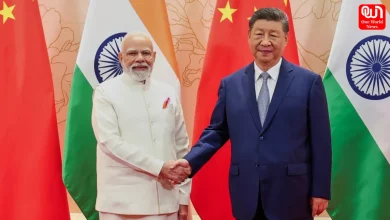
The second major story in today’s Political Update comes from France, where Prime Minister Narendra Modi and French President Emmanuel Macron jointly inaugurated Bharat Innovates 2026 in Nice. The event aims to strengthen innovation cooperation between India and France while showcasing India’s growing technological capabilities. More than 120 Indian innovators and startups are participating in the initiative.
The three-day event focuses on deep-tech sectors including artificial intelligence, biotechnology, advanced manufacturing, clean energy, semiconductors, healthcare, and digital transformation. It serves as a platform for connecting Indian innovators with global investors, industry leaders, and research institutions.
During the event, both leaders emphasized the importance of technological cooperation and innovation-driven growth. Prime Minister Modi highlighted India’s rapidly expanding startup ecosystem and invited global stakeholders to collaborate with Indian innovators. French President Macron praised India’s innovation ecosystem and its growing role in addressing global challenges.
The launch of Bharat Innovates 2026 is also being viewed as a significant step in strengthening India-France strategic relations. Experts believe such initiatives can help attract investment, boost research partnerships, and create opportunities for emerging technology companies.
However, some analysts argue that long-term success will depend on whether innovation initiatives ultimately lead to employment generation, affordable technology solutions, and sustainable economic growth.
India Approves 100% Ethanol Fuel for Flex-Fuel Vehicles
The third major Political Update concerns India’s energy sector.
Union Minister Nitin Gadkari recently confirmed approval for the use of 100% ethanol fuel in flex-fuel vehicles. The decision is being presented as a major step toward reducing India’s dependence on imported crude oil and strengthening domestic energy security.
The move builds upon India’s existing ethanol blending program, which has already contributed to reducing fuel imports and promoting alternative energy sources. The government believes expanded ethanol usage can benefit farmers by increasing demand for agricultural products used in ethanol production.
Supporters argue that the initiative could provide multiple advantages, including reduced fuel import bills, improved rural incomes, greater energy independence, and lower emissions compared to traditional fossil fuels.
At the same time, experts have raised several concerns. Questions remain regarding vehicle compatibility, infrastructure readiness, maintenance requirements, and fuel efficiency. There are also discussions about whether large-scale ethanol production could affect agricultural priorities or place additional pressure on water resources.
Social media reactions reflect both optimism and caution. While many users welcome efforts to promote cleaner energy and support farmers, others are seeking more clarity regarding implementation and costs.
The ultimate success of the policy will depend on consumer awareness, automobile industry preparedness, fuel distribution infrastructure, and long-term policy consistency.
Why These Political Developments Matter
These three stories represent different dimensions of governance and public policy.
The Jahangir Khan investigation highlights debates surrounding law enforcement, accountability, and constitutional rights. Bharat Innovates 2026 showcases India’s ambitions in technology, innovation, and international partnerships. Meanwhile, the ethanol fuel decision reflects India’s efforts to transform its energy strategy and reduce dependence on imported fuels.
read more: Delhi Electricity Price Hike: Consumers Using Over 500 Units May Pay Up To 5.7% More From July 2026
Together, these developments demonstrate how politics, technology, diplomacy, and economic policy are increasingly interconnected in shaping India’s future.
Conclusion
As political discussions continue across the country, these developments are expected to remain in focus. Whether it is debates over law enforcement practices, India’s expanding global innovation partnerships, or the transition toward alternative fuels, each story has implications for governance, economic growth, and public policy.
That was today’s Political Update from One World News.
Thank you for watching.
I am Aarav.
Namashkar, and stay informed.
We’re now on WhatsApp. Click to join.
Like this post?
Register at One World News to never miss out on videos, celeb interviews, and best reads.