Delimitation Bill By Month-End? Govt Mulls Special Session, Woos ‘Like-Minded Parties’ To Seal Numbers
Delimitation Bill may return by month-end as the Centre weighs a special Parliament session and seeks support from regional players.

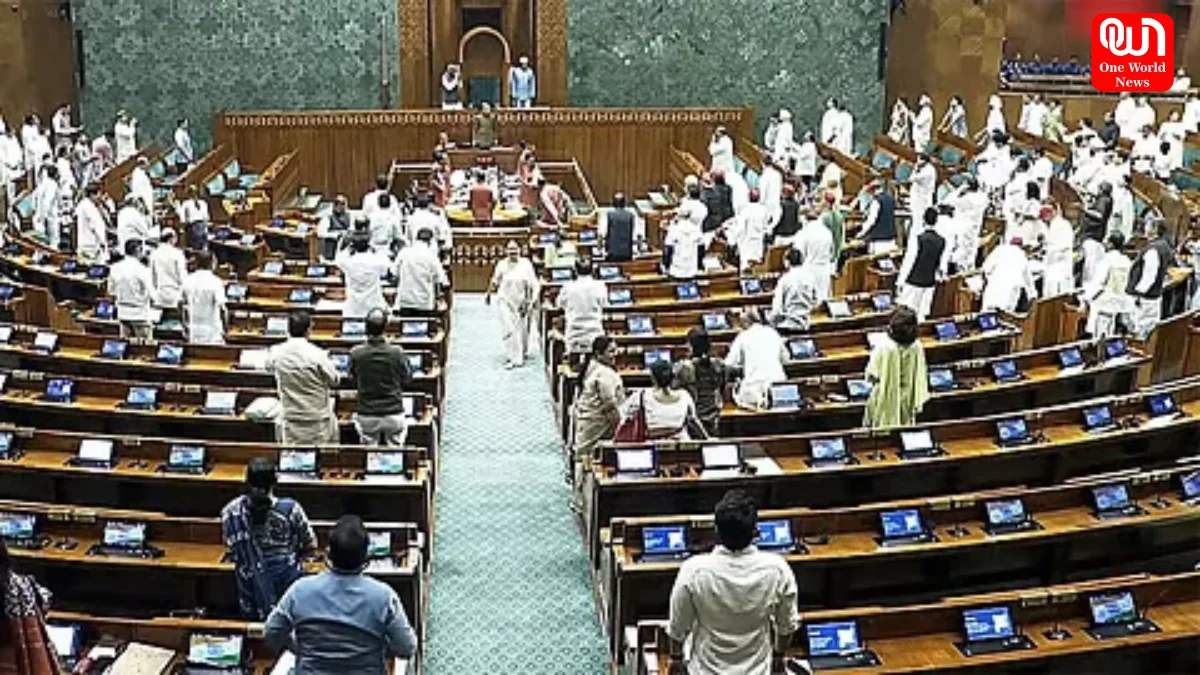
Delimitation Bill by October End? Centre Considers Special Session of Parliament, Seeks Support From DMK and Like-Minded Regional Players to Pass Women’s Reservation Legislation
The Centre is reportedly preparing a fresh push to pass the proposed delimitation legislation by the end of October 2026, with the government exploring the possibility of convening a special session of Parliament. The move comes months after the government’s constitutional amendment proposal linked to delimitation and women’s reservation failed to secure the required majority in the Lok Sabha.
According to reports published on October 16, government sources said the Centre is reaching out to opposition and regional parties to build broader parliamentary support before bringing the legislation back. The government is reportedly in discussions with the Dravida Munnetra Kazhagam (DMK) and smaller parties as it works to secure the numbers needed for passage.
The proposed delimitation bill is closely linked to the implementation of the 33% reservation for women in the Lok Sabha and state legislative assemblies. However, concerns about regional representation, particularly among southern states, remain a major obstacle to building political consensus. <Cite refs={[“turn919729search0″,”turn919729search1”]}/>
Centre Considers Special Session of Parliament
The possibility of a special session of Parliament has gained attention as the government attempts to revive the legislative proposals. According to media reports citing government sources, the Centre is considering a special sitting later this month to discuss the delimitation and women’s reservation measures.
The Monsoon Session, which concluded on August 13, has not yet been prorogued, leaving open the procedural possibility of reconvening Parliament.
The timing of a potential special session is also expected to take account of the 12th BRICS Parliamentary Forum, scheduled for October 26 and 27 at Samvidhan Sadan. Reports indicate that the government may provide around a week’s notice before convening the sitting, although an official announcement of dates has not been confirmed.
The government’s immediate priority appears to be ensuring adequate support before introducing the legislation again. The earlier setback demonstrated that the ruling alliance cannot rely solely on its existing numbers to secure the constitutional majority required for the proposed amendments. <Cite refs={[“turn919729search1″,”turn919729search5”]}/>
Why Is the Delimitation Bill Important?
Delimitation refers to the process of redrawing electoral constituency boundaries and adjusting the allocation of legislative seats. The exercise is intended to ensure that constituencies and representation reflect the applicable constitutional framework and demographic considerations.
The proposed legislation is significant because it is connected to the implementation of the women’s reservation law, formally enacted in 2023. That law provides for reserving one-third of seats for women in the Lok Sabha and state legislative assemblies, with implementation linked to a future census and delimitation exercise.
The Centre has sought to accelerate the process so that women’s reservation can become operational before the 2029 general elections.
The earlier legislative package also proposed changes that would enable delimitation without waiting for a fresh census in the manner required under the existing framework. It included a constitutional amendment and related legislation to facilitate the changes.
However, the proposal has generated debate over the timing of the exercise, the method of allocating seats and its possible impact on the political balance between states. <Cite refs={[“turn919729search3″,”turn919729search9″,”turn919729search14”]}/>
Women’s Reservation Legislation: What Happened in Parliament?
The government suffered a major setback on April 17, 2026, when the Constitution (131st Amendment) Bill, linked to delimitation and the implementation of women’s reservation, failed to secure the required two-thirds majority in the Lok Sabha.
According to reports, 298 members voted in favour and 230 against, falling short of the 352 votes required among the 528 members who participated in the division.
The defeat prevented the government from advancing the proposed legislative package as planned. It also exposed the difficulty of securing the support required for constitutional amendments, even when a proposal receives more votes in favour than against.
The government has since explored ways to revive the initiative, including discussions with regional parties and potential changes intended to address concerns about representation.
For the Centre, securing a wider political consensus is now a key part of its strategy to move forward with the women’s reservation framework. <Cite refs={[“turn919729search3″,”turn919729search5”]}/>
Centre Reaches Out to Like-Minded Parties
The Centre’s outreach to like-minded parties is emerging as a crucial part of its strategy to revive the legislation. Government sources have indicated that discussions are underway with the DMK and smaller opposition parties to build the numbers required for passage.
The DMK’s position is particularly important because the party has previously opposed the proposed delimitation framework over concerns about the representation of southern states. Recent reports have also highlighted a political split between the DMK and Congress following the Tamil Nadu elections, creating a possible opening for fresh discussions.
The government is reportedly seeking support beyond the National Democratic Alliance (NDA), recognising that constitutional amendments require a broader majority than ordinary legislation.
Smaller parties could also influence the outcome if they agree to support the proposal after receiving assurances on seat allocation and regional representation.
However, discussions do not necessarily translate into commitments to vote in favour. The final numbers will depend on the precise legislative proposal, the positions taken by individual parties and the outcome of negotiations. <Cite refs={[“turn919729search1″,”turn919729search2″,”turn919729search5”]}/>
Why Regional Players Matter in the Delimitation Debate
The concerns of regional players have become central to the political debate surrounding delimitation.
Several southern parties fear that a population-based redistribution of parliamentary seats could alter the balance of representation between states. They argue that states that have successfully controlled population growth should not face a relative loss of political influence compared with states whose populations have grown more rapidly.
Tamil Nadu has been particularly vocal in raising these concerns. Congress leader Rahul Gandhi has also criticised the proposed exercise, arguing that it could reduce the state’s relative voice in Parliament.
The Centre, meanwhile, has maintained that its proposed approach would increase the number of seats available to southern states rather than reduce their overall representation. In April, Union Home Minister Amit Shah cited projected increases in seats for states including Tamil Nadu, Karnataka, Kerala, Andhra Pradesh and Telangana under the government’s proposed model.
The disagreement highlights why negotiations with regional parties are essential. Any revised framework will need to address questions about seat allocation, fairness between states and the relationship between population changes and political representation. <Cite refs={[“turn919729news13″,”turn919729search9”]}/>
Parliamentary Support: Can the Government Secure the Numbers?
Securing sufficient parliamentary support remains the government’s biggest challenge.
Constitutional amendments require a special majority in Parliament, including support from at least two-thirds of members present and voting in each House, alongside the constitutionally prescribed majority of the House’s total membership. This makes the task more demanding than passing an ordinary bill.
Read more: Delhi ACP Accused Of Sexual Harassment Alleges Casteist Remarks By Journalist; FIR Registered
The April defeat demonstrated that the government needs to build a stronger coalition around the proposal. Its current outreach reportedly includes regional parties and smaller opposition groups that may be willing to consider a revised framework.
The outcome will depend on whether the Centre can address objections without losing support among its existing allies. Any changes to the proposal could also affect negotiations over women’s reservation, the size of the Lok Sabha and the principles governing delimitation.
Until the government formally announces a session and introduces a revised legislative package, the precise voting arithmetic and final provisions remain uncertain. <Cite refs={[“turn919729search3″,”turn919729search5”]}/>
What Happens Next?
The coming weeks could prove decisive for the Centre’s legislative strategy. If the government secures sufficient backing, it could bring the delimitation and women’s reservation proposals before Parliament during a special sitting later in October.
If negotiations fail, the government may need to continue consultations, reconsider aspects of the proposed framework or delay its next legislative move.
For opposition parties, the immediate priority will be to ensure that concerns about regional representation and electoral fairness are addressed before any new bill is passed.
Read more: Jammed Rifle, Taco Bell Co-Worker: How US Teen’s Hindu Temple Attack Plot Was Foiled
The larger challenge is to establish a framework that advances women’s political representation while maintaining confidence among states that their voices in Parliament will be protected.
Conclusion
The Centre’s reported plan to bring the delimitation bill back by the end of October marks a renewed effort to advance women’s reservation and reshape parliamentary representation. A possible special session of Parliament would provide an opportunity to revisit the proposals, but securing the necessary majority remains essential.
The government’s outreach to the DMK, smaller parties and other potential allies shows that regional negotiations could determine the legislation’s future. Whether the Centre can convert these discussions into firm parliamentary support will become clearer as the month progresses.
We’re now on WhatsApp. Click to join.
Like this post?
Register at One World News to never miss out on videos, celeb interviews, and best reads.