Tesla’s New Roadster Takes Flight After Nearly a Decade of Delays in Electric Vehicle Manufacturing
Tesla's new Roadster takes flight after years of delays, showcasing electric performance and futuristic automotive innovation across North America.

Tesla’s New Roadster Takes Flight After Nearly a Decade of Delays, Bringing Revolutionary Alternative Fuel Vehicles, Passenger Cars, and Automotive Manufacturing Technology to North America and the World
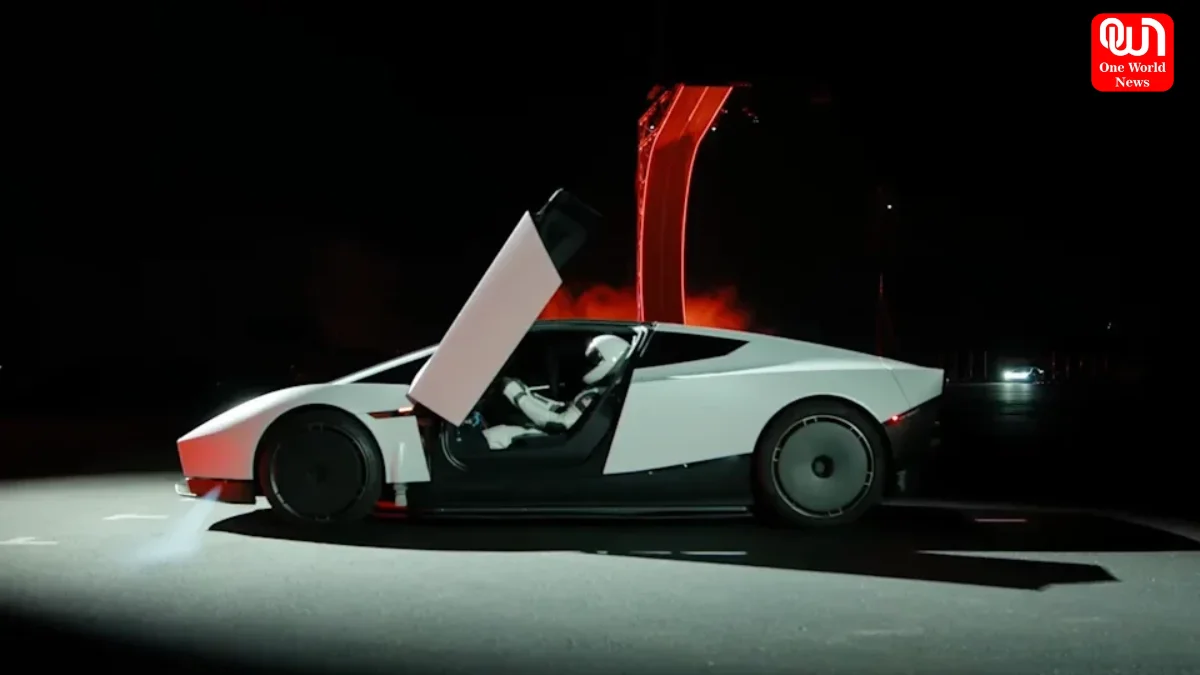
Tesla has finally unveiled its highly anticipated next-generation Roadster, nearly nine years after first introducing the electric sports car concept in 2017. The unveiling on October 15, 2026, attracted worldwide attention after the vehicle demonstrated dramatic aerial movements using advanced thruster technology developed in collaboration with SpaceX. The event marked a significant moment for Tesla and the wider automotive industry, although customers will have to wait longer before the vehicle enters production.
Tesla Roadster Unveiling: A Long-Awaited Automotive Milestone
Tesla originally revealed its next-generation Roadster in November 2017, promising an electric sports car capable of delivering exceptional acceleration, high speeds, and an impressive driving range. Production was initially expected in 2020, but repeated delays pushed the timeline back several times.
The October 2026 unveiling finally gave enthusiasts a closer look at the redesigned vehicle. However, the event was primarily a demonstration rather than a commercial launch, and Tesla now expects production to begin in 2028.
The prolonged development period has made the Roadster one of the company’s most closely watched automotive projects. Its unveiling demonstrates Tesla’s continued interest in high-performance electric vehicles, even as the company expands its focus on autonomous driving technology, artificial intelligence, and robotics.
The most striking feature of the new Roadster was its demonstration at a SpaceX testing facility in Texas. The prototype used a combination of a suction system and compressed-gas thrusters to perform unusual manoeuvres, including travelling upside down along a specially designed ramp, rotating in mid-air, and briefly lifting above the ground.
The vehicle also demonstrated a jump over other Tesla vehicles, creating a spectacle rarely associated with traditional car launches. Tesla CEO Elon Musk presented the demonstration as a glimpse of what future automotive engineering could achieve.
However, these capabilities should be understood in context. The demonstration involved a prototype, and it remains unclear which advanced manoeuvres will be available in production vehicles or permitted on public roads.
The technology has nevertheless generated considerable interest across North America and the global automotive market, particularly among enthusiasts following electric supercars and experimental vehicle engineering.
One of the most distinctive aspects of the new Roadster is its connection with SpaceX, the aerospace company also led by Musk. The collaboration centres on cold-gas thrusters designed to provide additional force beyond what conventional tyres can deliver.
Unlike ordinary cars, which rely entirely on tyre traction for acceleration and movement, the experimental Roadster incorporates technology intended to support brief, controlled aerial manoeuvres. Tesla has also demonstrated a suction-based system designed to help the vehicle remain attached to a specially constructed surface.
These innovations place the Roadster at an unusual intersection of Automotive and aerospace engineering. They also demonstrate how Manufacturing companies can experiment with technologies originally developed for different industries.
Nevertheless, engineering demonstrations do not automatically translate into practical consumer features. Questions surrounding safety, reliability, operating costs, regulatory approval, and everyday usability will need to be addressed before such technology can become commercially viable.
Performance Expectations and Electric Driving Range
Tesla has positioned the Roadster as a high-performance electric sports car rather than a conventional family vehicle. Its headline acceleration claims and futuristic design are intended to distinguish it from other premium electric cars.
The newly announced configurations include Performance, Thrust, and Rocket variants, with different levels of performance and specialised technology. Tesla’s published figures include acceleration from zero to 60 miles per hour in less than one second for the most advanced configuration.
The company has also indicated a driving range exceeding 300 miles. However, these figures are manufacturer claims, and final production specifications, independent performance testing, and real-world range will be important considerations for potential buyers.
The updated range expectation is also notably lower than the 620 miles originally promised in 2017. This illustrates how specifications can change during a lengthy development process.
What the Roadster Means for Alternative Fuel Vehicles
The Roadster’s unveiling comes at a time when Alternative Fuel Vehicles are becoming an increasingly important part of the global transportation market. Electric vehicles are encouraging manufacturers to rethink traditional ideas about powertrains, performance, efficiency, and vehicle design.
Tesla helped popularise battery-powered cars by demonstrating that electric vehicles could offer both everyday usability and impressive acceleration. The new Roadster builds on that reputation by targeting the premium sports-car segment.
Its success, however, will depend on more than eye-catching demonstrations. Buyers will also consider price, charging infrastructure, battery performance, safety, maintenance, and long-term ownership costs.
For the wider automotive sector, the Roadster could serve as a technology showcase. Even if it remains a low-volume product, its development may attract attention to innovations in electric propulsion, lightweight materials, aerodynamics, and integrated vehicle systems.
Impact on the Automotive Market in North America and Beyond
North America remains an important market for electric vehicle development, with Tesla competing against established automakers and emerging manufacturers. The Roadster’s unveiling could help reinforce the company’s image as an innovator in high-performance electric mobility.
Internationally, the vehicle will face a different set of challenges. Luxury electric car buyers increasingly have access to high-performance alternatives, while manufacturers across Europe and Asia continue to develop advanced battery-powered sports cars.
The Roadster’s unusual technology may help Tesla stand out, but its eventual market position will depend on production readiness, pricing, delivery timelines, and customer confidence.
The project also highlights the challenges involved in Automotive Manufacturing. Developing a technically ambitious prototype is only one stage of the process; manufacturers must subsequently establish dependable production systems, meet regulatory requirements, and deliver vehicles at the promised quality and scale.
For Tesla, turning the Roadster into a commercially successful product will be just as important as capturing attention during its unveiling.
Production Timeline and What Buyers Should Know
Despite the successful demonstration, the Roadster is not yet available as a regular production vehicle. Tesla has indicated that production is expected to begin in 2028, meaning customers must continue to wait before deliveries can become a reality.
The company previously accepted substantial reservations for the vehicle, and the repeated delays have raised questions about delivery schedules and the final specifications. Potential buyers should carefully review Tesla’s latest reservation terms and official announcements before making financial commitments.
The final production model will need to demonstrate that its promised performance can be delivered consistently, safely, and within an acceptable price range.
Read more: Delhi ACP Accused Of Sexual Harassment Alleges Casteist Remarks By Journalist; FIR Registered
Conclusion
Tesla’s new Roadster represents an ambitious development in electric sports cars, combining high-performance driving with experimental aerospace-inspired technology. Its dramatic unveiling after nearly a decade of delays has renewed public interest in the project, while the planned 2028 production timeline means that important milestones remain ahead.
For the global Motor Vehicles, Passenger Cars, Alternative Fuel Vehicles, and Automotive Manufacturing industries, the Roadster offers a glimpse into how manufacturers may continue to push engineering boundaries. Its long-term success will ultimately depend on whether Tesla can transform an extraordinary prototype into a practical, reliable, and commercially viable vehicle for customers in North America and around the world.
We’re now on WhatsApp. Click to join.
Like this post?
Register at One World News to never miss out on videos, celeb interviews, and best reads.