Delhi AQI Continues To Worsen As Diwali Nears, GRAP-II Invoked Across Capital
Delhi air quality worsens before Diwali as AQI rises, India Gate pollution concerns grow and GRAP-II restrictions aim to control winter smog.

Delhi AQI Continues To Worsen As Diwali Nears, GRAP-II Invoked Across Capital
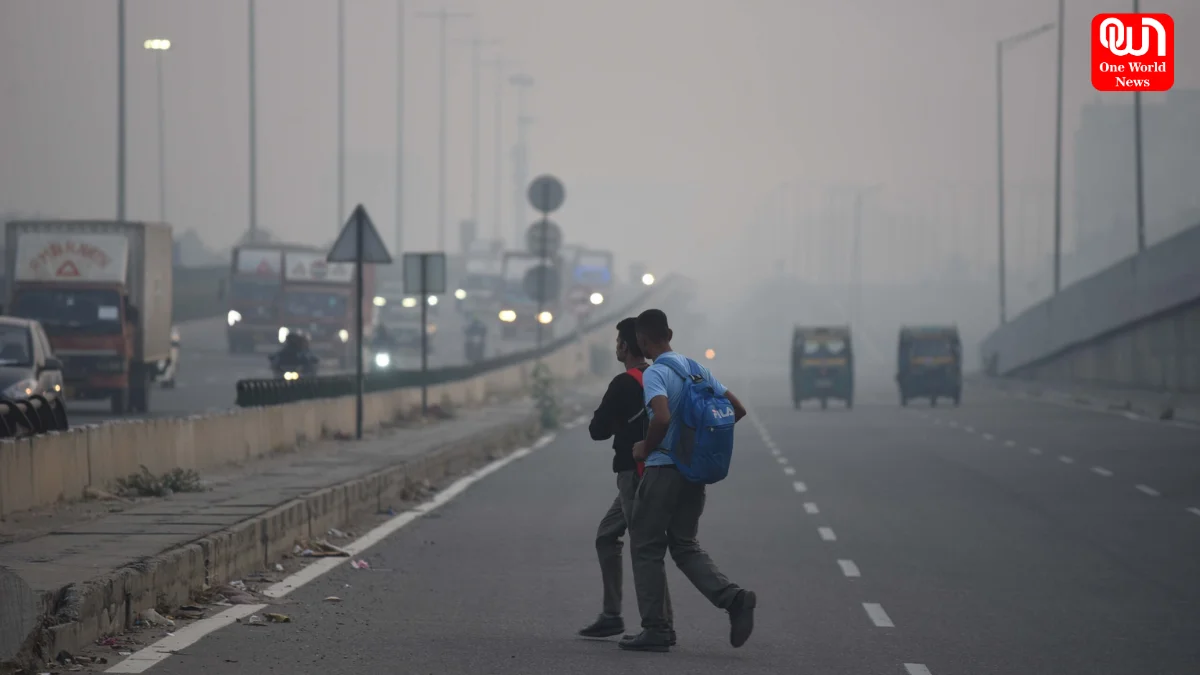
Air pollution in the national capital is becoming a serious concern as Diwali approaches. Delhi’s air quality has deteriorated sharply, with several monitoring stations reporting alarming pollution levels. A thick layer of smog has covered different parts of the city, raising concerns among residents about respiratory health and outdoor activities.
According to reports published on November 3, 2026, Delhi’s overall Air Quality Index (AQI) reached 451 at 8 AM, placing it in the severe category. The worsening Delhi air quality has prompted authorities to strengthen pollution-control measures. The Commission for Air Quality Management (CAQM) has already invoked Stage II of the Graded Response Action Plan (GRAP) across Delhi-NCR to prevent further deterioration.
Delhi AQI Reaches Severe Levels Ahead of Diwali
The pollution situation has worsened considerably over the past few days. According to data from the Central Pollution Control Board (CPCB), several areas of Delhi have recorded extremely high AQI readings.
Rohini reported an AQI of 429, followed by Punjabi Bagh at 424 and Bawana at 408. Other locations, including Patparganj, RK Puram, ITO, Chandni Chowk and Okhla, also experienced very poor air quality.
An AQI reading between 301 and 400 falls under the very poor category, while readings between 401 and 500 are classified as severe. These levels indicate unhealthy atmospheric conditions that can affect even healthy individuals, particularly during prolonged exposure.
India Gate Pollution Raises Concerns Across the Capital
The worsening India Gate pollution situation has added to concerns about Delhi’s deteriorating environment. The India Gate area, which attracts tourists, morning walkers and local visitors, is among the prominent public spaces where air quality remains an important concern during the winter season.
Increasing vehicular movement, road dust, construction activities and other emission sources contribute to the city’s pollution burden. The presence of smog can also reduce visibility, making outdoor activities uncomfortable.
Residents and visitors are being encouraged to check local AQI readings before planning outdoor activities, especially during early morning and late evening hours.
GRAP-II Invoked Across Delhi-NCR
In response to rising pollution levels, the Commission for Air Quality Management has announced the implementation of Stage II restrictions under the Graded Response Action Plan.
The GRAP-II invoked measures are designed to control pollution sources and prevent air quality from moving into more dangerous categories. Authorities have directed civic agencies to strengthen dust-control activities and improve enforcement across the region.
Some important measures under GRAP Stage II include:
- Increasing mechanical and vacuum-based road sweeping.
- Sprinkling water with dust suppressants on roads.
- Increasing parking charges to discourage private vehicle usage.
- Strengthening inspections at construction and demolition sites.
- Regulating the use of diesel generator sets.
- Restricting the use of coal and firewood in hotels and restaurants.
- Encouraging public transport and additional metro services.
Authorities have also been asked to consider staggered office timings to reduce traffic congestion and vehicle emissions.
What Is Causing Delhi’s Winter Air Pollution?
Several factors are responsible for the increasing winter air pollution across Delhi and neighbouring NCR cities.
Vehicular emissions remain one of the major contributors, particularly in areas experiencing heavy traffic congestion. Road dust, construction activities, industrial emissions and waste burning further increase the concentration of harmful particles.
Stubble burning in neighbouring Punjab and Haryana also contributes to the pollution problem. Weather conditions, including low wind speeds and limited atmospheric dispersion, can trap pollutants closer to the ground, resulting in dense smog.
Read more: Indian Killed in Helicopter Collision Near Everest Base Camp in Nepal | On Cam
The approaching Diwali celebrations have created additional concerns because firecracker emissions can further increase particulate pollution.
CPCB and CAQM Strengthen Delhi Pollution Control Measures
The Central Pollution Control Board continues to monitor air quality through monitoring stations across the national capital. Its AQI readings help authorities understand pollution levels and determine the need for additional restrictions.
Meanwhile, CAQM is coordinating pollution-control measures across Delhi and neighbouring NCR regions. The commission has instructed government departments, municipal bodies and enforcement agencies to implement the prescribed restrictions.
Effective Delhi pollution control requires cooperation between authorities, businesses and residents. Reducing unnecessary vehicle usage, avoiding open waste burning and following construction-related pollution guidelines can help support these efforts.
How Can Residents Protect Themselves From Rising AQI?
With pollution levels increasing, residents should take precautions to reduce exposure to unhealthy air.
People should limit outdoor exercise when AQI levels are very poor or severe. Wearing a well-fitted N95 mask when travelling outdoors may help reduce exposure to particulate pollution. Children, elderly individuals and people with existing respiratory or heart conditions should take extra precautions.
read more: Gold and Silver Prices Today, 3 November: Gold Falls ₹1,020, Silver Drops ₹3,970
Keeping windows closed during periods of high outdoor pollution, using appropriately sized air purifiers indoors and checking daily AQI updates can also help.
Conclusion
The worsening Delhi air quality ahead of Diwali highlights the growing challenge of controlling pollution during the winter season. With the AQI reaching severe levels and GRAP-II restrictions now in force across Delhi-NCR, authorities are focusing on reducing dust, traffic emissions and other pollution sources.
However, long-term improvement will require consistent enforcement, better public transport, responsible festive celebrations and active public participation. Protecting the capital’s air quality must remain a priority beyond the Diwali season.
We’re now on WhatsApp. Click to join.
Like this post?
Register at One World News to never miss out on videos, celeb interviews, and best reads.