BRICS Summit 2026: New Delhi Hosts Putin, Xi Jinping & Pezeshkian Amid Geopolitics and International Relations
BRICS Summit 2026 in New Delhi brings Putin, Xi Jinping and Pezeshkian together as India navigates geopolitics and international relations.

BRICS Summit 2026 in New Delhi: India’s Balancing Act With Vladimir Putin, Xi Jinping & Masoud Pezeshkian | Geopolitics & International Relations
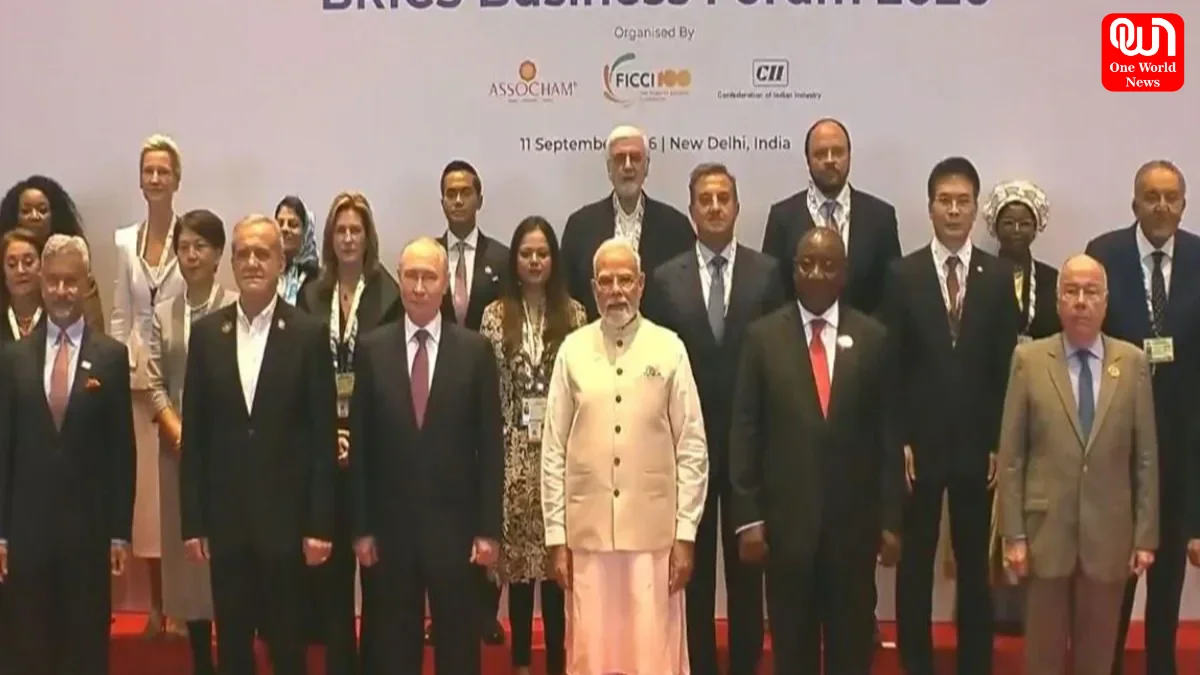
The BRICS Summit 2026 in New Delhi has attracted significant international attention, with foreign media focusing not only on the gathering of major emerging economies but also on India’s increasingly complex diplomatic position. With Vladimir Putin, Xi Jinping and Masoud Pezeshkian in New Delhi alongside Indian Prime Minister Narendra Modi, the summit has become an important stage for discussions on Geopolitics and International Relations.
The 18th BRICS Summit, being hosted by India on September 12 and 13, comes at a time of heightened tensions surrounding the Iran conflict, the Russia-Ukraine war, global trade and relations between the United States and China. International coverage suggests that the summit could test both BRICS’ unity and India’s ability to maintain relationships with competing global powers.
India’s Balancing Act Takes Centre Stage
One of the strongest themes in international coverage is India’s diplomatic balancing act. Foreign media has highlighted how New Delhi is attempting to maintain close relationships with Russia, China and Iran while simultaneously strengthening strategic and economic partnerships with the United States and other Western countries.
Reuters described India as balancing relations across Washington, Moscow, Tehran, Gulf states and Israel, particularly as conflicts disrupt shipping, energy markets and trade.
The Lowy Institute similarly argued that India’s participation in BRICS should not automatically be interpreted as a move away from the West. Instead, New Delhi wants BRICS to represent the interests of the Global South while seeking reforms to existing international institutions.
This distinction is important. India’s approach is increasingly being portrayed as strategic autonomy rather than alignment with one geopolitical camp.
Xi Jinping’s New Delhi Visit Draws Global Attention
The presence of Xi Jinping is another major focus of international reporting. The Chinese president’s visit to India is particularly significant because it is his first trip to the country since 2019.
Foreign media has linked the visit to the gradual improvement in India-China relations following years of tensions. Although significant disagreements remain, including the unresolved border dispute, trade concerns and strategic competition, the BRICS Summit provides an opportunity for Modi and Xi to engage directly.
For India, Xi’s presence also gives New Delhi an opportunity to demonstrate that BRICS can function as a platform for dialogue rather than becoming an explicitly anti-Western alliance.
Putin And Pezeshkian Add To The Geopolitical Stakes
The participation of Vladimir Putin and Iranian President Masoud Pezeshkian has added another layer of geopolitical importance to the summit.
Putin met Modi in New Delhi before the summit, with discussions covering bilateral cooperation as well as regional and global issues. Reuters reported that Russia is seeking to strengthen BRICS as a platform capable of influencing the global economic and political order.
Pezeshkian’s presence is equally significant because the Middle East conflict is expected to be one of the major challenges for BRICS leaders. Iran, Saudi Arabia and the UAE have different interests and relationships in the region, making a unified BRICS position difficult.
Al Jazeera reported that the conflict involving Iran, alongside the Russia-Ukraine war, could test the bloc’s ability to reach common ground.
Challenge To The West Or A Push For Multipolarity?
A major question emerging from foreign media coverage is whether BRICS represents a direct challenge to the West.
Read more: BRICS Summit Delhi: Modi Govt Cuts VIP Convoys, Ministers, CMs To Travel In One Bus
Some international reporting presents BRICS as an increasingly influential counterweight to Western-dominated institutions. The Financial Times noted that the expanded grouping now represents a substantial share of the global population and economy and has ambitions to reshape aspects of the international order.
However, other analysis warns against simply describing BRICS as an anti-Western bloc. The Indian Express noted that its members have different objectives, ranging from greater autonomy and institutional reform to direct strategic competition with Western powers.
For India, this distinction matters. New Delhi appears interested in a more multipolar international system rather than replacing one dominant power with another.
Economic Cooperation Remains A Key Priority
Beyond geopolitics, the summit is expected to focus heavily on economic cooperation. Trade, investment, energy security, food security, technology, supply chains and international financial systems are among the major issues attracting attention.
BRICS members have also discussed reducing dependence on the US dollar and developing alternative payment mechanisms. However, international analysts point to substantial economic differences between members as a barrier to rapid financial integration.
India’s emphasis is expected to remain on practical cooperation and development rather than allowing the summit to become solely focused on geopolitical confrontation.
read more: The Student Behind ‘Cockroach’ Protests That Forced an Indian Minister to Quit
What The Global Coverage Means For India
The international coverage of the BRICS Summit 2026 presents India as one of the most important diplomatic actors within the expanded grouping. New Delhi is attempting to use BRICS to amplify the voice of the Global South while maintaining working relationships with Western powers.
The summit therefore represents more than a meeting between India, Vladimir Putin, Xi Jinping and Masoud Pezeshkian. It is a test of whether BRICS can manage internal differences while becoming a meaningful force in global governance.
For India, success may not be measured by whether BRICS becomes “anti-Western.” Instead, the bigger achievement could be demonstrating that Geopolitics and International Relations can operate through dialogue, strategic autonomy and a more multipolar global order.
We’re now on WhatsApp. Click to join.
Like this post?
Register at One World News to never miss out on videos, celeb interviews, and best reads.