Hijab Not Essential To Islam’: Allahabad HC Rejects Student’s Plea To Wear Headscarf
Allahabad High Court hijab ruling: Court rejects Muslim student’s plea over Hijab ban, school uniform, religious practice, dress code and education in India.

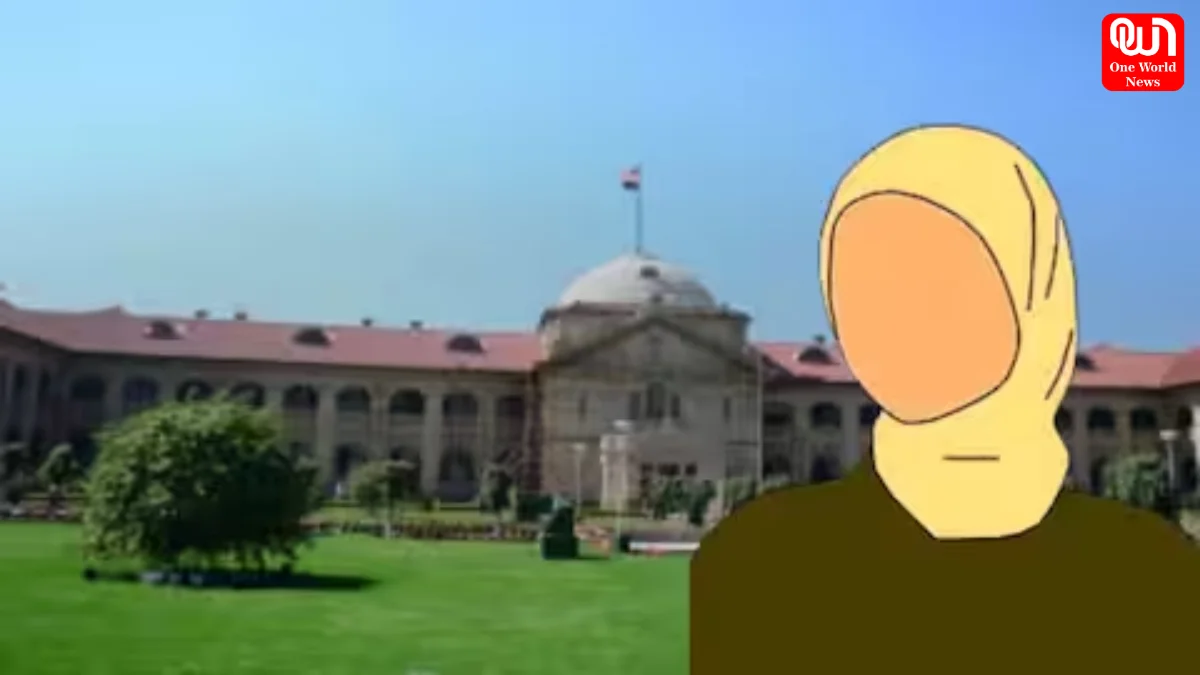
Allahabad High Court Hijab Ruling: Court Rejects Muslim Student’s Plea To Wear Headscarf With School Uniform, Citing Dress Code And Religious Practice
The Allahabad High Court hijab ruling has brought renewed attention to the debate surrounding religious attire, school uniforms and the rights of students in India. The court recently rejected a plea filed by a Muslim student seeking permission to wear a headscarf along with her prescribed school uniform.
The Division Bench of Justice J.J. Munir and Justice Indrajeet Shukla considered whether wearing a hijab could be treated as an essential religious practice and whether a student could insist on adding it to a uniform prescribed by a private educational institution. The court ultimately dismissed the petition, holding that sufficient material had not been placed before it to establish that wearing a headscarf was an essential religious practice of Islam.
What Did The Allahabad High Court Rule On Hijab?
The case involved a minor Muslim student from Tagore Public School in Attarsuiya, Prayagraj. She had studied at the school from Class VI to Class X while wearing a headscarf. After completing Class X, she sought admission to Class XI and requested permission to continue wearing the headscarf with the institution’s prescribed uniform.
The student argued that wearing the headscarf was an essential part of her religious practice and that preventing her from wearing it would affect her fundamental rights. The school, however, maintained that it followed a uniform dress code applicable to students and that allowing an additional item of clothing could undermine the policy.
The court rejected the petition and emphasized that an individual student cannot automatically claim a right to modify a school’s uniform policy.
Court’s Observation On Religious Practice
A central question before the court was whether wearing a hijab or headscarf constituted an essential religious practice protected under constitutional religious freedoms.
The Bench found that the petitioner had not provided sufficient factual or authoritative religious material demonstrating that wearing a headscarf inside the classroom was obligatory to such an extent that not wearing it would fundamentally alter or jeopardize her faith. The court described the assertion of essential religious practice as unsupported by an adequate factual and legal foundation.
The ruling also referred to previous decisions from different High Courts concerning hijab and educational dress codes. The Bench considered the Karnataka High Court’s Full Bench judgment particularly relevant and described it as persuasive authority, while noting that the Supreme Court has not yet delivered a final authoritative ruling resolving the issue after a split verdict.
School Uniform And Dress Code
The judgment places considerable emphasis on the purpose of a school uniform. According to the court, a uniform can promote discipline, equality among students, institutional identity and a common educational environment.
The Bench observed that where a dress code is uniform, bona fide, non-discriminatory and designed to maintain discipline and institutional identity, determining the prescribed uniform primarily falls within the school’s domain.
This reasoning is significant for the wider discussion around Hijab ban policies. The ruling was not framed as a nationwide prohibition on hijab in every educational institution. Instead, it dealt with the particular circumstances of the petitioner and the uniform policy of the school involved in the case.
Why Previous Permission Did Not Create A Right
The student also pointed out that she had previously worn a headscarf at the same school without objection. The court, however, held that previous non-enforcement of a dress code did not create a permanent or enforceable right to continue wearing an additional item of clothing.
The Bench reasoned that a school may decide to enforce its existing uniform policy more strictly at a later stage. Therefore, the fact that the student had previously worn the headscarf without objection did not prevent the institution from enforcing its prescribed dress code.
Religious Freedom And Education
The ruling highlights the continuing legal tension between religious practice, institutional rules and access to education. Students may have religious and constitutional concerns regarding their appearance, while educational institutions may also establish reasonable rules governing uniforms and discipline.
The Allahabad High Court’s decision focuses on the specific legal question presented before it: whether the student had established an enforceable right to add a headscarf to the school’s prescribed uniform. The court concluded that she had not established such a right in the circumstances of the case.
Read more: Three Newborns Burnt To Death As Ventilator Explodes Inside NICU At Amravati Hospital
Does The Ruling Mean Hijab Is Banned Across India?
The decision should not be interpreted as a blanket Hijab ban across all schools and colleges in India. The judgment concerned a particular student, a particular private school and its prescribed dress code.
The court’s reasoning was that a student cannot compel an institution to alter or relax a uniform policy when the policy is uniformly applied, non-discriminatory and intended to serve legitimate institutional purposes. The broader legal position regarding hijab and religious attire continues to involve constitutional questions and decisions from different courts.
Impact On Students And Schools In India
The Allahabad High Court hijab ruling could become an important reference point in discussions about school dress codes and religious attire. For schools, the decision reinforces the importance of having clearly defined and consistently applied uniform policies.
For students, the ruling demonstrates that invoking religious freedom alone may not be sufficient to obtain an exemption from an institutional dress code. Where a student seeks an exception on the basis of an essential religious practice, the court may require an appropriate factual and legal foundation supporting that claim.
At the same time, the decision does not eliminate the broader debate over religious expression, individual identity, equality and educational access in India.
Conclusion
The Allahabad High Court’s latest decision has added another significant chapter to India’s continuing debate over Hijab, school uniform, religious practice and education. The court rejected the Muslim student’s plea to wear a headscarf with her prescribed uniform after finding insufficient material to establish it as an essential religious practice in the circumstances presented.
The judgment also emphasized that a fair, uniform and non-discriminatory dress code can fall within the authority of an educational institution. While the ruling has generated discussion about religious freedom and student rights, its practical effect should be understood within the specific facts and legal issues considered by the court.
We’re now on WhatsApp. Click to join.
Like this post?
Register at One World News to never miss out on videos, celeb interviews, and best reads.