
Robert Goddard Day: Celebrating the Father of Modern Rocketry
Robert Goddard Day honors the scientist whose pioneering rocket research made space exploration and modern rocketry possible.

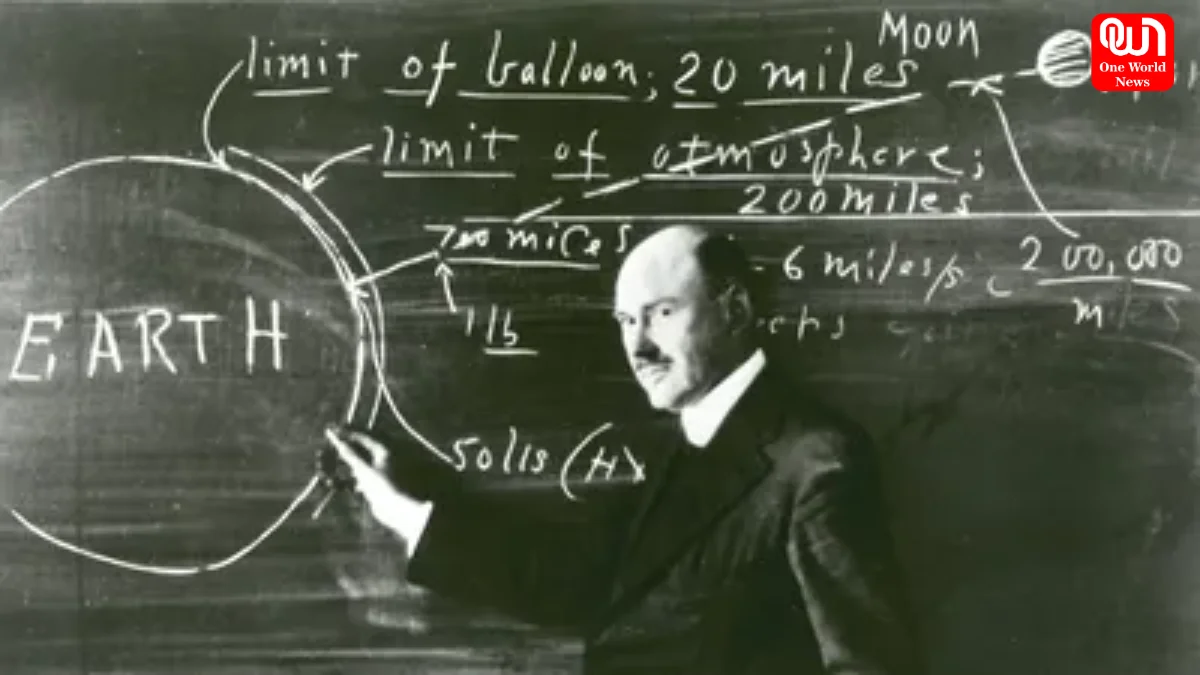
Robert Goddard Day: Honoring the Visionary Scientist Who Laid the Foundation of Modern Rocket Science
Observed on March 16, Robert Goddard Day commemorates the birth anniversary of one of the most influential scientists in history — a man whose ideas transformed humanity’s relationship with space. Long before rockets reached the Moon or satellites orbited Earth, Robert Goddard imagined a future powered by scientific curiosity and fearless innovation.
Read more: Ranveer Singh Shares New Poster of Dhurandhar 2: “Ab Bigadne Ka Waqt Aa Gaya Hai”
Today, Robert Goddard Day serves as a tribute to the visionary mind that laid the groundwork for modern rocketry and space exploration.
Who Was Robert Goddard?
Robert Hutchings Goddard was an American physicist and engineer best known for developing the world’s first successful liquid-fueled rocket. Born in the late 19th century, he grew up fascinated by science and the possibility of space travel at a time when such ideas were considered unrealistic or even absurd.
Despite skepticism and limited support, Goddard pursued his research with quiet determination. His work would later become the foundation upon which modern space programs were built.
A Vision Ahead of Its Time
What made Goddard extraordinary was not just his technical skill, but his imagination. He believed rockets could travel beyond Earth’s atmosphere long before spaceflight became a reality. In an era dominated by conventional thinking, he explored concepts such as multi-stage rockets, gyroscopic stabilization, and controlled propulsion.
Many of these ideas were ridiculed in his lifetime. Yet decades later, they became essential components of space missions, proving that visionary thinking often precedes acceptance.
The First Liquid-Fueled Rocket
One of Goddard’s most groundbreaking achievements was launching the first liquid-fueled rocket in 1926. This innovation marked a turning point in rocket science. Unlike solid-fuel rockets, liquid propulsion allowed for greater control, efficiency, and power — features that remain critical in modern spaceflight.
This achievement alone secured his place in scientific history, but it was only one part of a much larger legacy.
Challenges and Lack of Recognition
Despite his achievements, Goddard faced persistent challenges. Funding was limited, public understanding was low, and media criticism was common. His work was often misunderstood, and he worked in relative isolation for much of his career.
Robert Goddard Day also serves as a reminder of how innovators are sometimes overlooked during their own lifetimes. Recognition for Goddard’s contributions largely came after his death, when space exploration finally caught up with his ideas.
Impact on Modern Space Exploration
The influence of Goddard’s research is undeniable. His work directly influenced later developments in missile technology, satellite launches, and space missions. Engineers and scientists who worked on early space programs drew heavily from his research notes and experiments.
From lunar landings to deep-space probes, the principles Goddard established continue to guide aerospace engineering today. Robert Goddard Day celebrates this lasting impact on humanity’s journey beyond Earth.
Why Robert Goddard Day Matters Today
In a world increasingly shaped by science and technology, Robert Goddard Day highlights the importance of curiosity, persistence, and long-term thinking. Goddard’s story reminds us that transformative ideas often face resistance before they are embraced.
The day also inspires students and young scientists to pursue innovation, even when results are not immediate. Goddard’s life proves that meaningful progress often requires patience and belief in one’s vision.
Inspiring Future Generations
Educational institutions and science organizations use Robert Goddard Day to promote interest in STEM fields. Discussions, lectures, and educational programs focus on his contributions and the broader importance of scientific research.
By remembering Goddard, we encourage future generations to dream boldly and explore the unknown — just as he did.
Read more: Mardaani 3 Box Office Slows Down After Weekend Momentum
A Legacy That Reaches the Stars
Robert Goddard may not have lived to see humans walk on the Moon, but his ideas made such achievements possible. His legacy extends far beyond his lifetime, reaching into every rocket launch and space mission conducted today.
Robert Goddard Day is more than a remembrance — it is a celebration of human imagination, perseverance, and the power of science to reshape the future.
As we look toward deeper space exploration and new frontiers, we do so on a path first charted by a man who dared to believe that Earth was not the limit.
We’re now on WhatsApp. Click to join.
Like this post?
Register at One World News to never miss out on videos, celeb interviews, and best reads.