


Fast-moving newsrooms and lifestyle desks build dozens of visual banners, article thumbnails, and short social clips before an evening editorial package goes live. When creative teams have to produce responsive graphics while maintaining brand consistency, relying on a unified AI API prevents the chaotic scramble of coordinating across separate vendor accounts, mismatched rate limits, and conflicting credentials right before the publication lock.
The operational risk in daily digital publishing is rarely a shortage of cutting-edge models. The real breakdown happens when a single vendor service degrades, causing an entire production run of web thumbnails or companion reels to stall. SeeAPI provides an API gateway that unifies visual generation and provider routing behind a single endpoint, allowing editorial desks to keep turnaround times predictable even during peak traffic hours.
The Hidden Cost Of Fragmented Model Accounts
Modern lifestyle and news portals no longer publish static text alone. A single feature story on digital trends or seasonal style now demands a hero landscape banner, an eye-catching vertical thumbnail for mobile readers, and a short looping video clip for social feeds. To source these assets, media teams often set up individual accounts across multiple generative platforms. On paper, having direct access to several specialized models sounds like flexibility. In the daily newsroom workflow, it creates administrative drag and technical fragility.
Each standalone vendor requires its own billing cycle, separate usage quotas, distinct error codes, and unique API payload structures. When an editorial assistant needs to adjust an image prompt or regenerate a background element, they must juggle multiple browser dashboards or maintain custom adapter scripts. If one provider experiences a sudden latency spike or throttles requests during a breaking news rush, editors are forced to abandon their workflow, track down alternate logins, and rebuild prompt templates from scratch.
Production Friction Across Multiple Billing Dashboards
Managing distinct vendor balances introduces operational waste that distracts creative staff from narrative quality. Subscriptions expire on different calendar days, and prepaid credit pools frequently lock out team members right when an urgent graphic needs rendering. When finance requires reconciled invoicing across half a dozen credit card statements, the true cost of asset generation doubles in accounting overhead alone.
Consolidating requests through an aggregated gateway removes the need to fund separate micro-accounts. Editorial leadership can allocate a centralized budget, track total resource consumption across departments, and ensure that graphic designers always have access to generation pipelines without waiting for administrative top-ups.
Inconsistent Asset Proportions And Format Failures
A frequent failure mode in high-velocity desks occurs when assets pass initial prompt testing but distort under production cropping. A banner generated through an external interface might look vibrant on a wide display, yet when resized for mobile viewports, focal objects bleed off-center and typographic elements warp into unreadable artifacts. When writers test prompts in siloed playgrounds without unified parameter validation, production engineers spend hours manually reframing outputs.
Standardizing generation parameters through dedicated programmatic calls guarantees that image aspect ratios, seed locks, and style references remain identical across repeated runs. That discipline ensures that an illustrated concept generated for an article header can be faithfully translated into vertical social teasers without introducing bizarre visual anomalies.
Automated Fallback Keeps Publication Schedules Intact
The defining technical bottleneck in commercial generation is availability. Standard foundation model endpoints occasionally return timeout errors or throttle high-concurrency requests without warning. When an editor is racing against a publishing cutoff, waiting twenty minutes for a stalled queue means missing the peak reader engagement window.
SeeAPI tackles this vulnerability through automated provider routing. Rather than binding an entire application or workflow to a single external host, the platform monitors response health and routes incoming requests through resilient failover paths. For instance, when generating high-fidelity video through Veo 3.1 Lite, the system sets SeeAPI as the default provider with a 99.8 percent success rate and roughly 18-second turnaround, while keeping Replicate configured as an automated backup at a 98.5 percent success rate and approximately 22-second latency.
When the primary provider encounters network congestion or unexpected downtime, the Auto switch protocol automatically reroutes the task to the secondary pipeline. The creative desk does not need to rewrite payload parameters, alter environment keys, or halt their production line. The asset completes, the publishing queue advances, and editorial deadlines remain secure.
Read More: How to Remove Personal Information from Google Search
Integrating Visual Workflows Into Daily Operations
Integrating a programmatic generation gateway into a digital newsroom requires clear division between automated rendering and human editorial review. The objective is not to remove human judgment from visual design, but to eliminate repetitive manual configuration. Creative leads establish validated style parameters, while automated pipelines handle routine scaling and variations.
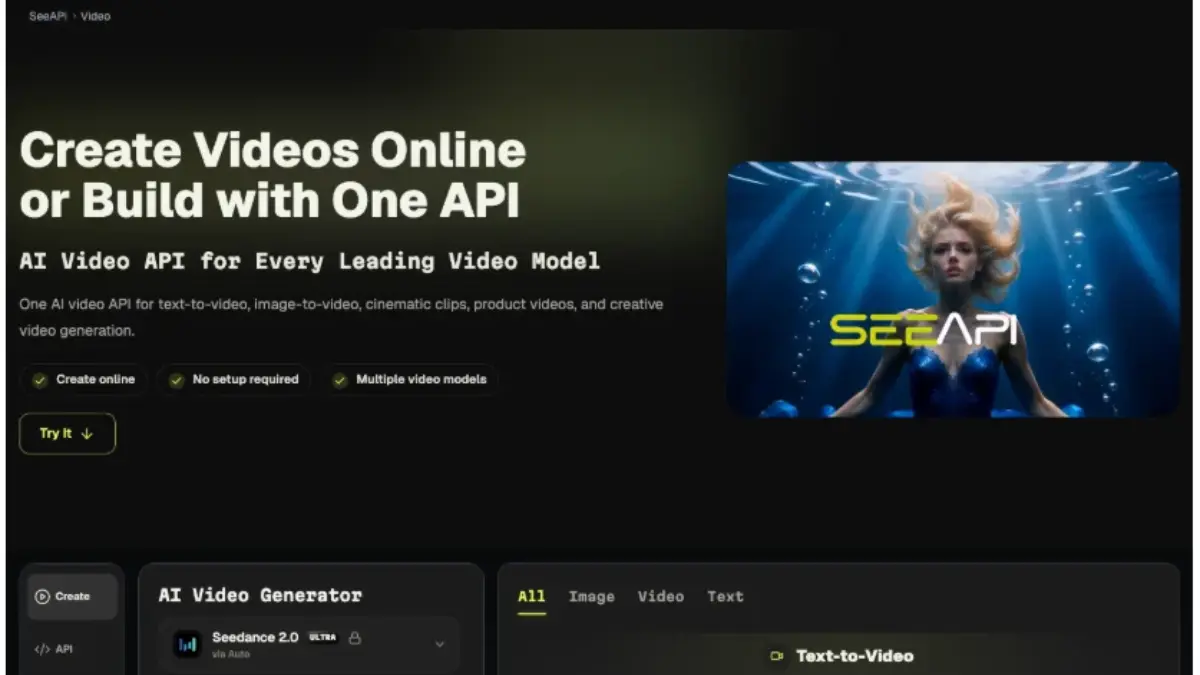
When developers hook content management systems directly into a robust AI Image API, reporters and section editors can generate draft graphics that match publication guidelines directly inside their familiar publishing tools. A structured API integration brings predictability to what was previously an ad-hoc and disjointed process.
Three Essential Stages For Production Integration
- Credential Configuration And Key Provisioning: Generate a secure workspace token and establish environment-level credentials, ensuring individual team members do not handle unencrypted secret keys across third-party web forms.
- Endpoint Selection And Parameter Locking: Select designated generation endpoints—such as Nano Banana 2 for high-speed editorial illustrations—and lock aspect ratio, negative prompt filters, and style references within centralized request templates.
- Automated Failover And Asset Retrieval: Submit generation jobs through the unified gateway with asynchronous polling, enabling automated retry on fallback routes before storing finalized media into the editorial storage bucket.
Establishing these three steps ensures that editorial staff focus purely on evaluating content relevance and layout aesthetics, rather than troubleshooting connection errors or modifying header authentication schemes.
Comparing Multi Account Workflows Against Unified Gateway Infrastructure
Before standardizing on a visual generation gateway, engineering and creative managers should compare standard multi-account workflows against a unified API infrastructure across core operating criteria.

| Operating Criteria | Fragmented Multi-Vendor Subscriptions | Unified SeeAPI Gateway Infrastructure || — | — | — || Account Governance | 5+ vendor portals with individual logins | Single administrative dashboard and key management || Outage Resilience | Pipeline halts completely if provider fails | Automated failover routing (e.g. 99.8% primary to 98.5% backup) || Credit Flexibility | Monthly allowances expire across separate accounts | Pooled annual credits that never expire || Endpoint Maintenance | Multiple distinct SDKs and parameter structures | Unified request schema across image and video models || Latency Predictability | High variance during peak provider demand | Intelligent routing optimizes for lowest queue times |
This side-by-side comparison illustrates why agile media organizations prioritize consolidated gateways. The efficiency gain is not merely about saving a few dollars per generation; it is about protecting editorial uptime and eliminating points of failure in the publishing pipeline.
Practical Takeaways For Digital Publishers And Editorial Leaders
Adopting an API gateway is particularly beneficial for online publications, digital agencies, and syndication desks producing high volumes of visual content under strict timelines. Organizations that depend on timely story releases cannot afford to lose an entire afternoon to API outages or authentication disputes.
For independent creators or occasional bloggers who generate only one or two images per month, direct web interfaces with basic subscriptions may still suffice. But when team scalability, redundant provider availability, and non-expiring credit reserves are essential to keeping publishing schedules on track, SeeAPI delivers a practical and resilient foundation for creative production.
We’re now on WhatsApp. Click to join.
Like this post?
Register at One World News to never miss out on videos, celeb interviews, and best reads.