
Satellite-to-Phone Technology: Will Smartphones Work Without Mobile Towers?
Explore how Direct to Cell and Satellite Phone Connectivity could connect smartphones without mobile towers and transform global communication.

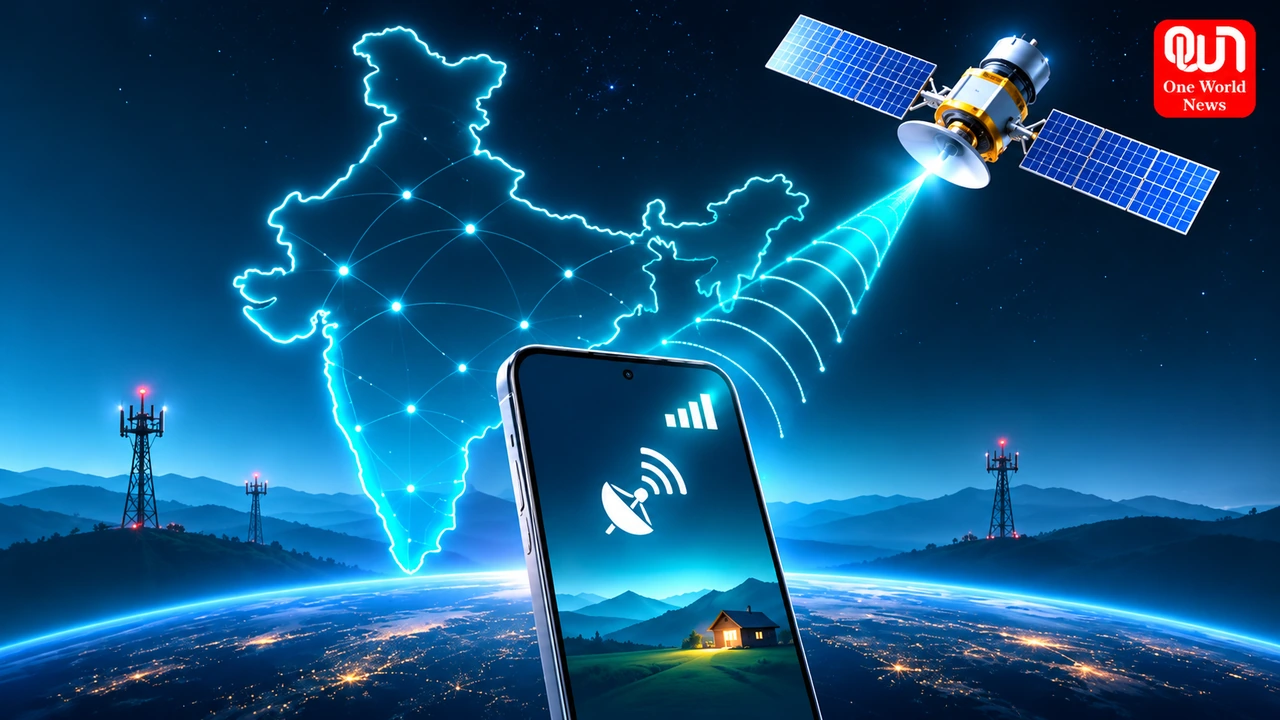
Satellite-to-Phone Technology Explained: How Direct to Cell and Satellite Phone Connectivity Will Change the Future of Smartphones
Satellite-to-phone technology is a communication system that allows smartphones to connect directly with satellites orbiting Earth. Unlike traditional mobile networks, which depend on ground-based towers, this technology uses satellites to provide connectivity in areas where mobile signals are unavailable.
It is also known as Direct-to-Device (D2D) or Direct to Cell technology. The main objective is to reduce network coverage gaps and make communication possible in remote locations.
For example, someone travelling through a mountain region or working in a remote village could potentially send messages even without a nearby mobile tower.
How Does Direct to Cell Technology Work?
Direct to Cell technology uses low Earth orbit (LEO) satellites that operate much closer to Earth than traditional geostationary satellites. These satellites are equipped with specialised antennas that communicate with compatible smartphones.
The process works in the following steps:
-
Smartphone sends a signal: The phone transmits a signal when the user tries to send a message or access a supported service.
-
Satellite receives the signal: A satellite travelling above the user captures the signal.
-
Signal reaches a ground station: The satellite transfers the information to a ground gateway.
-
Telecom network processes the request: The gateway connects with the partnering mobile operator’s network.
-
Communication is delivered: The message or supported data reaches the intended destination.
This process allows satellites to act like mobile towers in space and extend network coverage beyond traditional infrastructure.
Will Smartphones Work Without Mobile Towers?
Yes, compatible smartphones can work without traditional mobile towers through satellite connectivity. However, the availability of this service depends on the smartphone model, telecom operator, satellite provider, subscription, and country.
Read more: CBSE Releases 2027 Board Exam Date Sheet; Exams Begin 16th February
Users may be able to send messages, access selected applications, or use other supported communication features when conventional mobile networks are unavailable.
However, satellite connectivity does not mean that every smartphone can access unlimited internet or make regular calls anywhere on Earth. Service capabilities vary between providers.
The technology is designed to complement existing 4G and 5G networks rather than completely replace mobile towers.
Major Benefits of Satellite Phone Connectivity
Satellite Phone Connectivity could transform how people communicate, especially in locations with limited mobile infrastructure.
1. Connectivity in Remote Locations
People living or travelling in mountains, forests, deserts, and rural areas often experience network problems. Satellite connectivity could help improve communication in these locations.
2. Emergency Communication
Natural disasters such as floods, earthquakes, and cyclones can damage mobile towers. Satellite networks could provide an alternative communication option when traditional infrastructure stops working.
3. Better Travel Experiences
Hikers, travellers, explorers, and people working in isolated locations could benefit from additional connectivity without depending entirely on nearby mobile towers.
4. Improved Network Coverage
Telecom companies could extend their coverage to locations where installing traditional mobile towers is expensive or difficult.
5. Support for Connected Devices
Satellite networks could also support Internet of Things (IoT) devices used in agriculture, transportation, logistics, and industrial operations.
GSMA+1
What Are the Challenges of Satellite-to-Phone Technology?
Despite its advantages, satellite-to-phone technology still faces several challenges.
-
Device compatibility: Not every smartphone supports direct satellite connectivity.
-
Network availability: Services depend on satellite coverage and telecom partnerships.
-
Signal limitations: Buildings, mountains, and dense physical obstacles can affect connectivity.
-
Internet speed: High-speed internet may not be available through every satellite service.
-
Regulatory approval: Satellite operators need appropriate permissions to provide services in different countries.
-
Service costs: Subscription charges and commercial availability may vary between providers.
These challenges need to be addressed before satellite connectivity becomes a common feature across smartphones.
Is Satellite-to-Phone Technology Available in India?
India is an important market for satellite communication because several remote and geographically challenging regions need better connectivity.
As of January 2026, the Department of Telecommunications had issued satellite communication authorisations to three companies: OneWeb India Communications, Jio Satellite Communications, and Starlink Satellite Communications.
However, satellite communication authorisation should not be confused with the commercial launch of Direct to Cell services for ordinary smartphones. Consumers should check the latest operator announcements and regulatory approvals before expecting this feature on their devices.
Press Information Bureau
What Is the Future of Smartphones Without Mobile Towers?
The future of smartphones could involve a combination of traditional mobile networks and satellite communication. Mobile towers will continue supporting high-speed connectivity in cities, towns, and populated areas, while satellites could provide additional coverage in remote locations.
With improvements in satellite technology, users may eventually experience better messaging, voice communication, internet access, and emergency services beyond conventional network coverage.
This development could also create new opportunities for telecom companies, smartphone manufacturers, and satellite technology providers.
Conclusion
Satellite-to-phone technology is changing the future of mobile communication. Through Direct to Cell and advanced Satellite Phone Connectivity, compatible smartphones can potentially connect to satellites without depending on traditional mobile towers.
Although challenges involving network speed, device compatibility, regulations, and availability remain, this technology has significant potential. Rather than replacing existing mobile networks, satellites are expected to strengthen them and reduce connectivity gaps.
In the coming years, staying connected in remote locations could become easier, making smartphone communication more accessible across the world.
We’re now on WhatsApp. Click to join.
Like this post?
Register at One World News to never miss out on videos, celeb interviews, and best reads.