Why Do Some Women Experience Dry Eye Symptoms During Menopause?
Menopause brings several changes to a woman’s body, but discomfort in the eye is one of the less expected ones.

Menopause brings several changes to a woman’s body, but discomfort in the eye is one of the less expected ones. You might notice a burning sensation, frequent watering or a gritty feeling in your eyes, even if your daily habits have not changed. These symptoms can be associated to changing hormone levels, particularly fluctuations in oestrogen and androgens.
These hormones also play a role in keeping the eyes lubricated. Women who have had LASIK surgery may notice dry eye symptoms too. In this regard, it will be beneficial to understand what is causing the discomfort. Let us look at how menopause affects tear production.
How Do Hormonal Changes During Menopause Affect Tear Production?
Hormone levels change during menopause. Oestrogen and androgens play a part in the way the tear-producing glands work. When these levels fluctuate, the eyes may not produce enough tears, or the tears do not stay on the surface for long enough.
Changes in the Meibomian Glands
The meibomian glands are found along the edges of the eyelids. They release an oily substance that forms the outer layer of the tear film. When this layer is too thin or does not work properly, tears evaporate more quickly.
During menopause, changes in hormone levels can affect the oil these glands release. Its quantity or quality may decrease. Tears then dry up sooner, leaving the eyes feeling rough, dry or irritated.
Changes in Tear Production
The lacrimal glands, located above the eyes, produce the watery part of tears. Hormonal changes can affect their activity as well. When these glands produce fewer tears, the eye surface does not get enough moisture. Moreover, some women notice that their eyes feel dry even when they have not spent much time looking at screens or working outdoors.
Why Does the Tear Film Become Unstable?
A healthy tear film has three layers: oil, water and mucus. The oil slows down evaporation, the watery layer keeps the eye moist, and the mucus helps tears spread across its surface. All three need to work together.
If hormone-related changes affect any of these layers, the tear film may break up sooner than usual. The eyes can then feel dry or irritated. Some women also experience blurred vision, burning or watering. Excessive watering can seem unusual, but it can happen when irritation triggers the eyes to produce extra tears.
If you are researching LASIK surgery cost, remember to factor in a pre-surgery eye assessment too, as existing dry eye symptoms need to be evaluated before the procedure.
What Are the Signs of Dry Eye During Menopause?
Dry eye can show up in different ways. For some women, the discomfort lasts through much of the day. Others notice it mainly when reading, using a phone or spending time in an air-conditioned room. Common symptoms include-
- Your eyes may feel as though they are burning, particularly towards the end of the day.
- You may feel as if dust or a small grain of sand has entered your eye. The sensation can remain even after blinking.
- The eyes may become red or itchy as the surface gets irritated.
- Dryness can make the eyes water more than usual. This happens when irritation triggers a reflex response that produces extra tears.
- Your vision may become hazy for short periods. Observe this especially when reading or looking at a screen. It may clear after blinking.
- Sunlight, bright indoor lights or oncoming headlights may feel uncomfortable.
These symptoms can come and go, and hence, you may not experience all of them at once. If they keep returning or start affecting your daily activities, an eye examination can help identify whether dry eye is the cause.
How Can Women Manage Dry Eye During Menopause?
A few changes at home may help make your eyes more comfortable. Lubricating eye drops can replace moisture on the eye surface. If you need them frequently, ask your eye doctor whether lipid-containing artificial tears would be suitable.
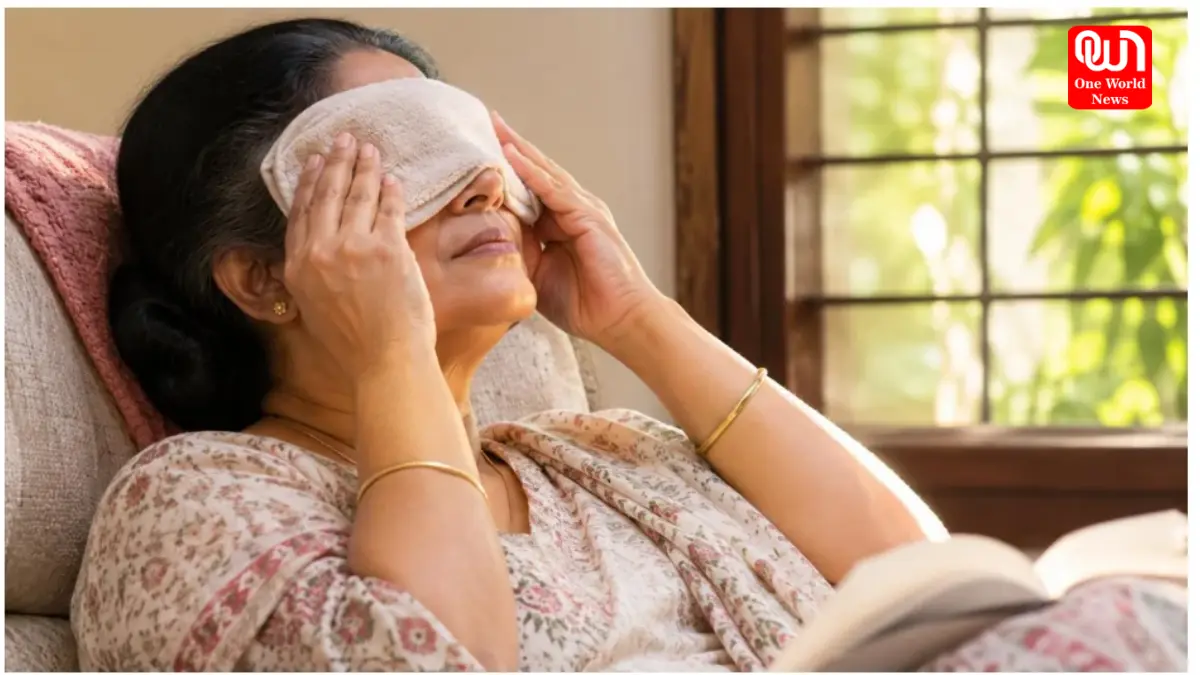
- A warm compress placed over closed eyelids for 8-10 minutes can help soften the oil in the meibomian glands. You can also clean your eyelids gently using products recommended for eye hygiene.
- Screen habits matter too. Take short breaks when working on a computer or using your phone. Try to blink fully and regularly. If the air inside your home feels dry, a humidifier may help.
- Food choices can also support general eye health. Include omega-3 sources such as fish, flaxseeds and walnuts in your meals. If contact lenses have become uncomfortable, speak to your eye doctor about other options.
Conclusion
Menopause can bring changes that you may not immediately connect with your eyes. If dryness, watering or irritation has become a regular problem, do not dismiss it as just another part of getting older. An eye examination can help identify the cause and guide treatment. If you are considering LASIK surgery, discuss any existing dry eye symptoms with your ophthalmologist before making a decision.
We’re now on WhatsApp. Click to join.
Like this post?
Register at One World News to never miss out on videos, celeb interviews, and best reads.