Understanding AZ-104 from an Educational Perspective: Foundations of Cloud Administration
Learn the fundamentals of Microsoft AZ-104, including Azure administration, cloud infrastructure, identity management, storage, networking, and governance.

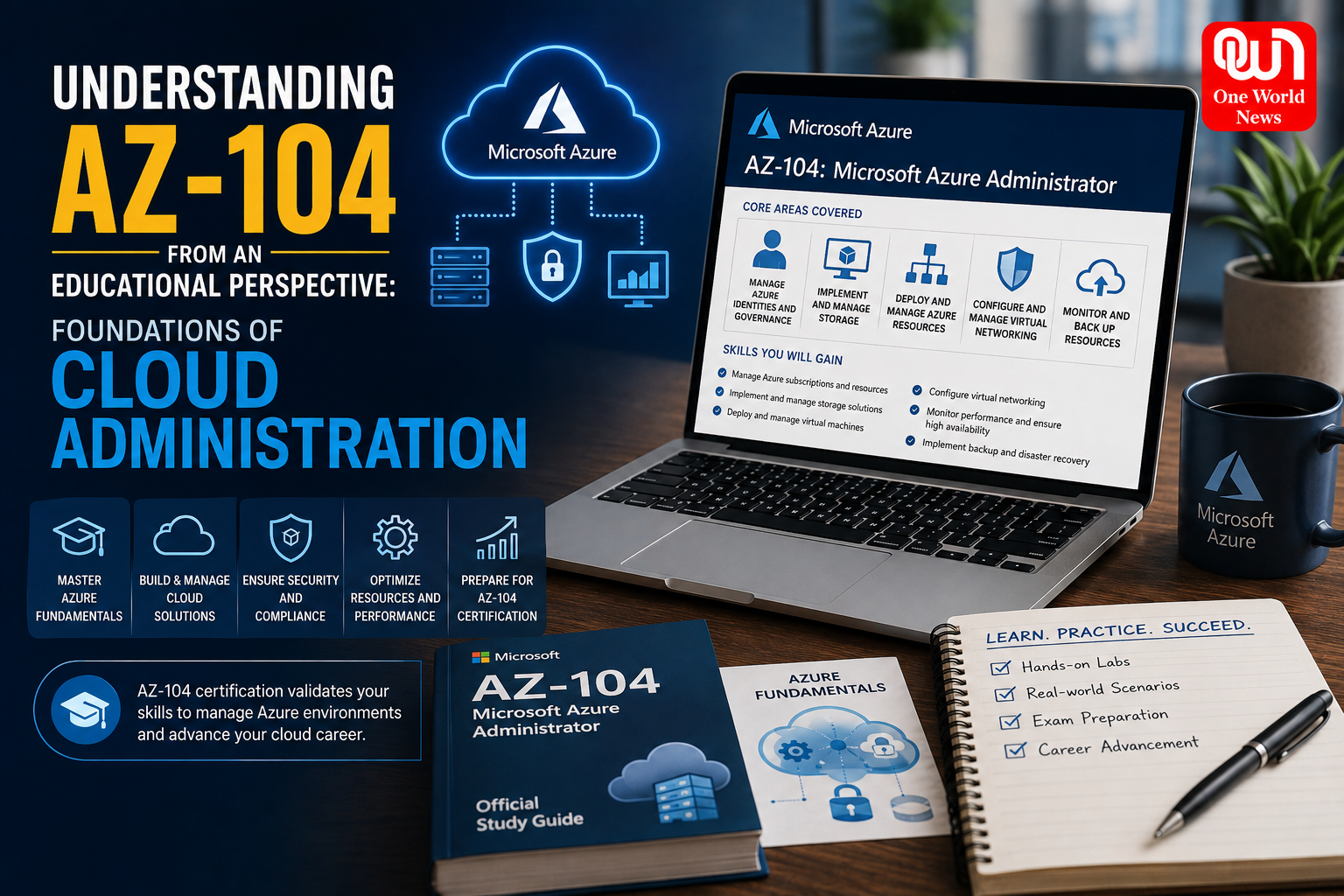
Cloud computing has become one of the most influential technologies in today’s digital world.
Organizations across industries increasingly rely on cloud platforms to store information, deploy applications, manage infrastructure, and support collaboration. As businesses continue their digital transformation, understanding the principles of cloud administration has become an essential educational objective for students, educators, and technology professionals.
From an educational perspective, AZ-104 introduces learners to the concepts of cloud administration rather than focusing on certification preparation or examination strategies. Educational discussions commonly include cloud infrastructure, virtual networking, identity management, storage solutions, resource monitoring, governance, security, and operational management. Studying these concepts helps learners understand how cloud environments are organized and maintained while encouraging analytical thinking, responsible technology practices, and continuous learning.
Learning about cloud administration also develops technical literacy, systems thinking, and problem-solving skills that are valuable across numerous professional disciplines.
Understanding Cloud Administration
Cloud administration involves managing cloud-based resources, services, and infrastructure to ensure reliable, secure, and efficient operations.
Educational discussions commonly include:
- Cloud infrastructure
- Resource management
- Virtual machines
- Storage services
- Networking
- Operational monitoring
These concepts help learners understand the responsibilities involved in maintaining modern cloud environments.
The Evolution of Cloud Computing
Cloud computing has evolved dramatically over the past two decades.
Organizations previously depended on physical servers located within local data centers. Modern cloud platforms provide scalable computing resources, centralized management, flexible storage, and global accessibility that support organizations of every size.
Studying this technological evolution helps learners appreciate why cloud administration has become a critical area of information technology education.
Cloud Infrastructure Fundamentals
Cloud infrastructure provides the technological foundation for digital services.
Educational discussions commonly include:
- Virtual computing
- Cloud services
- Resource allocation
- Infrastructure planning
- Scalability
- Service availability
These principles explain how organizations build flexible and efficient computing environments.
Identity and Access Management
Managing digital identities is an important aspect of cloud administration.
Educational concepts commonly include:
- Authentication
- Authorization
- Identity protection
- Role-based access
- Multi-factor authentication
- User management
These topics demonstrate how organizations provide secure access to cloud resources.
Storage Technologies
Reliable storage systems support nearly every cloud application.
Educational discussions commonly examine:
- Object storage
- File storage
- Managed disks
- Backup strategies
- Data availability
- Information management
Understanding storage concepts helps learners appreciate how digital information is securely maintained.
Networking Principles
Cloud networking enables communication between digital resources.
Educational discussions commonly include:
- Virtual networks
- Secure communication
- Traffic routing
- Network segmentation
- Internet connectivity
- Communication protocols
Networking principles explain how cloud systems exchange information efficiently and securely.
Resource Monitoring
Continuous monitoring supports stable cloud operations.
Educational discussions often explore:
- Performance monitoring
- Activity logging
- Resource utilization
- Operational visibility
- Alerts
- System health
These concepts demonstrate how organizations observe cloud environments and maintain dependable services.
Governance and Compliance
Responsible cloud administration extends beyond technical knowledge.
Educational discussions commonly include:
- Governance frameworks
- Organizational policies
- Compliance standards
- Risk management
- Accountability
- Professional responsibility
These concepts encourage learners to understand the importance of responsible technology management.
Security in Cloud Administration
Security remains one of the most important aspects of cloud management.
Educational topics commonly include:
- Encryption
- Data protection
- Secure communication
- Identity security
- Privacy
- Threat awareness
These principles help learners understand how organizations safeguard digital resources.
Students, educators, and technology professionals interested in expanding their understanding of cloud infrastructure, networking, storage, identity management, security, and governance can explore trusted educational institutions, official documentation, academic publications, and research resources featuring questions here. These materials are most beneficial when used to deepen conceptual understanding and encourage continuous learning.
Skills Developed Through Cloud Administration Education
Studying cloud administration supports the development of valuable professional competencies.
Examples include:
- Critical thinking
- Analytical reasoning
- Communication
- Problem-solving
- Collaboration
- Adaptability
These transferable skills complement technical expertise across many industries.
Career Opportunities
Educational knowledge related to cloud administration supports numerous professional pathways.
Examples include:
- Cloud Administrator
- Systems Administrator
- Cloud Engineer
- Infrastructure Engineer
- IT Operations Specialist
- Technology Consultant
- DevOps Professional
- Technical Support Engineer
As organizations continue expanding their cloud environments, professionals with cloud administration knowledge remain in high demand.
Applications Across Industries
Cloud administration supports digital transformation across many sectors.
Examples include:
- Healthcare
- Education
- Banking
- Government
- Manufacturing
- Retail
- Telecommunications
- Scientific Research
These industries depend on reliable cloud infrastructure to improve efficiency, collaboration, and service delivery.
Frequently Asked Questions (FAQs)
What educational topics are associated with AZ-104?
Educational discussions commonly include cloud infrastructure, resource management, storage technologies, networking, identity management, governance, monitoring, and cloud security.
Why is cloud administration important?
Cloud administration helps organizations manage digital resources efficiently while maintaining reliability, scalability, and security.
Why is identity management essential?
Identity management ensures that authorized individuals have secure access to cloud resources while protecting organizational information.
Why is monitoring important in cloud environments?
Monitoring helps organizations observe system performance, identify operational issues, and maintain reliable cloud services.
Why is continuous learning important in cloud technologies?
Cloud computing continues evolving through advances in automation, cybersecurity, artificial intelligence, networking, and distributed systems, making lifelong learning essential.
Can studying cloud administration concepts support future careers?
Yes. Educational knowledge of cloud administration provides a strong foundation for careers in cloud engineering, systems administration, infrastructure management, DevOps, technology consulting, and IT operations.
Conclusion
The educational concepts associated with AZ-104 provide learners with valuable insight into the principles that support modern cloud administration. By exploring cloud infrastructure, networking, storage technologies, identity management, governance, monitoring, and security, individuals develop a comprehensive understanding of contemporary cloud environments. As organizations continue expanding their use of cloud technologies, studying these concepts from an educational perspective encourages critical thinking, ethical responsibility, continuous learning, and professional growth while strengthening knowledge of cloud administration and digital infrastructure management.