Understanding PL-300: An Educational Overview of Data Analytics and Business Intelligence
Explore PL-300 concepts, including data analytics, business intelligence, Power BI, data visualization, and reporting fundamentals in this educational guide.

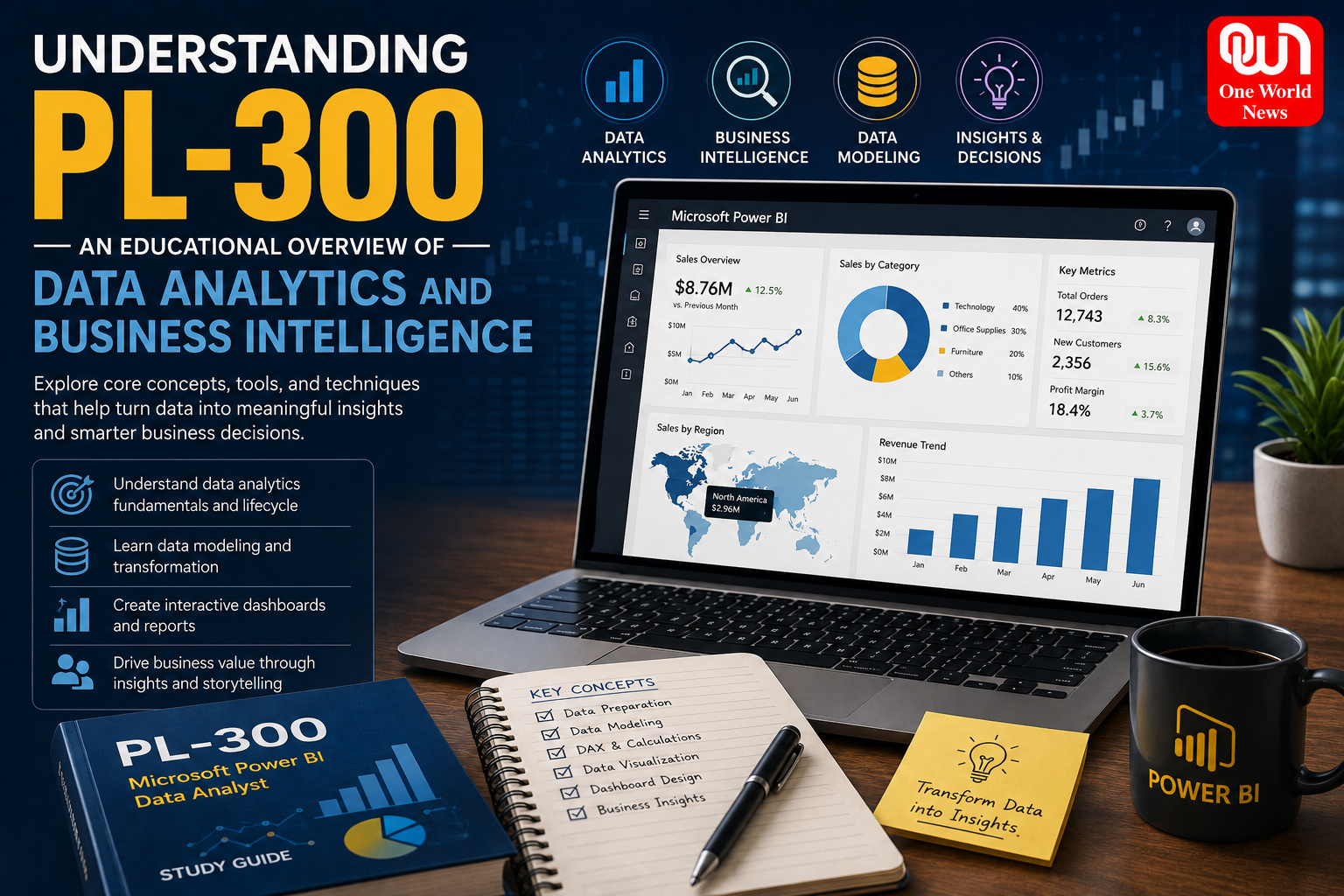
Data has become one of the most valuable resources in today’s digital society.
Organizations collect vast amounts of information from business operations, customer interactions, research activities, financial transactions, healthcare systems, and educational institutions. However, data alone has little value unless it can be interpreted, analyzed, and transformed into meaningful insights. This is why data analytics and business intelligence have become essential areas of modern education.
From an educational perspective, PL-300 represents a collection of concepts related to data analysis, visualization, reporting, and decision support rather than certification preparation or examination techniques. Studying the educational topics commonly associated with PL-300 helps learners understand how information is organized, interpreted, and communicated in ways that support informed decision-making. These concepts encourage analytical reasoning, critical thinking, and responsible data management while preparing learners to understand the growing importance of business intelligence in many industries.
Learning about data analytics also strengthens digital literacy and interdisciplinary knowledge across business, technology, healthcare, engineering, environmental science, and finance.
Understanding Data Analytics
Data analytics involves examining information to identify patterns, relationships, and meaningful trends.
Educational discussions commonly include:
- Data collection
- Data organization
- Information analysis
- Statistical thinking
- Trend identification
- Business intelligence
These concepts help learners understand how valuable insights are generated from structured and unstructured information.
The Evolution of Business Intelligence
Business intelligence has developed significantly over the past several decades.
Organizations once relied mainly on handwritten records and printed reports to evaluate business performance. Advances in computers, cloud platforms, databases, and visualization technologies introduced interactive dashboards and automated reporting systems that allow decision-makers to interpret information more efficiently.
Studying this evolution helps learners appreciate how technology has transformed organizational decision-making.
Data Collection and Quality
Reliable analysis begins with dependable information.
Educational discussions commonly include:
- Structured data
- Unstructured data
- Data quality
- Information accuracy
- Data consistency
- Data governance
Understanding these principles helps learners recognize why trustworthy information forms the foundation of effective analysis.
Data Modeling
Data modeling organizes information into logical structures.
Educational concepts commonly include:
- Tables
- Relationships
- Logical organization
- Information integration
- Data structures
- Efficient analysis
These concepts explain how different datasets can be connected to improve understanding and reporting.
Data Visualization
Visual presentation makes information easier to interpret.
Educational discussions often explore:
- Charts
- Graphs
- Dashboards
- Visual storytelling
- Comparative analysis
- Trend visualization
Visualization enables learners to communicate analytical findings clearly and effectively.
Business Intelligence Concepts
Business intelligence combines technology with analytical thinking.
Educational discussions commonly include:
- Organizational reporting
- Decision support
- Performance evaluation
- Strategic planning
- Operational analysis
- Information management
These principles demonstrate how organizations use data to improve planning and performance.
Responsible Data Management
Ethics plays an important role in analytics education.
Educational concepts commonly include:
- Privacy
- Transparency
- Accountability
- Data protection
- Fairness
- Responsible decision-making
Responsible data practices help ensure that information is managed ethically and securely.
Cloud Technologies in Analytics
Modern analytical systems frequently depend upon cloud computing.
Educational discussions commonly examine:
- Cloud infrastructure
- Data storage
- Distributed computing
- Resource scalability
- Digital collaboration
- Information accessibility
Cloud technologies make advanced analytical capabilities available to organizations worldwide.
Data Analytics Across Academic Disciplines
Data analysis contributes to many areas of education and research.
Examples include:
- Business
- Economics
- Healthcare
- Engineering
- Environmental Science
- Education
This interdisciplinary approach highlights the growing importance of analytical thinking across diverse professions.
Students, educators, researchers, and professionals interested in expanding their understanding of data analytics, business intelligence, visualization, data modeling, and responsible information management can view here.. Trusted universities, official documentation, academic journals, research publications, and educational organizations provide reliable resources that explain these concepts in greater depth.
Skills Developed Through Data Analytics Education
Studying data analytics supports the development of valuable professional competencies.
Examples include:
- Critical thinking
- Analytical reasoning
- Problem-solving
- Communication
- Attention to detail
- Decision-making
These transferable skills remain valuable across technical and non-technical careers.
Career Opportunities
Educational knowledge related to business intelligence supports numerous career pathways.
Examples include:
- Data Analyst
- Business Intelligence Analyst
- Reporting Specialist
- Business Analyst
- Data Consultant
- Information Manager
- Operations Analyst
- Technology Consultant
As organizations continue adopting data-driven strategies, professionals with analytical expertise remain highly sought after.
Applications Across Industries
Data analytics supports innovation across many sectors.
Examples include:
- Healthcare
- Banking
- Retail
- Manufacturing
- Government
- Education
- Telecommunications
- Scientific Research
These industries rely on analytical insights to improve efficiency, identify trends, optimize resources, and support informed decision-making.
Frequently Asked Questions (FAQs)
What educational topics are associated with PL-300?
Educational discussions commonly include data analytics, business intelligence, data visualization, reporting, data modeling, cloud technologies, and responsible data management.
Why is data analytics important?
Data analytics helps organizations interpret information, discover meaningful patterns, solve problems, and support evidence-based decision-making.
Why is visualization valuable?
Visualization transforms complex information into charts, graphs, and dashboards that improve understanding and communication.
Why is responsible data management important?
Responsible data practices promote privacy, transparency, fairness, accountability, and ethical handling of information.
Why is continuous learning important in analytics?
Analytics technologies continue evolving through advances in artificial intelligence, cloud computing, automation, and business intelligence, making lifelong learning essential.
Can studying PL-300 concepts support future careers?
Yes. Educational knowledge of data analytics provides a strong foundation for careers in business intelligence, reporting, consulting, finance, operations management, healthcare analytics, technology services, and research.
Conclusion
The educational concepts associated with PL-300 provide learners with valuable insight into the principles of modern data analytics and business intelligence. By exploring data collection, modeling, visualization, cloud technologies, responsible data practices, and analytical decision-making, individuals develop a comprehensive understanding of how information supports organizational success. As businesses, governments, and educational institutions continue embracing data-driven innovation, studying these concepts from an educational perspective encourages critical thinking, ethical responsibility, continuous learning, and professional growth while strengthening knowledge of one of the most influential fields in today’s digital economy.