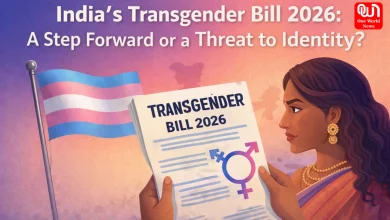
Transgender Rights Amendment Bill 2026: Key Changes and National Debate Explained
Transgender Rights Amendment Bill 2026 explained: key changes, rights impact, and why Transgender Rights Amendment Bill 2026 is debated nationwide.


Transgender Rights Amendment Bill 2026 – Key Changes, Legal Impact, Controversies, and Why It’s Sparking Nationwide Debate
As of 2026, the Transgender Rights Amendment Bill 2026 has emerged as one of the most debated legislative developments in the country. The bill aims to revise and expand existing transgender rights protections, but its provisions have triggered intense national discussion among activists, lawmakers, and citizens alike.
The Transgender Rights Amendment Bill 2026 builds upon earlier transgender protection laws by introducing structural, legal, and administrative changes. While the government presents it as a progressive step toward inclusion and equality, critics argue that certain provisions may undermine autonomy and fail to address ground realities faced by the transgender community.
Key Changes in the Transgender Rights Amendment Bill 2026
One of the most significant updates in the Transgender Rights Amendment Bill 2026 is the revised process for gender identity recognition. The bill proposes a more formalized certification system, which includes documentation and verification mechanisms. Supporters claim this ensures legal clarity, while opponents argue it creates barriers and violates the principle of self-identification.
Another major change is the expansion of welfare provisions. The bill outlines increased access to healthcare, education, and employment schemes specifically designed for transgender individuals. These include skill development programs, reserved opportunities in certain sectors, and dedicated healthcare policies.
Additionally, the Transgender Rights Amendment Bill 2026 introduces stricter penalties for discrimination and violence against transgender individuals. This includes clearer definitions of offenses and stronger enforcement mechanisms, which are intended to improve accountability.
Why the Bill Is Triggering National Debate
Despite its stated goals, the Transgender Rights Amendment Bill 2026 has sparked widespread debate due to concerns around implementation and inclusivity. One of the central issues is the certification requirement. Many activists believe that requiring official validation of gender identity contradicts global human rights standards that emphasize self-identification.
Another point of contention is the perceived gap between policy and practice. Critics argue that while the bill outlines strong protections on paper, past experiences show that enforcement remains inconsistent. Without proper infrastructure and sensitization at institutional levels, these legal provisions may not translate into real change.
The bill has also raised questions about consultation. Several advocacy groups claim that the transgender community was not adequately involved in drafting the amendments. This has fueled concerns that the law may not fully reflect the lived experiences and needs of those it intends to protect.
Read more: OWN Exclusive: Interview With Designer Akassh k aggarwal
Supporters’ Perspective
Supporters of the Transgender Rights Amendment Bill 2026 argue that it represents a necessary evolution of existing laws. They highlight the inclusion of structured welfare programs, clearer legal definitions, and stricter anti-discrimination measures as positive steps forward.
From a governance perspective, proponents believe that formal systems, such as certification, help streamline access to benefits and reduce misuse. They also emphasize that the bill brings transgender rights into mainstream policy discussions, which is crucial for long-term societal change.
Concerns Raised by Activists and Experts
On the other hand, activists and human rights experts have expressed serious reservations. The most prominent concern is that bureaucratic procedures could make it harder for transgender individuals to access their rights rather than easier.
There are also concerns about privacy and dignity. Mandatory verification processes may expose individuals to scrutiny, discrimination, or harassment. Experts warn that unless implemented with sensitivity and accountability, such measures could do more harm than good.
Furthermore, critics argue that the bill does not go far enough in addressing issues like housing discrimination, mental health support, and social stigma — all of which remain critical challenges.
The Bigger Picture
The debate around the Transgender Rights Amendment Bill 2026 reflects a larger societal conversation about identity, rights, and inclusion. It highlights the tension between legal structure and personal freedom, as well as the challenges of translating policy into meaningful change.
Read more: OWN Exclusive: Interview With Designer Akassh k aggarwal
In many ways, the bill is not just about legislation — it is about how a society chooses to recognize and respect diversity. The discussions it has sparked indicate a growing awareness of transgender issues, but also reveal how much work remains to be done.
What Happens Next
As the Transgender Rights Amendment Bill 2026 moves through legislative and public scrutiny, its final impact will depend on amendments, implementation strategies, and continued dialogue with stakeholders. The coming months are likely to shape not only the future of this bill but also the broader trajectory of transgender rights in the country.
For now, the Transgender Rights Amendment Bill 2026 stands at the center of a crucial national conversation — one that will influence policy, perception, and progress for years to come.
We’re now on WhatsApp. Click to join.
Like this post?
Register at One World News to never miss out on videos, celeb interviews, and best reads.