JAGO VOTER JAGO: 2008 CASH-FOR-VOTES SCAM – When Bundles Of Cash Were Displayed Inside The Indian Parliament
2008 CASH-FOR-VOTES SCAM: Discover why BJP MPs displayed ₹1 crore in Parliament, the political controversy and the court's verdict.


JAGO VOTER JAGO: 2008 CASH-FOR-VOTES SCAM Explained – How BJP MPs Displayed ₹1 Crore Inside Parliament During Manmohan Singh Government’s Trust Vote, Political Allegations, Investigation And Court Verdict
Imagine a situation where a debate is taking place inside the Indian Parliament, the government is fighting to save its majority, and suddenly, bundles of currency notes appear on the tables of the Lok Sabha. Sounds unbelievable, right? But this shocking incident actually happened in 2008 and became one of the most controversial political episodes in India’s parliamentary history.
The 2008 CASH-FOR-VOTES SCAM created a nationwide political storm after three BJP MPs displayed bundles of cash inside Parliament, alleging that they had been offered money in exchange for supporting the Congress-led government during a crucial trust vote.
The incident raised serious questions about political corruption, parliamentary ethics and the importance of protecting democracy.
But what exactly happened? Who was involved, and what happened to the investigation? Let’s understand the entire story.
How Did The 2008 Cash-For-Votes Controversy Begin?
The story goes back to July 2008, when Dr Manmohan Singh was serving as India’s Prime Minister and the Congress-led United Progressive Alliance (UPA) government was facing a major political challenge.
The controversy revolved around the India-US Civil Nuclear Deal, which had become a major point of disagreement between the government and its Left allies.
Opposing the agreement, the Left parties withdrew their support from the UPA government. This left the government facing a serious challenge to its parliamentary majority.
To continue in power, the Manmohan Singh government needed to win a confidence motion in the Lok Sabha.
The crucial voting was scheduled for July 22, 2008. However, before the political drama could settle, an unexpected incident shocked the entire country.
₹1 Crore Cash Displayed Inside Parliament
On July 22, 2008, three BJP MPs, Ashok Argal, Faggan Singh Kulaste and Mahavir Singh Bhagora, walked into the Lok Sabha with bags containing bundles of currency notes.
During the proceedings, they displayed the cash before Parliament, alleging that they had been offered money to vote in favour of the UPA government or abstain from voting.
The amount displayed was reportedly around ₹1 crore.
The dramatic incident immediately disrupted parliamentary proceedings and attracted nationwide attention.
The MPs claimed that they wanted to expose an alleged attempt to purchase political support and influence the outcome of the confidence motion.
The incident became popularly known as the Cash-for-Votes Scam or Cash-for-Vote Scandal.
Who Were The Key People Named In The Controversy?
As the investigation progressed, several political figures and individuals came under scrutiny.
Some of the prominent names associated with the controversy included:
- Amar Singh: The former Samajwadi Party leader was accused by investigators of having a role in the alleged conspiracy.
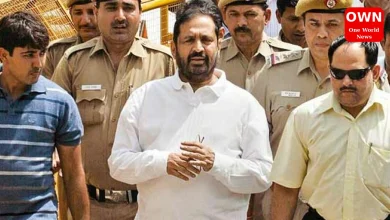
- Sudheendra Kulkarni: A former aide of senior BJP leader L.K. Advani, he was accused of allegedly masterminding the operation.
- Sanjeev Saxena: A former aide of Amar Singh whose name emerged during the investigation into the alleged delivery of money.
- Sohail Hindustani: A BJP activist who was also investigated in connection with the alleged operation.
- Ashok Argal, Faggan Singh Kulaste and Mahavir Singh Bhagora: The three BJP MPs who displayed the currency notes in Parliament.
It is important to remember that being named or investigated in a criminal case does not automatically establish guilt. The allegations against the individuals had to be examined through the legal process.
Parliamentary Committee And Police Investigation
Following the incident, the Lok Sabha Speaker constituted a seven-member inquiry committee on July 26, 2008, to investigate the allegations.
The committee examined the incident and submitted its report in November 2008, which was subsequently presented in Parliament.
Read more: ‘I Respect PM Modi’: Sam Pitroda Says It’s Congress’ Problem If It Objects To His Diwali Greetings
The inquiry did not conclusively establish that the money displayed in the House had been sent by the individuals accused of attempting to influence the MPs.
However, it recommended further investigation into certain individuals, including Sanjeev Saxena, Sohail Hindustani and Sudheendra Kulkarni.
The matter subsequently reached the Delhi Police, which conducted a criminal investigation.
In August 2011, the police filed a chargesheet naming several individuals in connection with the alleged conspiracy.
What Happened In The 2013 Court Verdict?
One of the biggest developments came on November 22, 2013, when a Delhi court discharged former Samajwadi Party leader Amar Singh, Sudheendra Kulkarni, Ashok Argal, Faggan Singh Kulaste, Mahavir Bhagora and Sohail Hindustani.
The court found insufficient evidence to proceed against them on the charges at that stage.
However, corruption charges were framed against Sanjeev Saxena, who was accused of being involved in the alleged delivery of money.
Later, in May 2015, Saxena was also discharged from the case.
Thus, the criminal proceedings did not result in convictions of the accused in this case.
Why Does The 2008 Cash-For-Votes Scam Still Matter?
The controversy remains an important chapter in Indian political history because it highlighted serious questions about parliamentary democracy and political accountability.
A government must prove its majority through the constitutional process. Allegations of bribery or attempts to influence elected representatives can weaken public confidence in democratic institutions.
The incident also demonstrated why independent investigations, transparent procedures and strong parliamentary ethics are essential.
For ordinary citizens, the biggest lesson is that democracy does not end after casting a vote. Citizens must continue to question their representatives and demand accountability.
JAGO VOTER JAGO: Your Vote, Your Power
The 2008 Cash-for-Votes controversy reminds us that every vote in a democracy carries enormous responsibility.
Whether it is a national election, state election or local election, voters should look beyond political slogans and promises. They should examine candidates’ records, integrity, public service and accountability.
After all, Parliament belongs to the people, and elected representatives are responsible for serving the people.
So, whenever elections arrive, ask questions, understand the issues and make informed decisions.
JAGO VOTER JAGO!
Because your vote is your power, your Parliament is your voice, and asking questions is your democratic right.
Stay connected with One World News for more stories that explain Indian politics, democracy, elections and important historical events.
We’re now on WhatsApp. Click to join.
Like this post?
Register at One World News to never miss out on videos, celeb interviews, and best reads.