
Muhammad ibn Musa al-Khwarizmi: The Father of Algebra
Muhammad ibn Musa al-Khwarizmi, Father of Algebra, shaped mathematics and computing, leaving a legacy that powers the modern world.

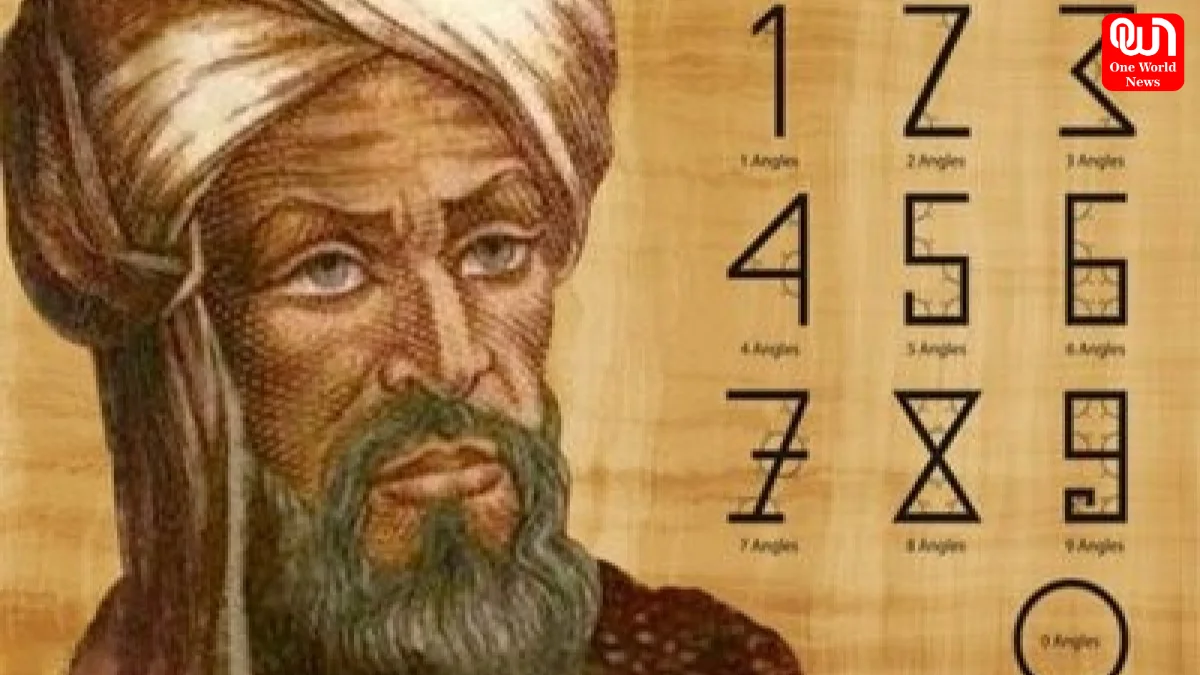
Muhammad ibn Musa al-Khwarizmi: The Forgotten Genius Who Gave the World Algebra and Shaped Modern Computing\
History often remembers kings, conquerors, and empires. Yet some of the most powerful revolutions in human history were not fought with swords — they were written with ink. One such revolution began in the 9th century, in the heart of Baghdad, with a scholar whose ideas continue to define our digital age: Muhammad ibn Musa al-Khwarizmi.
Close your eyes and imagine a time when mathematics lacked structure, when equations had no unified system, and when complex problems were solved through scattered methods. Into that world stepped a mind that brought order to numerical chaos.
A Scholar of the House of Wisdom
Muhammad ibn Musa al-Khwarizmi worked at the legendary House of Wisdom in Baghdad, a center of learning during the Islamic Golden Age. This institution gathered scholars from across cultures to translate, study, and expand upon knowledge from Greek, Persian, and Indian traditions.
In this intellectually vibrant environment, al-Khwarizmi began reshaping mathematics. He was not merely preserving knowledge — he was building something entirely new.
The Birth of Algebra
One of his greatest contributions was a groundbreaking mathematical text introducing systematic solutions to linear and quadratic equations. In this work, he introduced the concept of “Al-Jabr,” a method of restoring and balancing equations.
From this word — Al-Jabr — came the modern term “algebra.”
Before Muhammad ibn Musa al-Khwarizmi, mathematical problems were often explained geometrically or rhetorically. He transformed them into structured procedures. He gave numbers a language. He created clarity where confusion once ruled.
Today, every student solving an equation, every engineer calculating force, and every economist projecting growth is unknowingly drawing from his ideas.
The Origin of Algorithms
Perhaps even more astonishing is how his name itself shaped the modern world. The term “algorithm” is derived from the Latinized version of al-Khwarizmi’s name.
Algorithms form the backbone of computing. Every search engine result, financial transaction, navigation route, and piece of artificial intelligence relies on algorithmic processes. That means the digital age — smartphones, coding, data science — carries an echo of Muhammad ibn Musa al-Khwarizmi in its very foundation.
Read more: Emmanuel Macron At India AI Summit Praises India’s Unique Digital System
Few individuals in history can claim such an enduring and universal impact.
Beyond Mathematics
Muhammad ibn Musa al-Khwarizmi was not limited to algebra. He contributed to astronomy, geography, and cartography. His works helped refine world maps and astronomical tables, supporting navigation and scientific discovery for centuries.
His scholarship reflected intellectual courage — the courage to question inherited ideas and improve them. He did not accept knowledge as static; he believed it could evolve.
Why His Legacy Still Matters
In today’s world, driven by data, coding, and artificial intelligence, the influence of Muhammad ibn Musa al-Khwarizmi feels more relevant than ever. We live in an era built on equations and algorithms.
Yet many people remain unaware of the scholar whose work laid the groundwork for this technological civilization.
His story reminds us that progress often begins quietly — in libraries, research halls, and classrooms. It begins with thinkers who dare to ask deeper questions.
A Forgotten Legend Worth Remembering
History often highlights rulers and warriors, but intellectual pioneers like Muhammad ibn Musa al-Khwarizmi changed humanity in ways far more lasting.
He did not command armies.
He commanded ideas.
He did not conquer lands.
He conquered complexity.
Read more: Political Roundup Feb 20, 2026: Key Stories You Need to Know
Through algebra and algorithms, he transformed how humanity understands and interacts with the world.
Today, as we navigate a technology-driven society, we stand on the shoulders of this 9th-century genius.
Remembering Muhammad ibn Musa al-Khwarizmi is not merely honoring the past — it is recognizing the foundation of our present and future.
We’re now on WhatsApp. Click to join.
Like this post?
Register at One World News to never miss out on videos, celeb interviews, and best reads.