

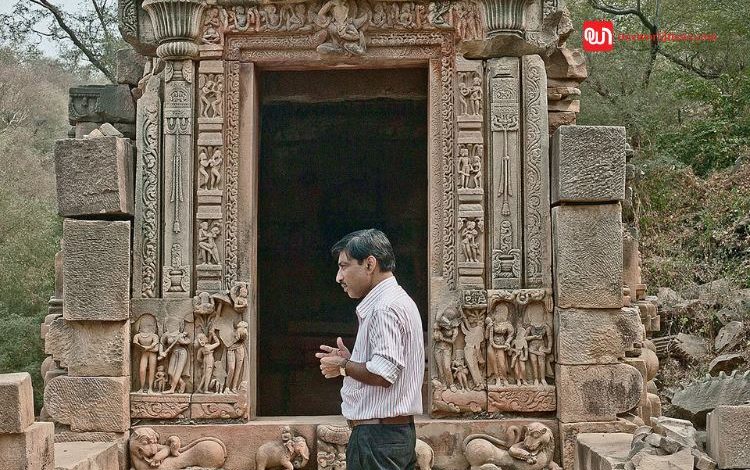
In recent years, veteran archaeologist K. K. Muhammed has voiced growing concern over the sluggish pace of temple restorations in India. According to him, the decline in restoration activity, especially after 2014, has significantly undermined efforts to preserve India’s ancient heritage.
Once respected for his extensive work reconstructing more than 100 historic temples, Muhammed now claims the institution entrusted with such tasks has been reduced to what he describes as a “wholly-paralysed body.”
What Went Wrong: From Reconstruction to “Toilets and Pathways”
Muhammed points to several changes in the decision-making and funding structure of the Archaeological Survey of India (ASI) as major reasons for the decline. Earlier, superintending archaeologists had discretionary power — up to ₹ 25 lakh — for on-site conservation and restorations. But after 2014, that power was drastically reduced to around ₹ 3 lakh. The result, as per him: on-the-ground conservation virtually came to a standstill.
Meanwhile, he accuses the ASI of diverting resources from core conservation to non-archaeological tasks. Projects such as constructing boundary walls, pathways, toilets, ticket counters, cafeterias, and souvenir shops have reportedly been outsourced to public sector construction firms — often at inflated costs. This, he argues, comes at the expense of restoring actual monuments and heritage structures.
In the words of Muhammed: “This period would go down in the history of ASI as the most unfortunate… when they knew the cost of toilets and cafeterias but not the value of temples and monuments.”
Lost Heritage: Examples from Bateshwar and Beyond
Muhammed highlights concrete examples to illustrate what he calls “lost decades” for temple restoration. He points out that in the last several years under the current regime, not a single temple has been reconstructed at the historic Bateshwar temple complex, despite earlier efforts that rebuilt dozens under previous administrations.
This lack of progress, he says, represents a “10-year temple void” — a period during which India missed opportunities to revive and preserve a large part of its temple heritage, even as heritage-driven tourism and cultural preservation gained prominence globally.
Underlying Causes: Centralisation, Bureaucracy, and Changing Priorities
According to Muhammed, the root of the problem lies in excessive centralisation and bureaucratic inertia. By curtailing financial autonomy at the field level, and shifting focus to peripheral infrastructural works, ASI’s mandate of heritage conservation has been undermined.
He further argues that rather than being guided by archaeological or conservation priorities, decisions now seem driven by what looks good publicly — like fancy amenities around monuments — rather than what’s vital: structural restoration. This, in his view, treats cultural heritage as political theatre, not as living history deserving careful, sustained preservation.
What’s at Stake: Cultural Loss, Heritage Tourism, and National Identity
The consequences of this neglect are far-reaching. Without timely restoration and conservation, many historical temples — some centuries old and architecturally significant — risk falling further into disrepair or becoming irrecoverable. Such damage not only erases tangible links to India’s past but also undermines opportunities for heritage tourism, which can bring economic and cultural benefits.
Muhammed warns that if this trend continues, India could fall behind other countries that have successfully leveraged their monuments and heritage sites to build cultural identity and attract international tourism.
A Call for Renewed Commitment and Structural Reform
Through his criticism, K. K. Muhammed urges stakeholders — heritage authorities, governments, civil society — to re-examine priorities. He emphasizes that conserving temples and ancient monuments must go beyond superficial facelift work; it should involve real archaeological restoration, structural stabilization, and safeguarding the authenticity of heritage sites.
He advocates for better funding, decentralised authority to archaeologists, transparency in project planning, and a return to conservation fundamentals rather than cosmetic upgrades.
Conclusion: Heritage Cannot Wait — Action Needed Now
- K. Muhammed’s warnings serve as a wake-up call. Without immediate and sustained action, India risks losing priceless heritage — temples that are not only monuments, but living embodiments of history, culture, and identity.
If heritage preservation remains deprioritised in favour of cosmetic infrastructure or delayed by bureaucratic inertia, the nation’s past will slowly fade — and future generations may inherit only memories, not monuments.