Union Minister Ashwini Vaishnaw Joins US-Led Talks on Critical Minerals Supply Chains
Union Minister Ashwini Vaishnaw attended a US ministerial meet on critical minerals, focusing on resilient and diversified global supply chains.

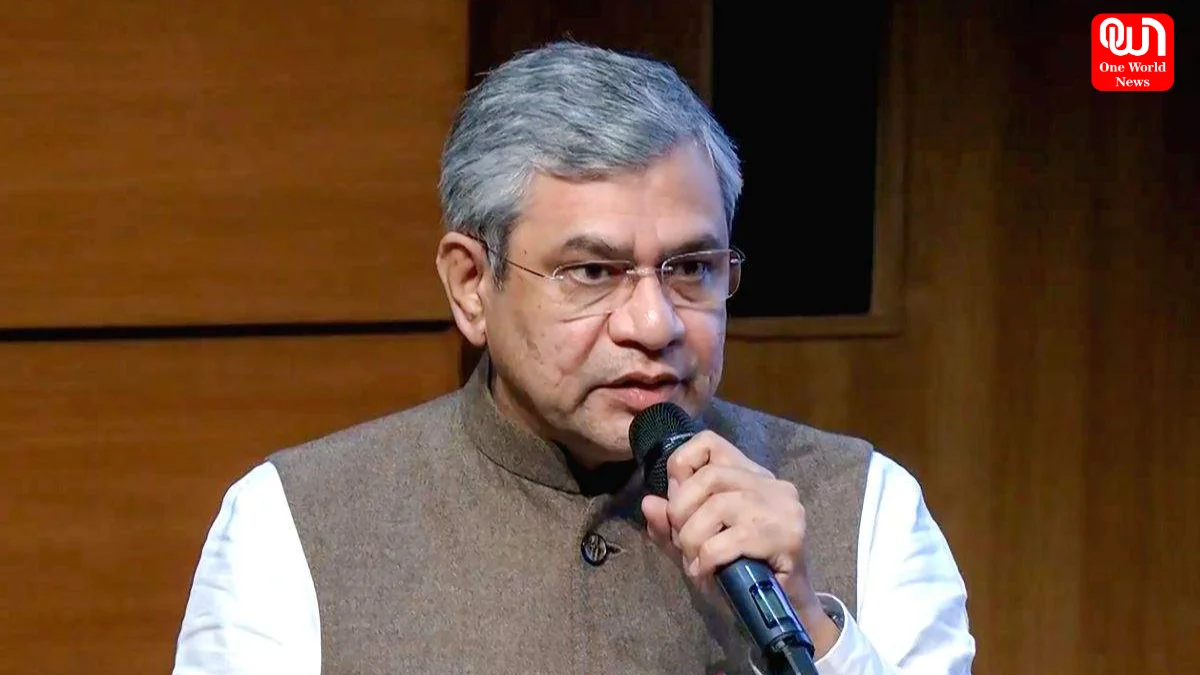
Union Minister Ashwini Vaishnaw Attends Critical Minerals Ministerial Meet in US to Strengthen Global Supply Chains
Union Minister Ashwini Vaishnaw participated in a high-level Critical Minerals Ministerial Meeting in the United States, underscoring India’s growing engagement in securing resilient and diversified global supply chains for strategic minerals. The meeting was hosted by United States Department of the Treasury amid rising global concerns over supply chain vulnerabilities in key sectors.
The discussions come at a time when critical minerals, particularly rare earth elements, have become central to economic growth, national security, and technological advancement. These materials are essential for electronics manufacturing, renewable energy technologies, electric vehicles, and defense systems.
Focus on Securing Strategic Supply Chains
The ministerial was convened by US Treasury Secretary Scott Bessent, who brought together finance and economic leaders from several major economies to address the increasing concentration and fragility of critical mineral supply chains.
Participants discussed strategies to secure and diversify sources of minerals such as rare earths, lithium, cobalt, and other materials vital to modern manufacturing. The emphasis was on reducing dependency on limited suppliers while avoiding abrupt decoupling that could disrupt global trade.
India’s Perspective on Critical Minerals
Speaking after the meeting, Union Minister Ashwini Vaishnaw highlighted the importance of supply chain resilience, particularly for countries experiencing rapid industrial growth.
He noted that India’s electronics manufacturing sector is expanding quickly, making access to stable and sustainable supplies of critical minerals increasingly important. According to the minister, building resilient supply chains is not just a national priority for India but a shared global responsibility.
Read more: Indian Army Opens Fire After Pakistani Drones Sighted Along LoC in J&K
Vaishnaw emphasized that the discussions allowed countries to share experiences and best practices in strengthening supply chains, especially in areas such as refining, processing, and value addition.
Technology, Processing, and Long-Term Sustainability
A key focus of the meeting was the development of advanced technologies for refining and processing mineral ores. Participants discussed how improving processing capabilities could help secure high-quality critical minerals, particularly rare earths used in permanent magnets and advanced electronics.
The talks also covered long-term sustainability, with an emphasis on environmentally responsible mining and processing methods. Countries explored ways to balance industrial demand with environmental safeguards, ensuring that supply chain resilience does not come at the cost of ecological damage.
Funding and Technology Sharing
Another important aspect of the discussions was financing. Delegates examined options for funding new mining, refining, and processing projects, especially in countries looking to expand their role in global supply chains.
Technology sharing between nations was also highlighted as a crucial step toward reducing supply bottlenecks. Collaborative approaches, participants agreed, would help accelerate innovation and lower barriers for countries seeking to build domestic capabilities in critical minerals.
Global Participation and Consensus
The ministerial meeting brought together representatives from Australia, Canada, the European Union, France, Germany, Italy, Japan, Mexico, the Republic of Korea, and the United Kingdom. The broad participation reflected a growing international consensus on the need to address vulnerabilities in critical mineral supply chains.
The United States outlined actions and investments it has already undertaken, as well as planned initiatives aimed at creating secure, diversified, and resilient supply networks. These efforts include domestic investments, international partnerships, and policy coordination.
Derisking Over Decoupling
In remarks shared after the meeting, Secretary Scott Bessent expressed optimism that participating nations would pursue a strategy of prudent derisking rather than complete decoupling. He stressed that addressing weaknesses in supply chains requires decisive action, cooperation, and a shared understanding of global interdependence.
Bessent also urged countries to act swiftly and collaboratively, noting that supply chains for critical minerals have become highly concentrated and vulnerable to disruption and manipulation.
Why the Meeting Matters
The participation of Union Minister Ashwini Vaishnaw in the ministerial signals India’s intent to play an active role in shaping the future of global critical mineral supply chains. As demand for clean energy, electronics, and advanced manufacturing continues to rise, access to these resources will remain a defining factor in economic competitiveness.
Read more: ISRO’s PSLV-C62 Mission Launches From Sriharikota With EOS-N1, Faces Technical Glitch
The meeting highlighted the urgency of coordinated international action and reinforced the idea that supply chain resilience is not a zero-sum game, but a shared global objective.
By engaging in these discussions, India has positioned itself as a key stakeholder in ongoing efforts to secure the materials that will power future growth and technological innovation.
We’re now on WhatsApp. Click to join.
Like this post?
Register at One World News to never miss out on videos, celeb interviews, and best reads.