RPG Fire, Panic On Deck: Seafarers’ Union Shares Video Of IRGC Attack On Indian Crew
Indian Seafarers Iran War sparks alarm as IRGC vessel attack near Strait of Hormuz raises concerns over Indian Crew safety and Middle East tensions.

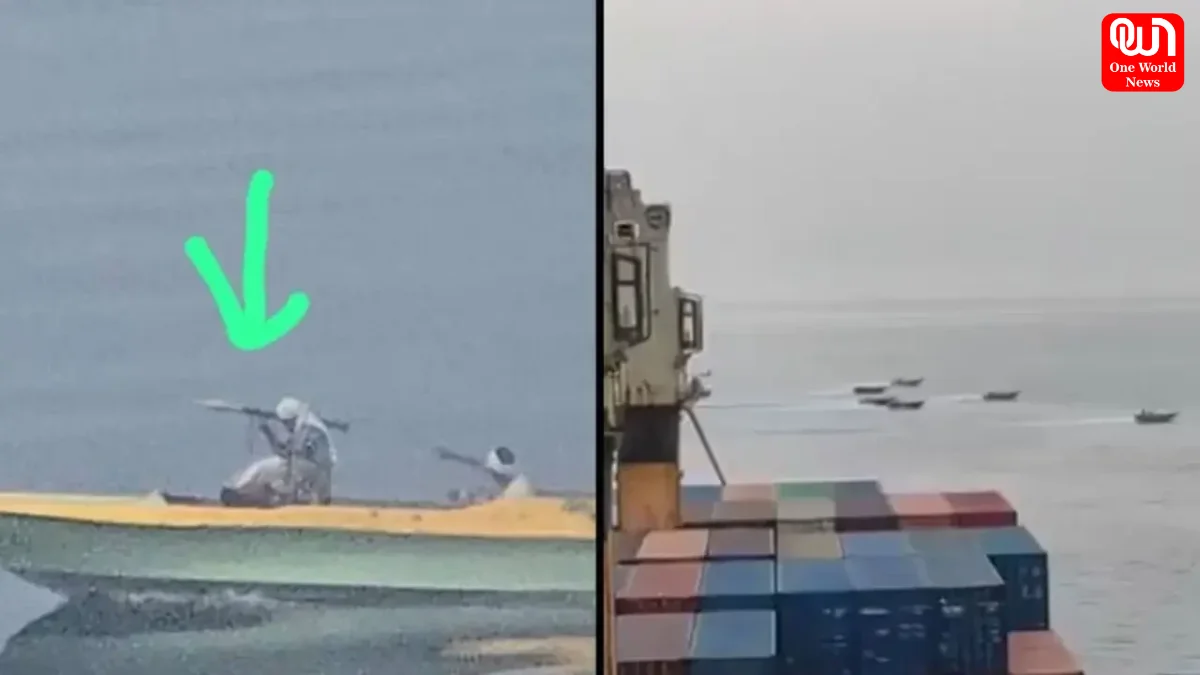
RPG Fire, Panic On Deck: Indian Seafarers Iran War Raises Alarm After IRGC Vessel Attack In Strait Of Hormuz Amid Growing Maritime Confrontation
A tense maritime incident involving an Indian-crewed vessel has renewed concerns over the safety of commercial shipping in the Strait of Hormuz. A video shared by the Forward Seamen’s Union of India (FSUI) reportedly shows an encounter involving the Islamic Revolutionary Guard Corps (IRGC) and an Indian crew during the continuing regional conflict.
The footage has drawn attention because commercial seafarers are increasingly being caught in a dangerous Maritime Confrontation between military forces. Reports from the region indicate that merchant vessels have faced threats, strikes, interceptions and restrictions while attempting to navigate one of the world’s most important shipping corridors.
Indian Seafarers Iran War: Why The Video Matters
The latest video comes against the backdrop of growing concerns surrounding the Indian Seafarers Iran War situation. Indian nationals make up a substantial portion of the global maritime workforce, meaning developments around the Gulf can have a direct impact on Indian families and shipping companies.
Earlier incidents have shown how quickly a routine commercial voyage can become a life-threatening situation. In one reported case, an Indian-crewed tanker was confronted by the IRGC and directed to retreat from the Strait of Hormuz. The exchange reportedly involved radio communications between the vessel and Iranian forces.
The footage being circulated has therefore intensified questions about whether merchant ships can safely operate in the region while military tensions remain high.
Strait Of Hormuz Becomes A High-Risk Shipping Zone
The Strait of Hormuz is a strategically vital waterway connecting the Persian Gulf with the Gulf of Oman and the Arabian Sea. Thousands of commercial vessels depend on the wider region for transporting energy supplies and other commodities.
The escalation of conflict has made navigation considerably more complicated. Shipping companies must consider military warnings, changing routes, security risks and the possibility of vessels being caught between opposing forces.
Reports have also documented Indian sailors remaining stranded in or around the region for extended periods. In June, reports said hundreds of Indian sailors aboard Indian-flagged vessels had been caught in the maritime crisis for months.
IRGC And The Growing Maritime Confrontation
The IRGC has become a central factor in maritime security around Iranian waters. Iranian forces have previously intercepted or redirected commercial vessels during periods of heightened tension.
However, it is important to distinguish between different incidents. Not every reported attack on an Indian-crewed vessel has involved Iran. Some Indian seafarers have also been affected by attacks attributed to US forces during the conflict. For example, the tanker MT Settebello, carrying a majority Indian crew, was struck near Oman in June, with three Indian seafarers reported killed.
This broader pattern demonstrates how civilian maritime workers can become exposed to military operations even when they have no role in the conflict.
Indian Crew Safety Comes Under Spotlight
The safety of the Indian Crew has become one of the biggest concerns raised by maritime unions and families. Seafarers work aboard commercial ships rather than military vessels, yet they can face missiles, drones, gunfire, fires, interceptions and emergency evacuations when operating near conflict zones.
The Forward Seamen’s Union of India has repeatedly called for stronger protections for Indian maritime workers and greater international attention to attacks involving civilian shipping. The union has also sought independent investigations into deadly incidents involving Indian sailors.
India’s maritime authorities have taken steps to reduce exposure to the danger. In July, India’s Directorate General of Shipping reportedly directed shipping stakeholders to avoid deploying Indian seafarers on vessels transiting the Strait of Hormuz until further notice following attacks on commercial tankers.
Vessel Attack Raises Wider Geopolitical Concerns
Every Vessel Attack in the region has consequences beyond the individual ship. The Strait is a major artery for international trade, and disruptions can affect shipping schedules, insurance costs, energy markets and global supply chains.
The situation also reflects wider Geopolitics in the Middle East, where military confrontation has increasingly spilled into commercial maritime routes. When merchant ships are targeted or intercepted, governments face the difficult task of protecting their citizens while avoiding further escalation.
For India, the challenge is particularly significant because of its large maritime workforce and dependence on international shipping routes.
Read more: Riya Ahir Seeks FIR Withdrawal And Action Against Social Media Threats After Mumbai Gen Z Protest
What Happens Next?
The latest video is likely to add pressure on governments, maritime organizations and shipping companies to strengthen protection for civilian crews. Independent verification of footage and incident details will remain important, particularly when information emerges during an active conflict.
For Indian seafarers, the priority is straightforward: safe passage, clear communication, emergency support and protection from military confrontation.
As tensions continue around the Strait of Hormuz, the international maritime community will be watching closely. The growing number of incidents involving commercial vessels underlines a crucial point—the people working at sea are civilians, and their safety should remain a priority regardless of the geopolitical conflict surrounding them.
We’re now on WhatsApp. Click to join.
Like this post?
Register at One World News to never miss out on videos, celeb interviews, and best reads.