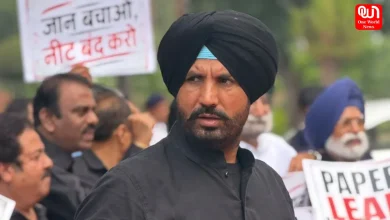
Political Roundup: Kejriwal’s Court Boycott Sparks National Debate
Political roundup: Kejriwal skips court citing conscience, sparking debate on democracy, law, and accountability across India.

Political Roundup: Arvind Kejriwal Refuses Court Appearance, Ignites Debate on Conscience vs Constitutional Duty
Good evening, you’re watching One World News, and I’m Aarav.
Today’s political roundup brings you a developing story that is rapidly gaining national attention and igniting widespread debate across legal, political, and social platforms.
A statement by Arvind Kejriwal has stirred intense discussion after he expressed deep disappointment with the judicial process. In a recent communication addressed to Justice Swarana Kanta Sharma, Kejriwal said that his “hope for justice has been completely shattered.”
He further announced that, guided by his inner conscience and inspired by Mahatma Gandhi’s principles of Satyagraha, he would not appear before the court or present arguments in the ongoing case.
This move comes in the backdrop of the ongoing legal proceedings related to the controversial Delhi Excise Policy Case, which has been at the center of political controversy for months. According to recent reports, Kejriwal has withdrawn from court proceedings citing a lack of confidence in fairness and invoking Gandhian non-cooperation.
A Moral Stand or Institutional Challenge?
Kejriwal’s decision has opened multiple layers of debate. Supporters view his stance as a moral act rooted in personal conviction. They argue that invoking Satyagraha reflects a principled protest — a peaceful resistance against what he perceives as injustice.
For many, this echoes the historical philosophy of non-violent dissent championed during India’s freedom struggle. They believe that in moments of perceived injustice, individual conscience can act as a powerful force for change.
However, critics see the situation differently. They argue that refusing to participate in judicial proceedings raises serious concerns about accountability. Courts, after all, are fundamental pillars of democracy. Opting out of the process, they say, could set a troubling precedent where individuals bypass institutions based on personal beliefs.
Some political voices have also emphasized that judicial independence must be respected, especially when courts have already dismissed claims of bias.
read more: Political Roundup: Major Shift as Raghav Chadha and AAP MPs Join BJP
The Larger Democratic Question
From a neutral standpoint, this situation raises a deeper and more complex question:
👉 Where does one draw the line between personal conscience and constitutional responsibility?
In a democracy like India, both individual beliefs and institutional frameworks coexist and often complement each other. However, when the two collide, the result is a complex public discourse — exactly what we are witnessing today.
Legal experts suggest that while dissent is a democratic right, participation in due process is equally essential to uphold the rule of law. On the other hand, political thinkers argue that civil disobedience has historically played a role in correcting systemic issues.
This tension between conscience and compliance is not new — but in the modern political landscape, amplified by media and public scrutiny, its implications are far-reaching.
Social Media Reacts
As expected, social media platforms are witnessing a surge of reactions. Hashtags related to the issue are trending, with users sharply divided in their opinions.
Some users hail Kejriwal’s decision as bold and principled, while others criticize it as irresponsible and potentially damaging to judicial norms. The debate has moved beyond political lines and into broader conversations about democracy, ethics, and governance.
This digital divide reflects the larger national sentiment — a mix of support, skepticism, and concern.
Beyond One Individual
It is important to understand that this development is not just about one leader or one legal case. It reflects the evolving relationship between politics, law, and public perception in India.
The case also highlights how political narratives and legal processes intersect, often influencing public opinion and shaping democratic discourse.
As the situation unfolds, attention will likely shift to how higher courts, including the Supreme Court, respond — and whether this stance triggers wider political or legal consequences.
read more: AAP Faces Its Toughest Test After Raghav Chadha Split: Inside Delhi Durbar Power Struggles
Staying Grounded in Democracy
As observers, it is crucial to remain balanced. Emotions and opinions may vary, but certain principles remain constant — respect for democratic institutions, freedom of expression, and adherence to the rule of law.
The ongoing political roundup reminds us that democracy thrives not just on debate, but on responsible engagement with its institutions.
We’re now on WhatsApp. Click to join.
Like this post?
Register at One World News to never miss out on videos, celeb interviews, and best reads.