‘No Force Can Stop Women’s Reservation’: Narendra Modi Targets Opposition on Constitution Day
Narendra Modi renews support for women reservation on Constitution Day, targeting Opposition over the Lok Sabha bill and delimitation exercise.

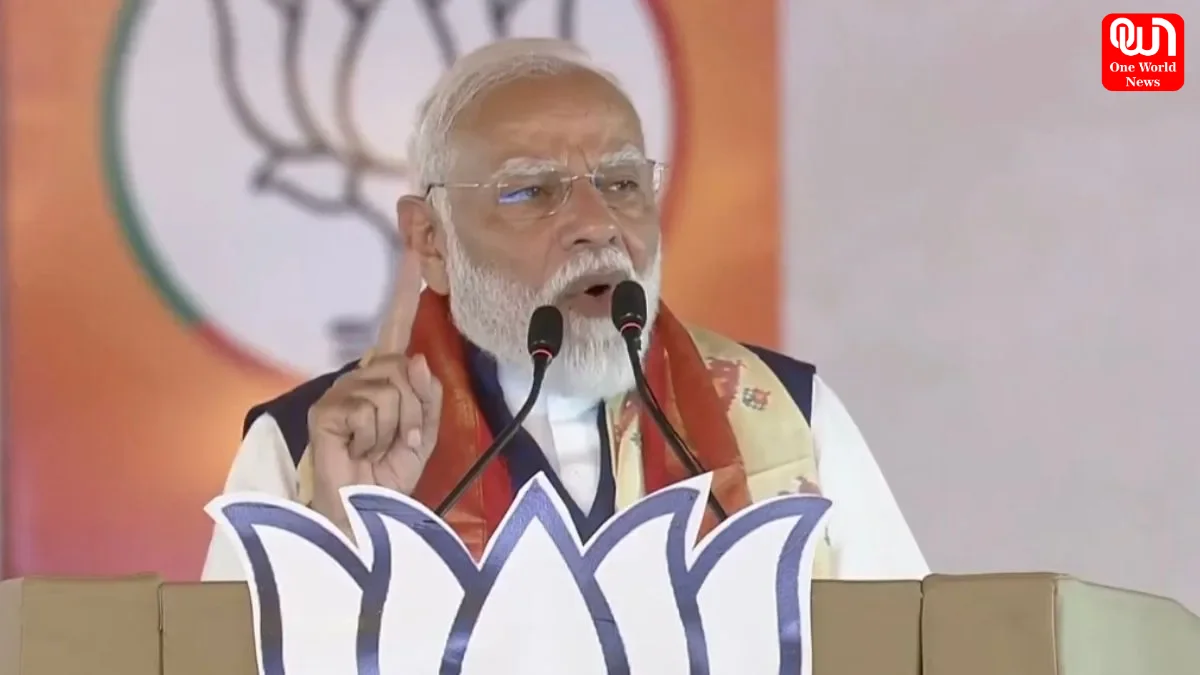
No Force Can Stop Women’s Reservation’: Narendra Modi Targets Opposition on Constitution Day as Debate Over Lok Sabha Women Representation, Constitutional Amendment Bill and Delimitation Exercise Intensifies
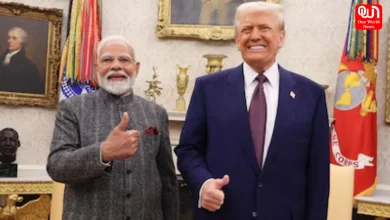
Prime Minister Narendra Modi used the occasion of Constitution Day on November 26, 2026, to renew his commitment to women’s reservation in India’s legislative bodies while launching a fresh attack on the Opposition over the defeat of the proposed Constitutional Amendment Bill. Addressing the issue through a signed article, the Prime Minister assured women across the country that no force could prevent the government from ensuring justice and equal political representation for them.
His remarks have brought the debate over women’s political participation back into the national spotlight. The Prime Minister accused the Opposition of preventing legislation intended to provide greater representation to women in Parliament and state assemblies. Without directly naming the Congress, he questioned the party’s position and said that democratic institutions should be strengthened through constructive participation rather than parliamentary disruptions.
Narendra Modi’s Constitution Day Message on Women’s Reservation
On Constitution Day, Narendra Modi highlighted the importance of recognising women’s contributions to India’s constitutional journey and democratic development. He stated that the Constitution’s journey would remain incomplete without acknowledging the remarkable women who helped shape the country’s constitutional framework.
The Prime Minister expressed disappointment over the defeat of the proposed women’s reservation legislation earlier this year. He argued that providing adequate representation to women in legislative institutions was an important step towards achieving equality and strengthening Indian democracy.
Addressing the country’s women, Modi said that no force could stop the government from ensuring justice for Nari Shakti.
His statement reflects the government’s continued emphasis on women’s empowerment and political participation. The issue of women representation has remained an important part of national political discussions, particularly after Parliament passed the Nari Shakti Vandan Adhiniyam in 2023.
PM Modi Targets Opposition Over the Defeat of the Constitutional Amendment Bill
A major part of the Prime Minister’s Constitution Day message focused on the Opposition’s role in the defeat of the Constitutional Amendment Bill in April 2026.
Modi criticised the leading Opposition party, accusing it of obstructing legislation that aimed to improve women’s representation in elected institutions. He suggested that the Opposition had moved away from its responsibility of holding the government accountable and had instead become an obstacle to parliamentary proceedings.
He described the Opposition as an ‘Avrodh Paksh’ rather than a ‘Virodh Paksh’, questioning its approach towards important legislative matters.
The Prime Minister maintained that disrupting parliamentary processes could not replace the responsibility of participating constructively in democratic decision-making.
However, Opposition parties had raised concerns about linking women’s reservation with the delimitation exercise. They argued that the proposed changes could have wider consequences for electoral representation and the distribution of parliamentary seats among states.
What Happened to the Women’s Reservation Bill in Lok Sabha?
The proposed Constitution (131st Amendment) Bill, 2026, was introduced to accelerate the implementation of 33 per cent reservation for women in the Lok Sabha and state legislative assemblies.
The legislation also proposed increasing the strength of the Lok Sabha from its existing 543 seats to a maximum of 850 through delimitation.
However, the bill failed to secure the required two-thirds majority in the Lok Sabha on April 17, 2026.
According to parliamentary voting figures, 298 members supported the legislation, while 230 voted against it. Since constitutional amendments require a special majority, the bill could not secure enough votes to move forward.
Its defeat became a major political issue, with the government and Opposition presenting different arguments about the proposed legislation.
Understanding the Connection Between Women Reservation and Delimitation Exercise
The delimitation exercise has become one of the most debated aspects of the women’s reservation issue.
Delimitation involves redrawing electoral constituency boundaries and determining the allocation of seats based on population-related criteria. It plays an important role in maintaining electoral representation as demographic patterns change.
The government proposed linking the implementation of women’s reservation with changes in parliamentary representation. Its 2026 legislation aimed to create a framework that could facilitate the introduction of the 33 per cent quota before the 2029 general elections.
Opposition parties, however, questioned the timing and structure of the proposed delimitation exercise. Concerns were also raised about its possible impact on the political representation of different states.
This disagreement became a major reason behind the political confrontation surrounding the Constitutional Amendment Bill.
Nari Shakti Vandan Adhiniyam: What Does the Existing Law Say?
The Nari Shakti Vandan Adhiniyam, officially known as the Constitution (106th Amendment) Act, 2023, provides for reserving one-third of seats for women in the Lok Sabha and state legislative assemblies.
The legislation was considered a significant step towards improving women’s participation in Indian politics.
However, its implementation is linked to a census followed by delimitation, meaning the reservation does not automatically come into effect immediately after the law’s passage.
The failed 2026 amendment proposal attempted to change this implementation framework and accelerate the process.
For millions of women aspiring to participate in electoral politics, the legislation represents an important opportunity to gain greater representation in decision-making institutions.
Why Women’s Representation Matters for Indian Democracy
Women’s representation is essential for building a more inclusive and balanced democratic system. Although women participate actively in elections, social development and economic activities, their presence in legislative institutions remains comparatively limited.
Increasing women’s participation in Parliament and state assemblies could bring greater attention to issues involving education, healthcare, employment opportunities, public safety and economic independence.
It could also encourage political parties to provide more opportunities to women candidates and strengthen their participation in policy-making.
The debate surrounding women’s reservation is therefore not limited to political disagreements. It also concerns the future direction of India’s democratic institutions.
What Happens Next in the Women’s Reservation Debate?
Narendra Modi’s Constitution Day message has once again placed women’s reservation at the centre of national political discussions. His assurance to Nari Shakti indicates that the government intends to continue pursuing greater political representation for women.
Rad more; 22-Year-Old Woman Gang-Raped by Colleagues After Party at Delhi Cafe; 3 Held, Including 2 Women
However, the defeat of the Constitutional Amendment Bill has left questions about the timeline and mechanism for implementing the proposed quota.
The government and Opposition will need to address their differences over delimitation, parliamentary representation and the implementation framework.
As India moves towards the next general election cycle, women’s representation is likely to remain an important political and constitutional issue.
The larger challenge will be translating the promise of equal participation into meaningful representation within India’s democratic institutions.
We’re now on WhatsApp. Click to join.
Like this post?
Register at One World News to never miss out on videos, celeb interviews, and best reads