India-EU Free Trade Deal: 10 Things to Know About Tariff Cuts and Strategic Impact
India-EU Free Trade Deal focuses on tariff reduction, market access, defence cooperation, and reshaping trade ties between two major economies.

Reduced Tariff and Defence Partnership: 10 Key Takeaways From the India-EU Free Trade Deal
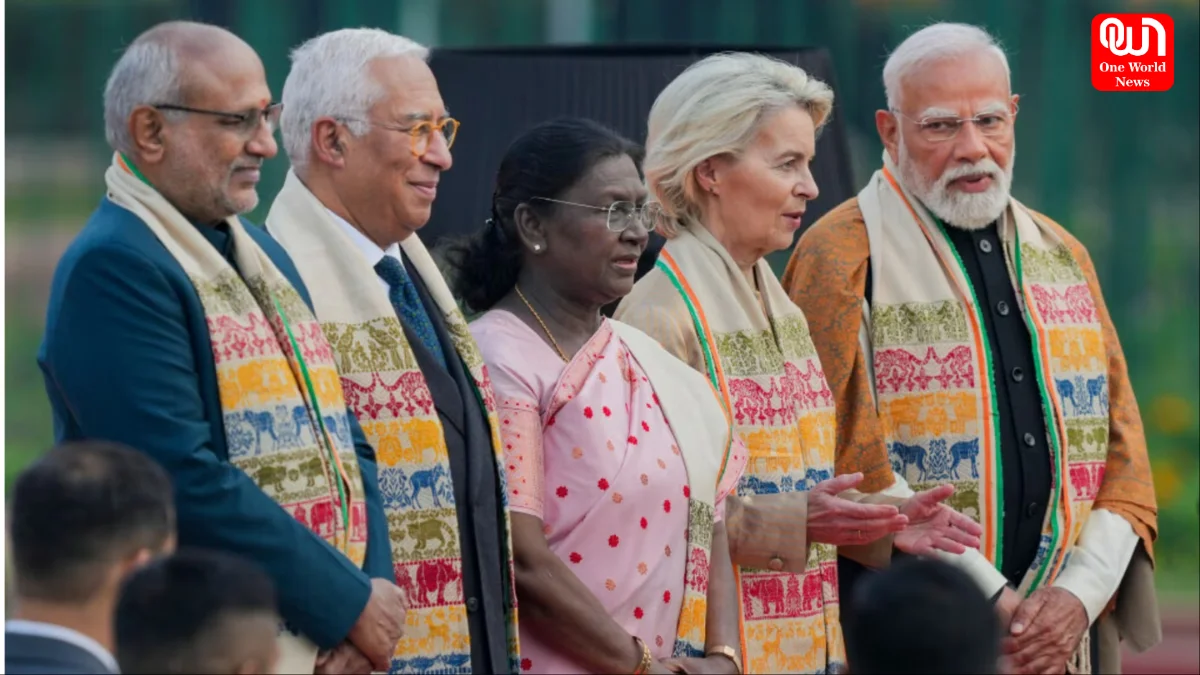
After nearly two decades of on-and-off negotiations, India and the European Union have finally concluded an ambitious free trade agreement, often described as the “mother of all deals.” The pact, expected to be formally announced at the India-EU summit in New Delhi, has the potential to reshape economic, strategic, and diplomatic ties between two of the world’s largest markets.
Here are ten key takeaways explaining why this agreement matters and what it means for both sides.
1. Nearly Two Decades in the Making
Negotiations for the India-EU free trade agreement began in 2007 but stalled in 2013 due to disagreements over tariff structures, market access, and regulatory standards. Talks were revived in 2022 and gained momentum as global trade uncertainty increased and both sides looked to diversify partnerships beyond traditional allies.
2. Massive Economic Scale
Together, India and the 27-nation European Union account for roughly one-quarter of global GDP and represent a combined consumer base of nearly two billion people. Bilateral trade in goods reached about $136.5 billion in FY2025, while services trade exceeded $80 billion, highlighting the enormous potential of the deal.
3. Tariff Reduction at the Core
At the heart of the agreement lies significant tariff reduction. India has agreed to lower import duties on several European products, including automobiles and wine. In return, the EU will ease access for Indian exports such as textiles, garments, jewellery, chemicals, pharmaceuticals, and electronics.
This reciprocal tariff easing is expected to boost trade volumes and competitiveness on both sides.
4. Major Impact on the Auto Sector
The automobile sector has drawn the most attention. India’s car import duties currently exceed 100 percent in some cases. Under the deal, tariffs on EU-made vehicles could drop to around 40 percent, potentially opening India’s fast-growing car market to more European manufacturers.
However, India has had to carefully balance liberalisation with protecting domestic auto companies and existing market leaders.
5. Some Sectors Kept Outside the Deal
Despite the agreement’s broad scope, not all sectors are included. Certain agricultural and dairy products have been excluded, reflecting India’s concern about safeguarding millions of small farmers from sudden import competition.
Read more: Political Roundup: Top Developments Making Headlines on January 27, 2026
Sensitive industrial sectors have also been handled cautiously to prevent disruption to domestic manufacturing.
6. Non-Tariff Barriers Still a Concern
India has long raised concerns about EU non-tariff barriers, especially carbon-related levies on steel, aluminium, and cement. These measures increase costs for Indian exporters and have been a sticking point in negotiations.
There is also unease over changes to preferential tariff treatment under existing EU schemes, which have already impacted billions of dollars in Indian exports. Officials believe the FTA could help soften some of these pressures.
7. Strategic Timing of the Deal
The agreement comes at a time when global trade relationships are under strain. Many countries are seeking alternatives amid uncertainty in trade ties with the United States.
The India-EU deal follows recent European agreements with other regions and complements India’s own trade pacts with several countries, positioning both sides more strongly in a shifting global trade landscape.
8. Legal Review Before Implementation
Although negotiations are complete, the deal will not take effect immediately. The text will undergo a legal review process lasting several months, followed by formal signing and ratification. Approval by the European Parliament is required, and the agreement is expected to become operational within about a year.
9. Linked to Broader Strategic Cooperation
The free trade agreement is being unveiled alongside a wider diplomatic push. Leaders are expected to adopt a comprehensive agenda covering technology, connectivity, sustainability, and global challenges.
A separate Security and Defence Partnership will focus on maritime cooperation, cybersecurity, and counter-terrorism, signalling that the relationship extends far beyond trade.
10. Big Opportunities and Political Challenges
Economists say Indian exporters, particularly in textiles, garments, and leather, stand to gain significantly from improved access to Europe’s vast market. This could help them compete with other major exporting nations.
Read more: Trump Slams Canada Over Opposition to Greenland Golden Dome
European companies, meanwhile, view India as one of the world’s most promising growth markets. However, the deal is likely to face political scrutiny on both sides, especially from industries concerned about competition and environmental groups wary of regulatory standards.
Conclusion
The India-EU free trade agreement marks a turning point in bilateral relations. By addressing tariff barriers, expanding market access, and linking trade with strategic cooperation, the pact has the potential to redefine economic ties between two major global players.
While challenges remain, the deal reflects a shared recognition that deeper cooperation is essential in an increasingly uncertain global economy.
We’re now on WhatsApp. Click to join.
Like this post?
Register at One World News to never miss out on videos, celeb interviews, and best reads.