Lunar Eclipse On Raksha Bandhan 2026: When And Where To Watch Sturgeon Moon Live
Lunar eclipse August 28 2026 falls on Raksha Bandhan. Know Sturgeon Moon 2026 timing, lunar eclipse India visibility and live stream details.

Lunar Eclipse August 28 2026 On Raksha Bandhan: Sturgeon Moon 2026 Timing, Lunar Eclipse India Visibility And Live Stream
The sky is set to host a striking celestial event on August 28, 2026, when the full Sturgeon Moon 2026 coincides with Raksha Bandhan. The occasion has attracted attention because the year’s final lunar eclipse falls around the same date as the Hindu festival. However, skywatchers in India should note an important detail: the eclipse itself will not be visible from India, because the Moon will be below the horizon while the main phases take place.
Lunar Eclipse August 28 2026: What Makes It Special?
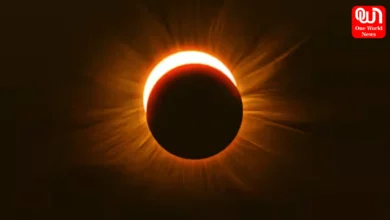
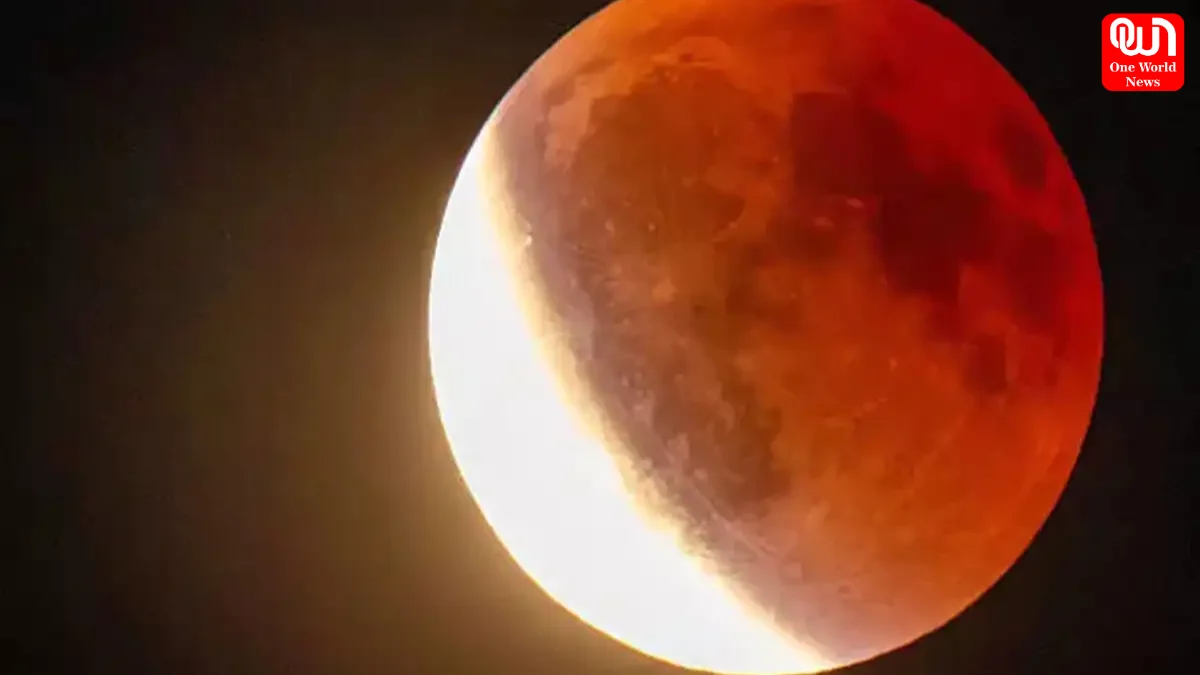
The lunar eclipse August 28 2026 is a deep partial lunar eclipse. At maximum eclipse, about 96.2% of the Moon’s area will be covered by Earth’s dark umbral shadow, making it one of the most dramatic partial lunar eclipses of the year. The partial phase will last approximately 3 hours and 18 minutes, while the complete sequence, including the penumbral stages, will span about 5 hours and 38 minutes.
Because most of the Moon enters Earth’s shadow without the entire lunar disk disappearing, the event is classified as a partial rather than a total lunar eclipse. The Moon can develop a noticeable reddish or copper-orange appearance near maximum eclipse, which is why some observers may describe it as a “blood moon.”
Raksha Bandhan Lunar Eclipse: Date And Festival Connection
Raksha Bandhan 2026 will be celebrated on Friday, August 28, coinciding with the full Moon. According to Drik Panchang’s New Delhi calculations, the Purnima Tithi begins at 9:08 AM on August 27 and ends at 9:48 AM on August 28. Its listed Raksha Bandhan thread ceremony window for New Delhi is 5:57 AM to 9:48 AM on August 28.
The coincidence of the festival and eclipse has generated questions about whether the eclipse should affect Raksha Bandhan rituals. From an astronomical perspective, however, visibility is the key distinction. Since the Raksha Bandhan lunar eclipse will not be visible from India, Indian observers will not see the Moon passing through Earth’s shadow. Some religious practices can vary according to family traditions and interpretations of Panchang or astrology.
Sturgeon Moon 2026: Why Is August’s Full Moon Called Sturgeon Moon?
The full Moon in August is traditionally known as the Sturgeon Moon. The name is associated with the sturgeon fish, which were historically abundant and easier to catch during this period around North America’s Great Lakes. The August full Moon reaches its full phase on August 28, 2026, at approximately 04:18 UTC.
This makes the Sturgeon Moon 2026 particularly interesting because it coincides with a deep partial lunar eclipse. For observers in regions where the eclipse is visible, the bright full Moon will gradually move into Earth’s shadow before taking on a darker, reddish appearance around the peak.
Lunar Eclipse India: Can You See It From India?
The answer is no. The lunar eclipse India visibility question is especially important because the eclipse occurs during daytime hours in India, when the Moon is below the horizon. India is therefore among the regions from which the partial eclipse cannot be directly observed.
The eclipse will instead be visible across large portions of North America and South America, as well as parts of Europe and Africa. Visibility varies by location because some places will see the entire event while others will see only portions of it around moonrise or moonset.
For Indian viewers, this means there is no need to travel outside the country simply to observe the eclipse unless they are already planning an international trip. The better option is to follow an online broadcast.
Lunar Eclipse Live Stream: Where To Watch Online
A lunar eclipse live stream provides the easiest way for viewers in India and other regions outside the visibility zone to follow the event. Timeanddate is providing live coverage of the August 27–28 eclipse, including an online broadcast and eclipse information.
Viewers can also follow live coverage from astronomy websites and space-focused broadcasters. Online coverage is particularly useful for Indian audiences because the actual eclipse will occur while the Moon is below the Indian horizon.
August 2026 Eclipse: Key Timings
According to Timeanddate’s global eclipse timetable, the eclipse begins with the penumbral phase at 01:23 UTC on August 28. The partial phase starts at 02:33 UTC, maximum eclipse occurs at 04:12 UTC, the partial phase ends at 05:51 UTC, and the penumbral phase concludes at 07:01 UTC.
Converted to Indian Standard Time, the key moments are approximately:
- Penumbral eclipse begins: 6:54 AM IST
- Partial eclipse begins: 8:04 AM IST
- Maximum eclipse: 9:42 AM IST
- Partial eclipse ends: 11:21 AM IST
- Penumbral eclipse ends: 12:31 PM IST
These timings explain why the eclipse cannot be observed from India: the Moon is not above the horizon during the relevant phases.
How To Watch The Eclipse Safely
Unlike a solar eclipse, a lunar eclipse does not require special eye protection. Observers in areas where the Moon is visible can watch it with the naked eye. Binoculars or a telescope can provide a closer view, while a tripod can help photographers capture sharper images.
For viewers watching online, a stable internet connection and a reliable astronomy livestream are enough. Checking the stream shortly before the event is advisable because broadcast schedules and coverage can change.
We’re now on WhatsApp. Click to join.
Like this post?
Register at One World News to never miss out on videos, celeb interviews, and best reads.