BRICS Summit 2026: 72 Hours, 15 Key Meetings — How PM Modi Made the Most of BRICS Summit Delhi
BRICS Summit 2026 Delhi at Bharat Mandapam: PM Modi’s 15 key meetings, BRICS Summit Live updates, diplomacy and major outcomes.

72 Hours, 15 Key Meetings: How PM Modi Made The Most Of BRICS Summit
The BRICS Summit 2026 in New Delhi became a major diplomatic moment for India, with Prime Minister Narendra Modi using a tightly packed three-day schedule to engage with leaders from Europe, Asia, Africa and the wider Global South. Hosted at Bharat Mandapam, the 18th BRICS Summit officially took place on September 12 and 13, while several high-level bilateral meetings were held around the main summit programme.
From Russian President Vladimir Putin and Iranian President Masoud Pezeshkian to Chinese President Xi Jinping and leaders from Africa and Southeast Asia, PM Modi held 15 formal bilateral meetings over the three-day diplomatic marathon.
BRICS Summit Delhi: A Packed Diplomatic Schedule
The first phase of Modi’s engagements began even before the main summit sessions. On September 11, he met Russian President Vladimir Putin, Iranian President Masoud Pezeshkian and UN Secretary-General António Guterres.
The discussions came at a time of major geopolitical uncertainty, making these meetings particularly significant for India’s foreign-policy outreach. Russia, Iran and the United Nations each represent important dimensions of India’s diplomatic and strategic priorities.
The schedule then intensified on September 12. Modi met Ethiopian Prime Minister Abiy Ahmed Ali, Malaysian Prime Minister Anwar Ibrahim, Abu Dhabi Crown Prince Sheikh Khaled bin Mohamed bin Zayed Al Nahyan and Vietnamese Prime Minister Le Minh Hung.
Modi-Xi Meeting Takes Centre Stage
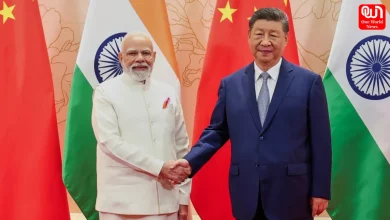
One of the most closely watched moments of the BRICS Summit 2026 Delhi was PM Modi’s meeting with Chinese President Xi Jinping at Bharat Mandapam.
The meeting focused on improving India-China relations, including border peace, economic ties, trade, connectivity and people-to-people exchanges. Both sides stressed the importance of maintaining peace along the border while working towards stronger bilateral engagement.
The Modi-Xi meeting was especially significant because it came after years of tensions and represented another step towards stabilising relations between the two Asian powers.
Bharat Mandapam BRICS Summit Showcases India’s Diplomacy
The BRICS Summit Bharat Mandapam programme was not limited to bilateral diplomacy. Leaders also participated in sessions on inclusive global governance, multilateralism, innovation, sustainability and inclusive growth.
The summit was held under India’s 2026 chairship theme, “Building for Resilience, Innovation, Cooperation and Sustainability.” The agenda reflected India’s effort to place development, technology, resilience and the interests of the Global South at the centre of BRICS cooperation.
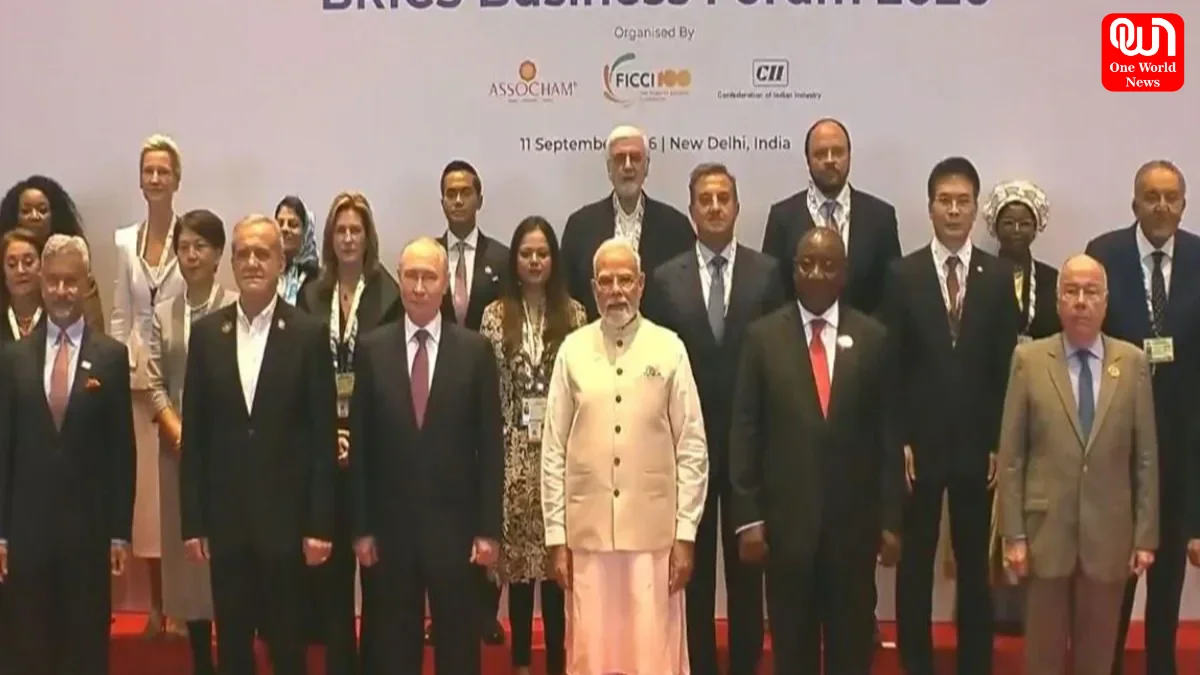
The venue also hosted the Bharat Innovates exhibition, a family photo and a joint tree-planting ceremony, adding economic, technological and symbolic dimensions to the summit.
Read more: BRICS 2026: India, Pakistan And BRICS Membership – Why Pakistan Is Still Waiting
Seven More Meetings on the Final Day
The final day brought another burst of bilateral diplomacy. Modi met leaders from Kazakhstan, the Philippines, Egypt, South Africa, Burundi, Nigeria and Uganda.
His discussions with South African President Cyril Ramaphosa covered areas including trade, critical minerals, infrastructure, food security, digital public infrastructure, emerging technologies and skills.
Meetings with African leaders also underlined India’s growing emphasis on South-South cooperation. Discussions with Uganda, Nigeria and Burundi focused on development partnerships, investment, technology, healthcare, agriculture, security and broader Global South cooperation.
BRICS Summit Live: From Global Governance to Resilience
The main summit discussions addressed challenges that extend beyond individual countries. PM Modi highlighted the impact of geopolitical tensions, pandemics, climate-related disasters and supply-chain disruptions.
India also pushed for stronger resilience mechanisms, including an integrated BRICS early-warning system for infectious diseases and guidelines for disaster-management data integration.
The leaders subsequently adopted the New Delhi Declaration, covering issues such as multilateralism, economic cooperation, sustainability, technology and global governance.
A Diplomatic Marathon With Multiple Objectives
The significance of the BRICS Summit 2026 was therefore not limited to the formal summit sessions. Modi’s 15 bilateral meetings allowed India to pursue country-specific priorities while simultaneously advancing the broader BRICS agenda.
From Russia and China to Africa, Southeast Asia and the Middle East, the meetings demonstrated the wide geographical reach of India’s diplomatic engagement.
With the BRICS Summit Delhi successfully concluding at Bharat Mandapam, India handed over the BRICS chairship to China for the next cycle. The summit ultimately served as both a multilateral platform and an opportunity for India to deepen strategic, economic and development partnerships across the Global South.
We’re now on WhatsApp. Click to join.
Like this post?
Register at One World News to never miss out on videos, celeb interviews, and best reads.