Why Do I Check My Phone at Night? The Shocking Brain Mechanism Behind Phone Addiction at Night
Why do I check my phone at night? Discover how phone addiction at night, smartphone use before sleep, and screen habits can disrupt sleep.

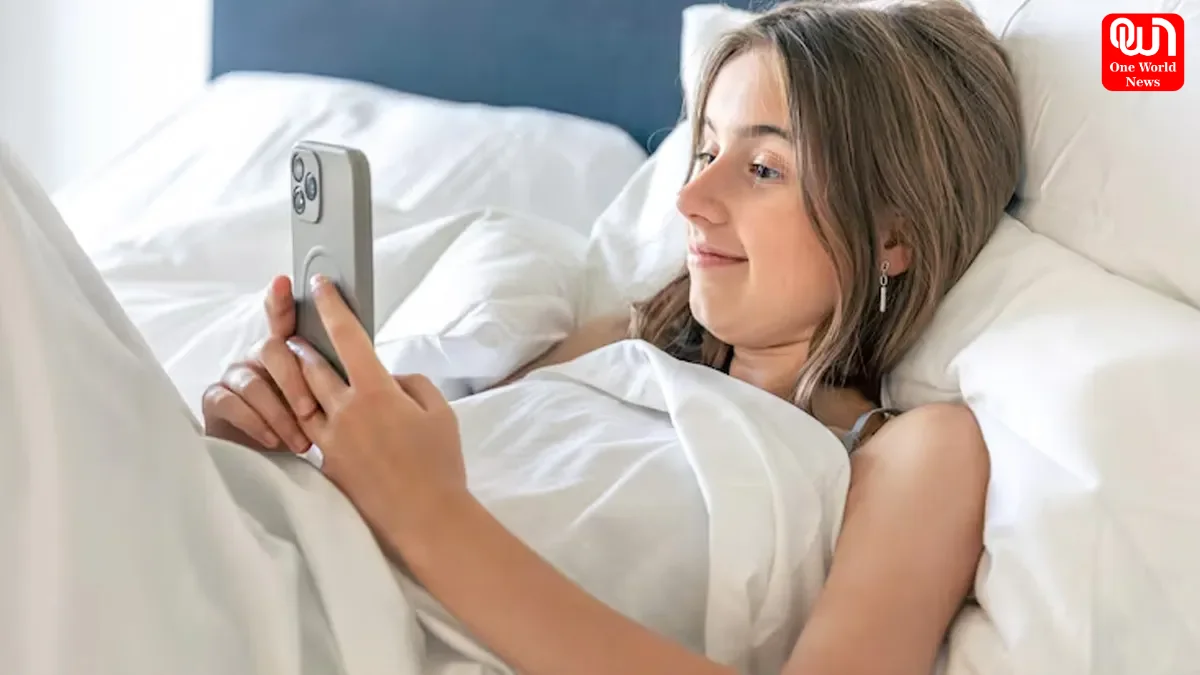
Struggling to Sleep? The Shocking Brain Mechanism Explaining Why Do I Check My Phone at Night, Phone Addiction at Night, and Why You Can’t Stop Checking Your Phone
You turn off the lights, get comfortable, and tell yourself you are finally going to sleep. Then, almost automatically, your hand reaches for your phone. You check one notification, scroll through a few posts, answer a message, and suddenly another 30 minutes have disappeared.
So, why do I check my phone at night even when I know I should be sleeping?
The answer is more complicated than simply having poor self-control. Nighttime phone checking can become a learned behavioral loop involving anticipation, reward, mental stimulation, habit, and the desire to escape boredom or stress. Research consistently finds an association between problematic smartphone use and poorer sleep quality, although researchers caution that most observational studies cannot prove that phone use alone causes every sleep problem.
Why Do I Check My Phone at Night?
One reason is that your brain learns patterns surprisingly well. If checking your phone regularly gives you something interesting—a message, social-media interaction, entertaining video, news update, or even something unexpected—your brain can begin associating the phone with reward.
This creates a simple cycle:
Boredom or wakefulness → phone checking → interesting content or reward → temporary satisfaction → repeated checking.
Because you never know exactly what you will find, checking can become particularly persistent. The anticipation itself can encourage you to look again.
This helps explain why you can’t stop checking your phone despite having no specific reason to unlock it.
The Brain’s Reward Loop Can Keep You Scrolling
Smartphones combine numerous sources of stimulation into one device. Social media, messaging, entertainment, shopping, news, and notifications all compete for attention.
Dopamine is often described online as the “addiction chemical,” but that explanation is too simplistic. Dopamine is involved in motivation, learning, and reward prediction. When something is potentially rewarding or unexpected, your brain can become motivated to seek it out.
That makes the phone particularly powerful at bedtime. A quiet bedroom offers very little stimulation, while your phone offers an endless stream of new information.
Over time, reaching for the phone can become an automatic habit rather than a deliberate decision.
Phone Addiction at Night Can Turn Into a Bedtime Loop
Phone addiction at night is not necessarily a formal medical diagnosis. A better way to describe the problem is problematic or compulsive smartphone use.
The important issue is whether the behavior interferes with your life or sleep.
A 2023 systematic review and meta-analysis involving 17 studies and more than 36,000 participants found that smartphone overuse was significantly associated with poorer self-reported sleep quality, sleep deprivation, and longer sleep latency.
In other words, the problem may not be that your phone magically prevents sleep. Instead, repeated use can make it easier to postpone sleep, keep your mind active, and establish a routine in which bedtime becomes associated with scrolling.
Smartphone Use Before Sleep Keeps Your Mind Engaged
One of the biggest problems with smartphone use before sleep is stimulation.
Imagine trying to fall asleep immediately after reading an emotionally intense message, watching a suspenseful video, arguing online, or scrolling through rapidly changing content. Your body may be in bed, but your brain is still processing information.
Sleep experts note that active phone activities such as texting and social media can be more stimulating than passive activities.
A recent review also emphasizes that the relationship works in both directions: technology can contribute to sleep problems, while people who already struggle to sleep may use technology as a distraction or emotional-regulation strategy.
Read more: Is Your High-Protein Diet Making You Gassy? Common Causes And Easy Fixes
Your Phone Can Also Push Your Body Clock
The screen itself may matter, too. Smartphone displays emit short-wavelength light, and evening exposure to light can influence the body’s circadian system.
However, focusing only on “blue light” misses the bigger picture. The content you consume, how long you stay awake, notifications, emotional stimulation, and the habit of taking your phone to bed can all contribute to the problem.
Research therefore increasingly views nighttime technology use as a combination of light exposure, arousal, sleep displacement, and behavioral conditioning, rather than one single mechanism.
Why Can’t You Stop Checking Your Phone?
The surprising answer may be that you are not always making a conscious decision.
Habits can become automatic when the same cue repeatedly produces the same behavior. Getting into bed becomes the cue. Feeling bored becomes the cue. Waking briefly during the night becomes the cue.
Your brain then predicts that the phone will provide stimulation or relief.
That is why simply telling yourself, “I won’t use my phone tonight,” may not be enough.
Instead, change the environment around the habit.
How to Break the Nighttime Phone Habit
Start with small changes rather than attempting an extreme digital detox.
Keep the phone away from your pillow or bed. Activate Do Not Disturb or another notification-limiting setting before going to sleep. If you use your phone as an alarm, consider placing it far enough away that you must physically get out of bed to reach it.
Most importantly, replace the phone-checking behavior with something predictable and calming. Reading a physical book, listening to quiet audio, stretching, or practicing a simple relaxation routine can give your brain an alternative bedtime cue.
If you wake during the night, avoid immediately checking the time, messages, or social media unless you genuinely need to.
The Real Problem May Not Be Your Phone
The biggest lesson is that phone and sleep have a complicated relationship.
Your smartphone is not automatically harmful simply because you use it. The timing, duration, content, and purpose of use all matter. Current evidence shows meaningful associations between problematic digital-media use and poorer sleep, while newer research also highlights that existing sleep difficulties can encourage nighttime technology use.
Read more: Worldwide Food Service Safety Month 2026: Promoting Safer Food Practices Across the Global Industry
So, if you repeatedly find yourself reaching for your phone after turning out the lights, don’t immediately blame yourself for lacking discipline.
You may simply have trained your brain to expect stimulation whenever bedtime becomes quiet.
The solution is to break that loop: reduce nighttime cues, make the phone less accessible, limit stimulating content, and give your brain a consistent signal that bedtime is for winding down—not endlessly checking what happened while you were offline.
We’re now on WhatsApp. Click to join.
Like this post?
Register at One World News to never miss out on videos, celeb interviews, and best reads.