ISRO’s PSLV-C62 Mission Launches From Sriharikota With EOS-N1, Faces Technical Glitch
ISRO launched the PSLV-C62 Mission from Sriharikota with EOS-N1 and 14 satellites, but reported an anomaly near the PS3 stage.

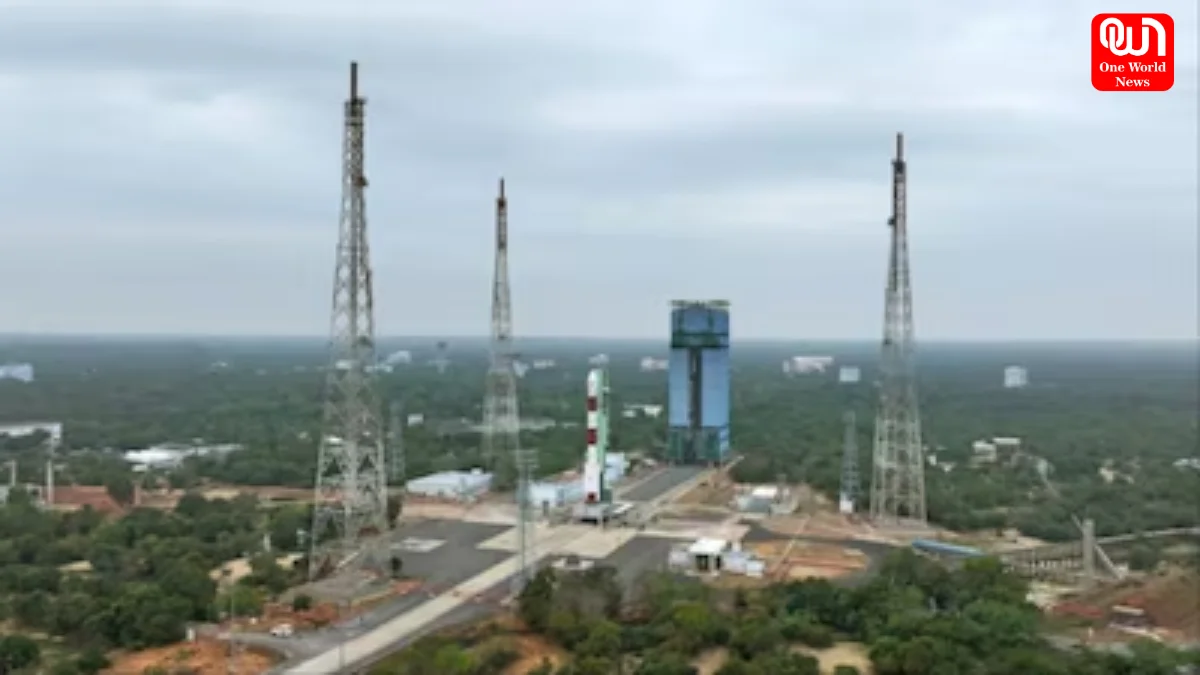
ISRO’s PSLV-C62 Mission With EOS-N1 Lifts Off From Sriharikota, Encounters Anomaly During Third Stage
The Indian Space Research Organisation marked the beginning of its 2026 launch calendar with the launch of the PSLV-C62 Mission from Sriharikota on Monday. The mission lifted off from the First Launch Pad at the Satish Dhawan Space Centre, carrying the EOS-N1 Earth observation satellite along with 14 co-passenger satellites for both domestic and international customers.
While the launch began as planned, ISRO later confirmed that the mission encountered a technical anomaly during the later phase of the flight, prompting a detailed analysis.
A Key Mission for ISRO and NSIL
The PSLV-C62 Mission was undertaken by NewSpace India Limited, the commercial arm of ISRO, and represents the ninth dedicated commercial mission executed by NSIL. It also marks the 64th flight of the Polar Satellite Launch Vehicle, which continues to be ISRO’s most reliable and frequently used launch vehicle.
PSLV has been central to India’s space achievements, including major missions such as Chandrayaan-1, the Mars Orbiter Mission, Aditya-L1, and Astrosat. The C62 mission was expected to further strengthen ISRO’s commercial launch credentials.
Launch Details and Configuration
The rocket lifted off at 10:17 AM from Sriharikota after a countdown that began nearly 25 hours in advance. According to ISRO, PSLV-C62 is a four-stage launch vehicle, consisting of two solid stages and two liquid stages, standing 44.4 metres tall with a lift-off mass of 260 tonnes.
Read more: Delhi Temperature Drops to 4.2 Degrees Celsius, Season’s Coldest Morning Recorded
The mission used the PSLV-DL configuration, equipped with two solid strap-on motors, a configuration designed for heavier payloads and precise orbital insertions.
EOS-N1 and Co-Passenger Satellites
The primary payload, EOS-N1, is an Earth observation satellite jointly developed by Thailand and the United Kingdom. The satellite was intended to be placed into a Sun Synchronous Orbit, allowing it to capture high-resolution images of Earth under consistent lighting conditions.
Alongside EOS-N1, the mission carried 14 additional satellites, reflecting ISRO’s growing role as a global launch service provider capable of deploying multiple payloads in a single mission.
Anomaly During the PS3 Stage
Soon after lift-off, ISRO confirmed that the mission experienced a disturbance near the end of the third stage (PS3). According to the ISRO chairman, the vehicle’s performance up to that point was largely as expected, but increased disturbance was observed close to the end of the stage.
Subsequently, a deviation in the vehicle’s flight path was detected. ISRO stated that all relevant flight data is being closely examined to understand the cause and impact of the anomaly.
Later, the space agency confirmed through an official update that the PSLV-C62 Mission encountered an anomaly during the end of the PS3 stage, and a detailed analysis had been initiated.
Technology Demonstration on Board
In addition to satellite deployment, the PSLV-C62 flight was designed to demonstrate the Kestrel Initial Technology Demonstrator (KID), a small re-entry capsule developed by a Spanish startup. The KID capsule was the final co-passenger on the mission.
As part of this demonstration, scientists planned to restart the fourth stage (PS4) to de-boost it and place it on a re-entry trajectory. The KID capsule was then expected to separate and re-enter Earth’s atmosphere, with a controlled splashdown in the South Pacific Ocean.
The demonstration was scheduled to occur more than two hours after launch, extending the mission duration beyond standard satellite deployment timelines.
Commercial and Strategic Importance
Despite the anomaly, the PSLV-C62 Mission underscores ISRO’s expanding commercial launch portfolio. Through NSIL, ISRO provides end-to-end launch services to international and domestic customers, offering cost-effective and reliable access to space.
Prior to this mission, PSLV had completed 63 successful launches, including a world record in 2017, when it deployed 104 satellites in a single mission — a milestone that placed India firmly on the global space map.
What Happens Next
ISRO has emphasized that the current priority is a thorough technical review. Data from onboard sensors and telemetry systems will be analyzed to determine the exact cause of the anomaly and assess its impact on mission objectives.
Read more: Iran Under Internet Blackout Amid Anti-Khamenei Protest and Deadly Clashes
Such reviews are a standard part of spaceflight operations and are critical for maintaining ISRO’s reputation for reliability and safety.
Conclusion
The launch of the PSLV-C62 Mission from Sriharikota marks an important moment in India’s 2026 space calendar. While the anomaly near the PS3 stage presents a technical challenge, it also reflects the transparent and methodical approach ISRO follows in mission evaluation.
As analysis continues, the mission reinforces India’s role as a major player in commercial and scientific space exploration, with PSLV remaining a cornerstone of ISRO’s launch capabilities.
We’re now on WhatsApp. Click to join.
Like this post?
Register at One World News to never miss out on videos, celeb interviews, and best reads.