Albert Namatjira: The Voice of a Forgotten Land
Discover Albert Namatjira’s inspiring journey—an Aboriginal artist who captured Australia’s soul and broke barriers through his art.

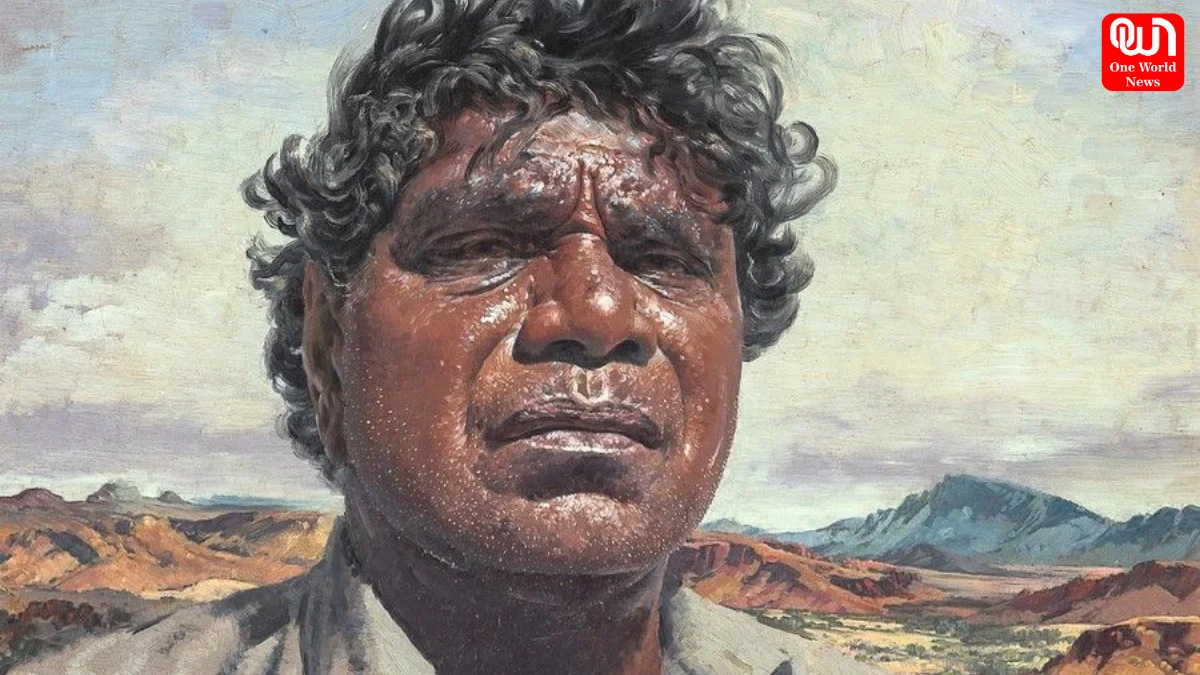
Albert Namatjira – The Aboriginal Artist Who Painted the Soul of Australia and Fought for Identity Through Art
Today, in the echoes of history and the silence of forgotten brilliance, I, Apoorva, bring you the story of a man who painted not just landscapes… but the soul of a people.
His name was Albert Namatjira—a name that still whispers through the red deserts of Australia.
Born in 1902 in the remote Hermannsburg region of Central Australia, Namatjira belonged to the Western Arrernte people. His early life was shaped by both Aboriginal traditions and the influence of a Lutheran mission where he was raised. But even as a child, there was something different about him—an eye that saw beyond the visible.
He didn’t just see land… he felt it.
The glowing red earth, the twisted white gum trees, the ancient mountains—these were not just landscapes in his paintings. They were living stories. Through watercolor, Namatjira created a bridge between two worlds: traditional Aboriginal connection to land and Western artistic techniques.
And that is what made him extraordinary.
In the 1930s, after learning painting techniques from artist Rex Battarbee, Namatjira began creating artworks that quickly captured attention. By 1938, his first exhibition in Melbourne sold out completely—a rare achievement, especially for an Aboriginal artist during that time.
But his rise was not just about art—it was about breaking barriers.
At a time when Indigenous Australians were denied basic rights, Namatjira became the first Aboriginal artist to gain widespread national and international recognition. His fame was historic. He was even granted Australian citizenship in 1957—something that, shockingly, many Aboriginal people were denied.
Yet, even as the world celebrated his art, his own country failed to offer him true equality.
Behind the success was a life filled with contradictions.
Read more: Uttarakhand Cabinet Gets Bigger: Five New Ministers Take Oath in Dehradun
Despite earning money from his paintings, Namatjira faced intense social and cultural pressure. In his community, sharing wealth was expected, and he often supported hundreds of relatives. At the same time, discriminatory laws restricted his freedom, limiting where he could live and how he could use his earnings.
Fame did not protect him.
Instead, it exposed the deep inequalities of the system he lived in.
His art remained pure, though—untouched by politics, yet deeply connected to identity. His paintings of Central Australia—rich in color, detail, and emotion—continue to hang in galleries across the country, reminding the world of a culture that refused to be erased.
But perhaps his greatest masterpiece was not on canvas.
It was his legacy.
Read more: Rupee Hits Record Low Of 93.12 Amid Oil Shock and Middle East Tensions
A legacy of resilience. A legacy of voice. A legacy of standing tall in a world that tried to silence him.
Albert Namatjira passed away in 1959, but his story did not end there. Today, he is remembered as a pioneer of contemporary Indigenous Australian art and a symbol of cultural pride. His influence continues through generations of artists who follow his path, painting not just what they see—but who they are.
Because some legends are never truly gone.
They live in stories… in struggles… and in strokes of paint that refuse to fade.
For One World News, this is Apoorva—bringing history back to life, one story at a time.
We’re now on WhatsApp. Click to join.
Like this post?
Register at One World News to never miss out on videos, celeb interviews, and best reads.