Al-Farabi: The Forgotten Philosopher Who Shaped Civilizations
Discover Al-Farabi, the great philosopher called the Second Teacher after Aristotle. Al-Farabi shaped philosophy, politics, and music theory.

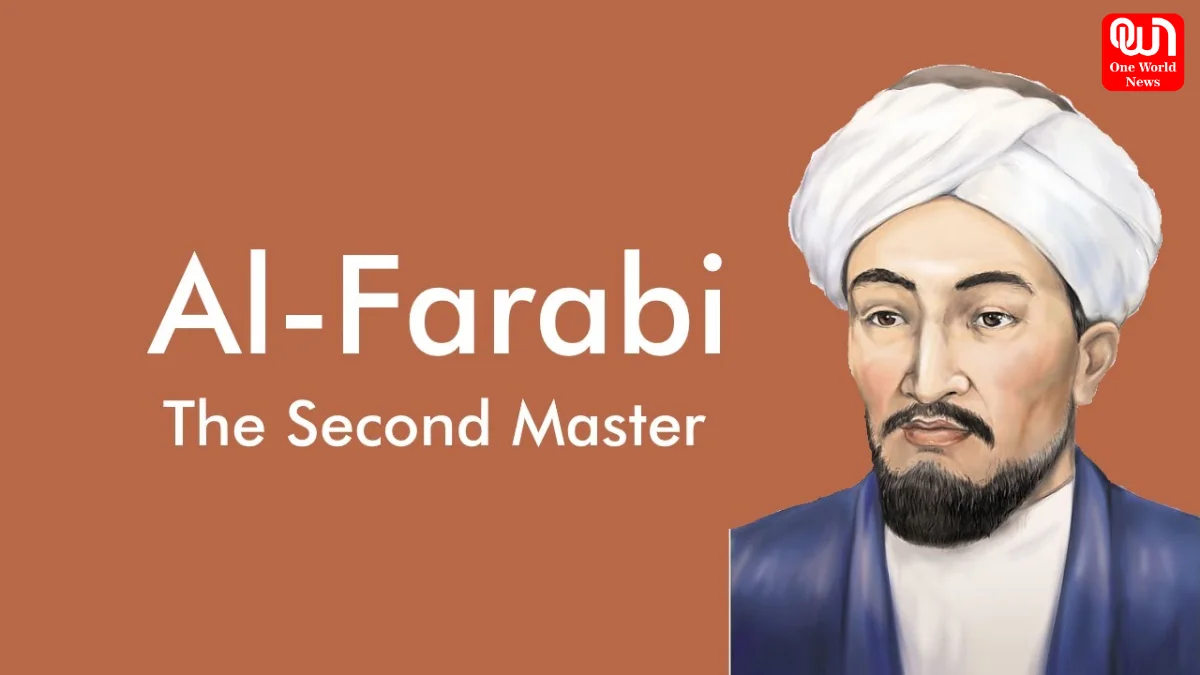
Al-Farabi – The Second Teacher After Aristotle Whose Philosophy, Music, and Vision of the Virtuous City Influenced the World
Hello and welcome to One World News. I am Apoorva, and today in our special segment “History & Forgotten Legends,” we journey back in time to rediscover the brilliance of a man whose wisdom shaped civilizations — yet whose name is rarely spoken today.
Today, we remember Al-Farabi, the philosopher whose ideas illuminated the world of knowledge more than a thousand years ago. As of March 2026, scholars across the world continue to study the works of Al-Farabi for their influence on philosophy, political theory, and intellectual history.
The Early Life of Al-Farabi
Born in the 9th century, around 872 CE, in the region of Central Asia — believed to be near modern-day Kazakhstan — Al-Farabi grew up during the height of the Islamic Golden Age. This was a period when science, philosophy, and literature flourished across the Islamic world. Cities like Baghdad became centers of knowledge where scholars translated and studied ancient Greek texts.
Al-Farabi traveled widely in pursuit of knowledge, eventually studying in Baghdad, which was then one of the most important intellectual capitals in the world. There, he immersed himself in philosophy, logic, mathematics, language, and music. His deep understanding of Greek philosophy, especially the works of Aristotle and Plato, helped him become one of the most influential thinkers of his time.
read more: Political Roundup: Key Political Developments Making Headlines Today
Why Al-Farabi Was Called “The Second Teacher”
So profound were his ideas that scholars across the Islamic world called Al-Farabi “The Second Teacher,” placing him just after the great Greek philosopher Aristotle, who was known as the “First Teacher.” This title reflected the immense respect scholars had for his ability to interpret, expand, and systematize philosophical knowledge.
Al-Farabi’s writings explained and clarified Aristotle’s complex ideas, making them more accessible to scholars of the medieval world. His work played a crucial role in preserving and transmitting classical philosophy to later generations.
Al-Farabi and the Idea of the Virtuous City
But Al-Farabi’s brilliance went far beyond interpreting Greek philosophy. He developed his own original ideas about politics, ethics, and the structure of an ideal society.
In one of his most famous works, The Virtuous City, Al-Farabi described a society guided by wisdom, justice, and knowledge. According to his philosophy, a truly successful society is one where leaders possess moral integrity and intellectual understanding. He believed that rulers should act like philosopher-kings — individuals who lead not for power, but for the well-being of their people.
The concept of the Virtuous City remains one of Al-Farabi’s most influential contributions to political philosophy. Even today, scholars see parallels between his ideas and modern discussions about ethical leadership and responsible governance.
Al-Farabi’s Contribution to Music and Science
Another remarkable aspect of Al-Farabi’s legacy was his work in music theory. While many remember him primarily as a philosopher, he was also a master of musical science. His book Kitab al-Musiqa al-Kabir (The Great Book of Music) became one of the most important works on music theory in the medieval world.
Al-Farabi believed that music had the power to shape emotions and influence the human soul. He studied how melodies and rhythms could affect mood, behavior, and psychological balance. His research combined mathematics, philosophy, and art, showing how deeply interconnected different fields of knowledge were in his thinking.
Influence on Future Thinkers
The intellectual legacy of Al-Farabi extended far beyond his own lifetime. His ideas influenced some of the greatest philosophers of the medieval world, including the famous Persian thinker Avicenna and the Jewish philosopher Maimonides. Through these scholars, Al-Farabi’s work reached Europe and helped shape the development of philosophy during the Middle Ages.
Despite this enormous influence, the name Al-Farabi slowly faded from popular historical memory. While philosophers and historians continued to study his work, he became less known among the general public compared to other historical figures.
Why Al-Farabi Still Matters Today
Today, as we rediscover forgotten minds who shaped our civilization, Al-Farabi’s legacy reminds us that true knowledge has no borders and no time limits. His vision of a society guided by wisdom, ethical leadership, and intellectual curiosity still resonates strongly in the modern world.
Because history is not only written by rulers and wars — it is also shaped by thinkers who dared to imagine a better world.
Read more: Gold Silver Price Today: Latest Bullion Market Update
Al-Farabi was one of those thinkers. His work connected philosophy, science, politics, and art into a single vision of human progress.
I am Apoorva, and you are watching One World News.
Stay tuned as we continue uncovering the legends that history almost forgot.
We’re now on WhatsApp. Click to join.
Like this post?
Register at One World News to never miss out on videos, celeb interviews, and best reads.