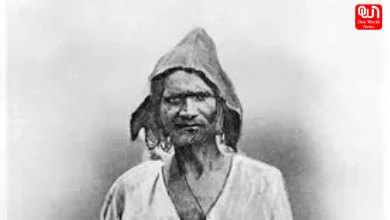
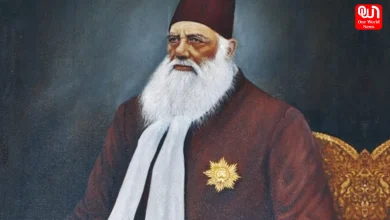
Maharshi Kanada and the Forgotten Origins of Atomic Thought
Maharshi Kanada envisioned atoms thousands of years before modern science, proving ancient wisdom shaped ideas that still define our universe.


Maharshi Kanada: The Ancient Indian Sage Who Imagined Atoms Long Before Modern Science
Long before laboratories, microscopes, and particle accelerators, knowledge was discovered through silence, observation, and deep contemplation. In ancient India, wisdom was not confined to instruments — it emerged from meditation and philosophical inquiry. Among the greatest minds of this tradition was Maharshi Kanada, a sage whose ideas would echo across centuries, long before the world was ready to understand them.
Today, science speaks fluently about atoms, particles, and matter. Yet few remember that the foundation of atomic thought was envisioned thousands of years ago by an Indian philosopher whose insights were born not from experiments, but from profound reasoning.
A Time Before Modern Science
Maharshi Kanada lived in an era when the natural world was explained through philosophy rather than equations. There were no laboratories or written scientific manuals. Knowledge was preserved through oral traditions, debate, and disciplined thought.
In this setting, Kanada proposed a revolutionary idea: that everything in the universe is composed of extremely small, indivisible particles. He called these particles anu — entities so minute they could not be seen, yet so powerful they formed all matter.
This idea was extraordinary for its time. While many cultures explained the universe through mythology alone, Maharshi Kanada offered a rational, systematic view of matter.
The Birth of Atomic Thought
Kanada argued that matter could be broken down into smaller and smaller units until it reached a fundamental particle that could no longer be divided. These particles combined in different ways to form all visible objects.
Read more: From PM Modi to Meloni: Who Has Been Invited to Trump’s Gaza Board Of Peace?
Today, we call these particles atoms.
What makes this vision remarkable is not just its accuracy, but its timing. Centuries before modern atomic theory emerged in the West, Maharshi Kanada had already laid out its philosophical framework. His insights show that ancient Indian thinkers were deeply engaged with questions that continue to shape modern science.
Knowledge Through Observation and Reason
Unlike modern science, which relies heavily on experimentation, Kanada’s approach was rooted in observation and logic. He studied nature closely, reflecting on change, motion, and composition. Through this, he concluded that visible transformations must arise from invisible processes.
His work emphasized cause and effect, natural laws, and structure — ideas that form the backbone of scientific thinking today. Though expressed philosophically, his concepts reveal a strikingly analytical mindset.
Why History Forgot Maharshi Kanada
Despite the depth of his contributions, Maharshi Kanada remains largely absent from global scientific narratives. As modern science developed in Europe, earlier philosophical foundations from other civilizations were often overlooked or minimized.
When atomic theory was formally articulated centuries later, it was presented as a new discovery, detached from earlier insights. The silence surrounding thinkers like Kanada reflects how history often favors written documentation and institutional power over oral traditions and philosophical schools.
As a result, the sage who imagined atoms long before they were named faded into obscurity.
Read more: Political Roundup: Today’s Global Political Pulse Explained
Ancient Wisdom, Modern Relevance
Today, as science continues to explore subatomic particles and the nature of matter, Kanada’s ideas feel surprisingly relevant. His belief that the universe is governed by fundamental building blocks aligns closely with contemporary physics.
Maharshi Kanada reminds us that scientific curiosity is not bound by time or geography. The human desire to understand reality transcends eras, cultures, and methods.
A Legacy Waiting to Be Remembered
Maharshi Kanada was not merely a philosopher. He was a visionary who dared to look beyond the visible world and imagine the invisible forces shaping existence. His work stands as proof that ancient knowledge systems were sophisticated, systematic, and deeply intellectual.
Remembering him is not about rewriting history — it is about completing it.
Conclusion
When science celebrates atomic power today, it often forgets the sage who first imagined the atom through thought alone. Maharshi Kanada represents a legacy of insight that the world is still catching up to.
Some legends are not forgotten.
They are simply waiting to be remembered.
And in remembering Maharshi Kanada, we acknowledge that the roots of human knowledge run far deeper than we are often taught.
We’re now on WhatsApp. Click to join.
Like this post?
Register at One World News to never miss out on videos, celeb interviews, and best reads.