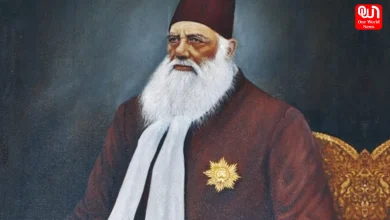
Brahmagupta: The Mind That Shaped Modern Mathematics
Brahmagupta laid the foundations of algebra and defined zero, shaping mathematics, science, and technology centuries before the modern world.

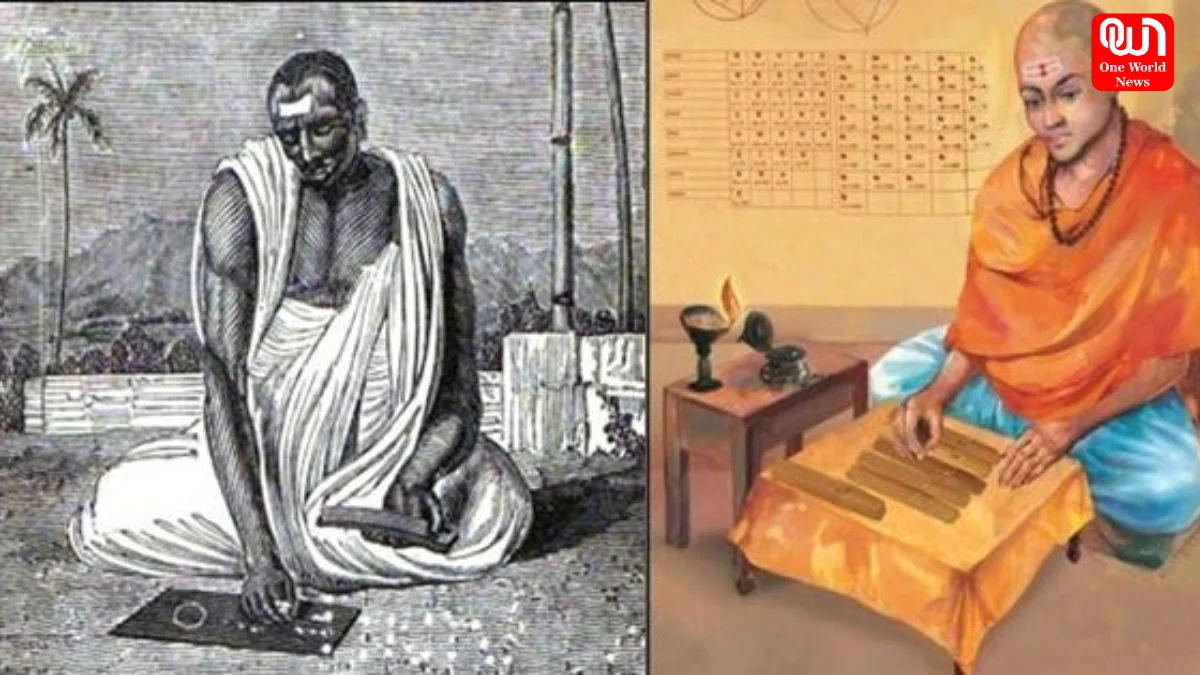
Brahmagupta: The Forgotten Genius Who Gave the World Zero and Changed Mathematics Forever
History often celebrates conquerors, rulers, and warriors. Yet some of the most powerful revolutions were led not by armies, but by ideas. One such silent revolutionary was Brahmagupta, a mathematician whose work continues to shape the modern world, even though his name remains unfamiliar to many.
Born in the 7th century in India, Brahmagupta lived at a time when knowledge traveled slowly and recognition even more so. Yet from this quiet era emerged ideas so profound that they now underpin mathematics, science, engineering, and digital technology.
Read more: PM Modi Praises Bhajan Clubbing on Mann Ki Baat
A World Before Zero
Before Brahmagupta, mathematics lacked a complete understanding of zero. Numbers existed, calculations were performed, but the concept of “nothing” as a number with rules did not fully exist.
Brahmagupta changed that.
He was the first mathematician to define zero as a number, not merely as an absence. More importantly, he laid down clear mathematical rules for using zero in calculations. Addition, subtraction, and multiplication involving zero were explained with logic and precision.
This single breakthrough transformed mathematics forever. Without zero, there would be no algebra as we know it, no advanced arithmetic, no computing systems, and no modern science.
The Birth of Algebraic Thinking
Brahmagupta was far ahead of his time in algebra. He introduced systematic methods to solve quadratic equations and worked extensively with negative numbers — concepts that were considered abstract or even illogical in many parts of the world centuries later.
His work treated negative numbers as valid mathematical entities, something European mathematics would only fully accept much later. This ability to think abstractly placed Brahmagupta among the earliest architects of algebraic reasoning.
Today, every equation solved in classrooms, laboratories, and research centers carries traces of his logic.
A Legacy Written in Silence
One of Brahmagupta’s most influential works laid out principles of arithmetic, algebra, geometry, and astronomy. His mathematical ideas traveled far beyond India through translations into Arabic and later into European languages.
Yet as these ideas spread, his name slowly faded from popular memory.
Many concepts credited to later mathematicians were already present in Brahmagupta’s writings centuries earlier. History absorbed his ideas but often overlooked the mind behind them.
From Ancient Manuscripts to Modern Technology
It is difficult to imagine modern life without Brahmagupta’s contributions. Satellite navigation, space exploration, engineering calculations, financial modeling, and digital computing all rely on mathematical frameworks built on zero and algebra.
Every time a computer processes data, every time an engineer calculates distance or trajectory, the intellectual legacy of Brahmagupta is at work.
He may not have known the future applications of his discoveries, but his thinking helped make them possible.
Why Brahmagupta Was Forgotten
The forgetting of Brahmagupta is not accidental. Colonial narratives, Eurocentric histories, and limited global acknowledgment of ancient Indian science contributed to the marginalization of scholars like him.
Mathematics became universal, but its origins were selectively remembered.
This raises an uncomfortable question: how many minds shaped the world without applause, recognition, or credit?
Read more: India-EU Free Trade Deal: 10 Things to Know About Tariff Cuts and Strategic Impact
Why Remembering Brahmagupta Matters Today
Remembering Brahmagupta is not about reclaiming pride alone — it is about restoring balance to the story of human knowledge. Innovation has never belonged to one culture or one era. It has always been global, interconnected, and cumulative.
By acknowledging thinkers like Brahmagupta, we gain a fuller, more honest understanding of how civilization progressed.
A Genius Beyond His Time
Brahmagupta did not command armies or rule kingdoms. His battlefield was thought, his weapon was logic, and his victory was timeless knowledge.
He proved that ideas could outlive empires.
In remembering Brahmagupta, we remember that history is not only written by those who ruled — but also by those who thought deeply, questioned boldly, and calculated fearlessly.
History remembers only when we choose to remember.
We’re now on WhatsApp. Click to join.
Like this post?
Register at One World News to never miss out on videos, celeb interviews, and best reads.