Rising Satellite Numbers Pose New Challenge for Space Telescopes
NASA Study Warns of Rising Light Pollution Threatening Future Space Observatories

Growing Satellite Constellations Are Disrupting Space-Based Astronomy
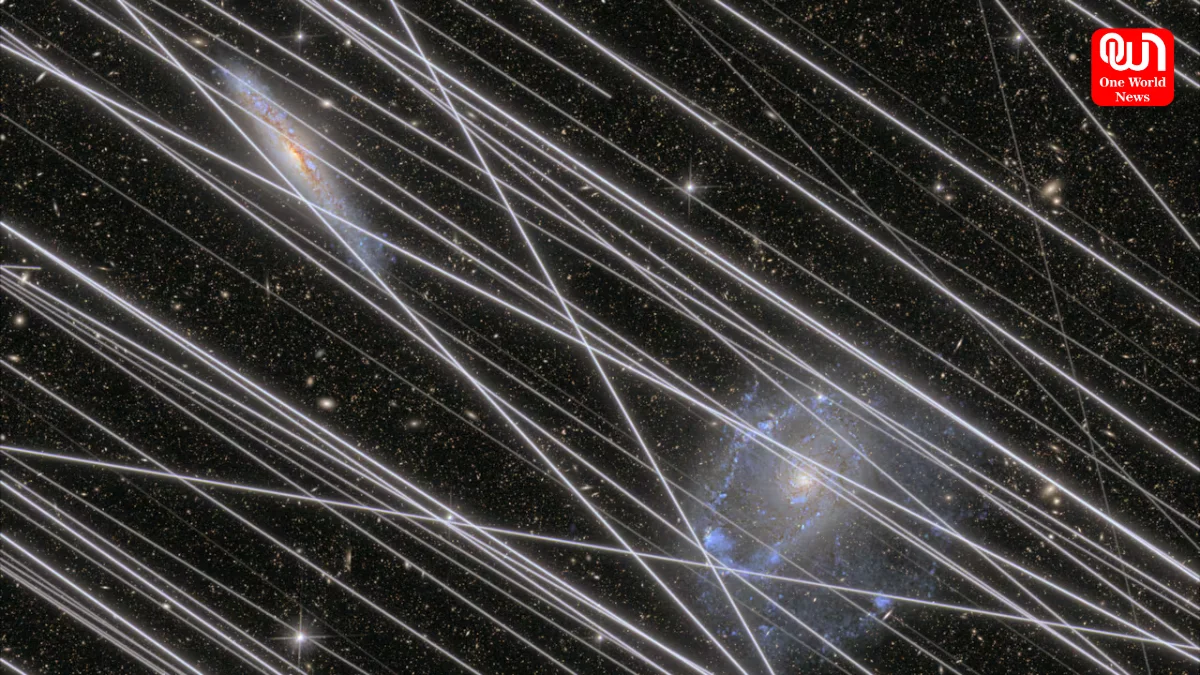
Space-based telescopes—long considered immune to the problems that plague ground observatories—are now facing a surprising and growing obstacle: their images are being compromised by the sheer number of satellites crowding low Earth orbit (LEO).
A recent NASA-led study reveals that these telescopes are increasingly contending with bright streaks, glints, and other forms of interference caused by reflected and emitted light from satellites. This marks a shift in a problem traditionally associated with Earth-bound observatories: light pollution.
A New Kind of Light Pollution
On Earth, astronomers have long battled skyglow from cities, car headlights, and other artificial lighting, all of which obscure the view of faint cosmic objects. Space telescopes, however, have typically been spared such interference. Operating above the atmosphere, they have enjoyed clear, unobstructed views—until now.
As thousands of new satellites orbit Earth, many cross directly through the field of view of space telescopes. These satellites can reflect sunlight, moonlight, and even Earth-shine, creating bright streaks across images. They also emit infrared radiation from their heated components and reflect radio wavelengths, further complicating astronomical measurements across multiple parts of the electromagnetic spectrum.
Extent of the Contamination
The NASA study examined four major space observatories—two currently in operation and two planned for the near future—and the findings were alarming.
- Hubble Space Telescope: Approximately 40% of its images may now show contamination from satellite light.
- SPHEREx (upcoming NASA mission): Nearly 96% of its images could be affected, threatening its mission to create a full-sky spectral map.
- ESA’s ARRAKIHS mission and China’s planned Xuntian Telescope are projected to face similarly high contamination rates.
This level of interference risks overwhelming faint cosmic signals, making it harder for astronomers to detect distant galaxies, map the distribution of dark matter, or study the early universe.
The Cause: Sky Crowding
The rapid increase in LEO satellites is driven largely by global efforts to expand internet access. Companies are deploying enormous “megaconstellations” to provide broadband coverage worldwide.
- 2019: ~2,000 satellites in LEO
- Today: ~15,000 satellites
- Next 10 years: Potentially up to 560,000 satellites, according to some projections
The resulting orbital congestion dramatically increases the likelihood that satellites will pass through telescope observations—multiple times per exposure in some cases.
Read More : Best 55-inch Android TV: A Complete Guide to Smart Viewing Comfort
Potential Solutions
Researchers emphasize that urgent action is needed to ensure the continued success of current and future space telescopes. Suggested strategies include:
- Launching satellites at lower altitudes so that they remain dimmer and fall out of orbit more quickly.
- Adjusting satellite design to reduce reflectivity and emitted infrared light.
- Improved coordination between satellite operators and space agencies to predict and avoid interference in real time.
There is one silver lining: some observatories orbit far beyond the congested region of LEO. NASA’s James Webb Space Telescope (JWST), for example, sits about 1.5 million kilometers from Earth at the Sun–Earth L2 point, ensuring that it remains unaffected by the growing crowd of satellites.
Read More : Understanding the Lifespan and Reliability of Hybrid Bearings
A New Challenge for Astronomy
The rise in satellite numbers represents a fundamental shift in the operating environment for space-based astronomy. Unless steps are taken to mitigate interference, the scientific return of several major missions—current and future—could be jeopardized.
As humanity fills the space around Earth with technology, safeguarding the clarity of our cosmic window has become an urgent, shared responsibility.
We’re now on WhatsApp. Click to join.
Like this post?
Register at One World News to never miss out on videos, celeb interviews, and best reads.