
Earth’s Rotation Day 2026: Celebrating the Planet’s Silent Spin
Celebrating Earth’s Rotation: Importance, Impact, and Activities

Understanding the Science Behind Earth’s Daily Spin
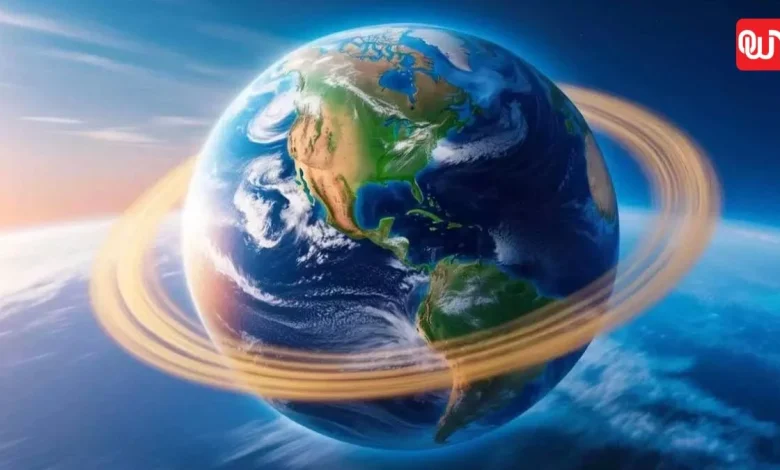
Every year, science enthusiasts, educators, and nature lovers observe Earth’s Rotation Day to recognize the planet’s continuous spin on its axis. In 2026, this special day will fall on Thursday, January 8, providing a unique opportunity to reflect on the mechanics, importance, and wonder of Earth’s rotation. Although the rotation is invisible to the naked eye, it is fundamental to life, shaping everything from day and night cycles to climate patterns and biological rhythms.
Understanding Earth’s Rotation
Earth rotates on its axis once approximately every 24 hours, creating the familiar cycle of day and night. This motion is so smooth and constant that it is easy to take for granted, yet it is essential for the functioning of ecosystems, human schedules, and weather patterns. The axis itself is tilted at an angle of about 23.5 degrees relative to the plane of Earth’s orbit around the Sun. This tilt, combined with rotation, is responsible for the seasonal variations experienced across the globe.
The phenomenon of Earth’s rotation was first conclusively demonstrated by French physicist Léon Foucault in 1851 through the use of the famous Foucault Pendulum. The pendulum’s slow, observable shift in direction provided simple but undeniable evidence that Earth is indeed spinning, giving scientists and the general public a tangible way to understand a planetary motion otherwise imperceptible.
Why Earth’s Rotation Matters
Earth’s rotation has profound implications for life and the environment. Most obviously, it generates the day-and-night cycle, regulating light and darkness across the planet. This, in turn, influences biological rhythms in humans, animals, and plants. Many species rely on these natural cycles for activities such as sleeping, feeding, mating, and migration. Humans also follow this rhythm for daily schedules, highlighting how Earth’s motion subtly governs even our modern lives.
Additionally, rotation affects climate and weather patterns. The spinning of the planet contributes to the Coriolis effect, influencing wind direction and ocean currents. This helps distribute heat and moisture around the globe, shaping weather systems and oceanic flows. Without Earth’s rotation, the planet’s climate would be drastically different, and life as we know it might not exist.
From a scientific perspective, studying Earth’s rotation also offers insight into the planet’s structure and behavior. Variations in rotation speed, axis wobble, and orbital dynamics help geologists and astronomers understand earthquakes, climate changes, and the planet’s long-term evolution. In essence, rotation is not just motion; it is a window into Earth’s inner workings.
Read More : National Bird Day 2026: Celebrating the Beauty and Importance of Birds Worldwide
Celebrating Earth’s Rotation Day 2026
Observing Earth’s Rotation Day is both educational and fun. Science museums and planetariums often host interactive exhibits, including demonstrations of the Foucault Pendulum, to illustrate the mechanics of rotation. For those at home, simple activities such as stargazing, tracking sunrise and sunset, or creating Earth-Sun models can make the day memorable and educational for children and adults alike.
Teachers and parents can use the day to engage young minds in conversations about planetary science, introducing concepts like the tilt of the axis, equinoxes, solstices, and global time zones. Even a simple discussion about how the rotation affects everyday life can spark curiosity about Earth’s dynamics and our place in the universe.
The Broader Significance
Beyond science, Earth’s Rotation Day reminds us of the planet’s delicate balance. The predictable spin of our world is a metaphor for consistency in nature, and recognizing it fosters a deeper appreciation for environmental stewardship. As climate change and ecological challenges continue, understanding the forces that sustain life can inspire responsible choices and respect for Earth’s systems.
Read More : Kate Middleton Stuns In Mughal-Inspired Oriental Circlet Tiara With A Royal History
Celebrating this day encourages reflection on how humans interact with the planet. From appreciating natural rhythms to promoting education in astronomy and Earth sciences, Earth’s Rotation Day is a quiet but powerful reminder of the invisible processes that make life possible.
In 2026, Earth’s Rotation Day on January 8 invites everyone to pause and celebrate the spin that governs life on our planet. From regulating day and night to influencing climate, biological rhythms, and scientific discovery, Earth’s rotation is a fundamental yet often overlooked aspect of our world. By honoring it, we reconnect with nature, deepen our understanding of science, and cultivate appreciation for the forces that shape life on Earth.
Observing this day is not just a scientific exercise — it is a celebration of our planet itself, reminding us that even the most subtle motions can have profound effects on life and the environment.
We’re now on WhatsApp. Click to join.
Register at One World News to never miss out on videos, celeb interviews, and best reads.