Begum Rokeya: A Visionary Who Dared to Dream for Women
Begum Rokeya was a pioneer of women’s education and feminism whose courage and writings reshaped ideas of equality in South Asia.

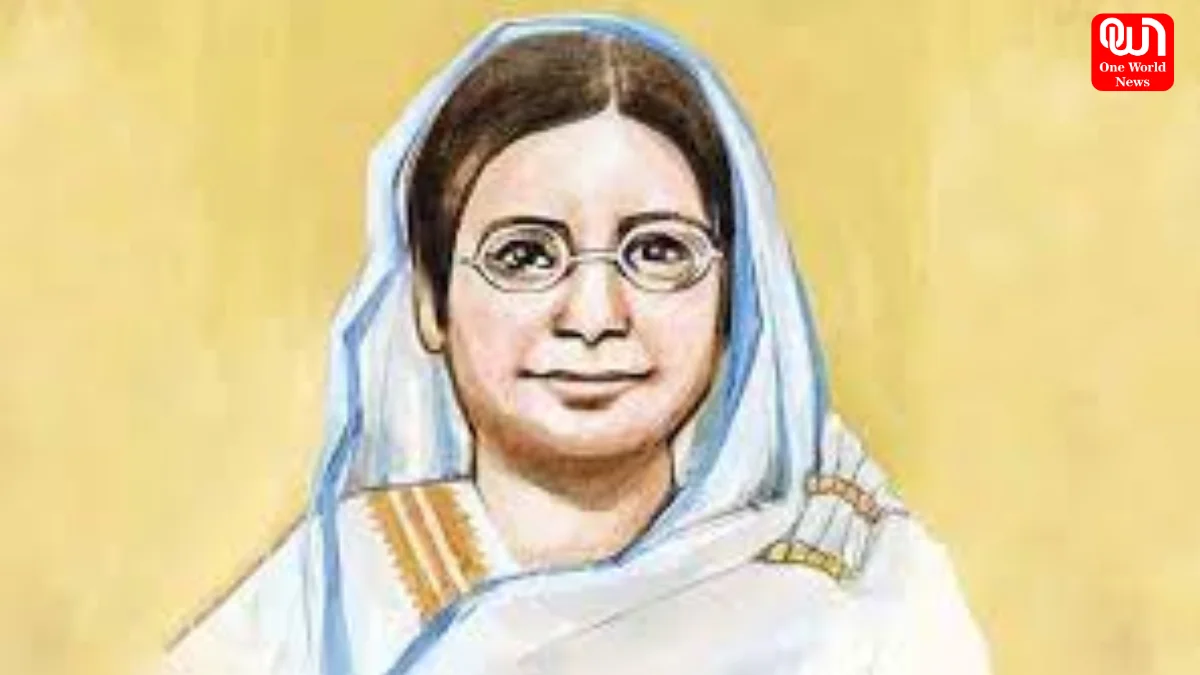
Begum Rokeya: The Forgotten Legend Who Lit the Path for Women’s Education and Equality in South Asia
History often celebrates emperors and political leaders, but it frequently overlooks the quiet revolutionaries who changed society from within. One such figure is Begum Rokeya, a woman whose courage, intellect, and imagination reshaped the conversation around women’s education and equality in South Asia.
Born in 1880 in undivided Bengal, Begum Rokeya lived in a time when educating women was seen as an act of defiance. Girls were expected to remain behind closed doors, denied literacy, independence, and choice. In such an environment, even the idea of dreaming was considered forbidden for women.
Begum Rokeya chose courage over silence.
Growing Up in a World of Restrictions
Begum Rokeya was born into a conservative Muslim family where formal education for girls was discouraged. Women were confined to domestic spaces, and intellectual growth was seen as unnecessary, even dangerous. Yet Rokeya’s curiosity could not be contained by social boundaries.
She secretly learned Bengali and English with the support of her elder brother and later her husband. This quiet rebellion marked the beginning of a lifelong struggle against gender-based oppression. For Rokeya, education was not merely personal advancement — it was liberation.
Read more: Pakistan Boycott India At T20 WC? Explained
A Pioneer of Women’s Education
Begum Rokeya firmly believed that a society could never progress if half of its population remained in darkness. This belief guided her work as an educator and reformer.
In 1911, she established a school for Muslim girls, an act considered radical at the time. The school faced social resistance, criticism, and skepticism, yet Rokeya persisted. She understood that education was the foundation upon which dignity, independence, and equality could be built.
Her efforts laid the groundwork for women’s education in regions where female literacy had long been neglected.
Writing as a Tool of Resistance
Begum Rokeya was not only an educator but also a powerful writer who used literature as a form of protest. Her most celebrated work, Sultana’s Dream, imagined a world where women led society through intelligence, science, and compassion, while men were confined to domestic spaces.
This satirical vision was more than fiction — it was a bold critique of patriarchy. At a time when women were denied public voices, Begum Rokeya dared to imagine an entirely different social order.
Through essays, stories, and speeches, she challenged rigid traditions, religious misinterpretations, and cultural norms that suppressed women. She did not write to please — she wrote to awaken.
A Feminist Ahead of Her Time
Long before feminism became a global movement, Begum Rokeya articulated its core principles. She spoke openly about gender inequality, social injustice, and the need for women to think independently.
Her ideas were revolutionary because they combined education, self-respect, and critical thinking. She did not advocate blind rebellion but conscious empowerment — encouraging women to question, learn, and claim their rightful place in society.
In many ways, Begum Rokeya was decades ahead of her time.
Why Her Legacy Still Matters
Today, as conversations around women’s rights, education, and empowerment continue worldwide, Begum Rokeya’s work remains deeply relevant. The barriers she fought — social control, denial of education, and imposed silence — still exist in different forms.
Yet her name is often absent from mainstream history books. Her contributions are whispered rather than celebrated, remembered by scholars but forgotten by popular narratives.
Remembering Begum Rokeya is not just about honoring the past. It is about acknowledging the foundations upon which modern ideas of equality were built.
Read more: Union Budget 2026: Date, Time and How to Watch the Budget Speech Live
Remembering a Forgotten Legend
Begum Rokeya was more than a writer or reformer. She was a dreamer in an age that forbade women from dreaming. She lit lamps where darkness prevailed and opened doors where walls once stood.
History may have overlooked her, but her legacy endures in every girl who learns, questions, and rises.
Begum Rokeya was not just a forgotten legend — she was a beginning.
And remembering her is how we shape a better future.
We’re now on WhatsApp. Click to join.
Like this post?
Register at One World News to never miss out on videos, celeb interviews, and best reads.