
Asim Munir Appointed Pakistan’s First Chief Of Defence Forces
Asim Munir to Oversee Unified Command as Nation’s First Chief of Defence Forces

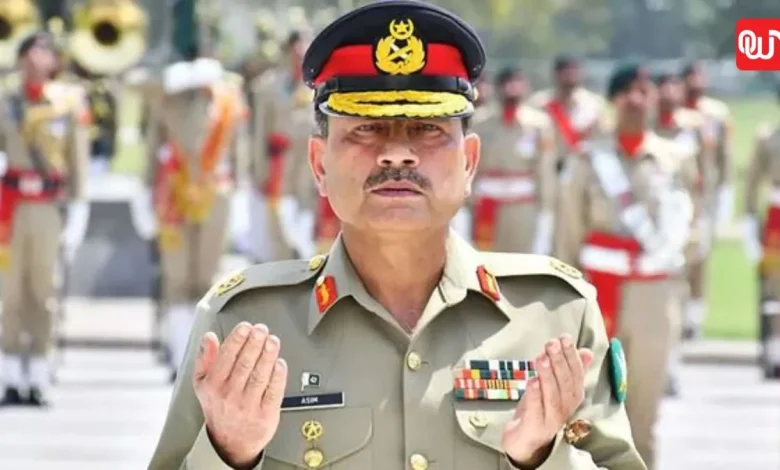
Asim Munir Leads Pakistan’s Historic Military Restructuring as First CDF
In a historic overhaul of its military command structure, Pakistan has formally appointed Field Marshal Asim Munir as the country’s first Chief of Defence Forces (CDF). The move — approved by President Asif Ali Zardari on the advice of Prime Minister Shehbaz Sharif — marks a sweeping reorganisation of defence leadership, consolidating command across all branches of the armed forces under a single authority.
What the Change Means: CDF Role, Tenure and Powers
- Under the new arrangement, Asim Munir will hold dual responsibilities — continuing as Chief of Army Staff (COAS) and concurrently serving as Chief of Defence Forces.
- His tenure as CDF is set for five years, beginning from the date of notification.
- The constitutional and legal framework governing this transition was formalised through a recent amendment (the 27th Amendment to the Constitution of Pakistan) along with changes to the Pakistan Army Act, 1952 (PAA).
- The posting of CDF replaces the earlier leadership structure — specifically the abolished post of Chairman Joint Chiefs of Staff Committee (CJCSC), ending the model of separate service-wise leadership.
This reorganisation aims to centralise command and streamline coordination across the Army, Navy, and Air Force — handing strategic, operational, and administrative authority to a single individual.
Read More : TMC Goes on the Offensive Over SIR, PM Modi Urged to Temper BJP’s Bengal Strategy
Background: Why This Shift?
Analysts note that this is the most sweeping restructuring of Pakistan’s military hierarchy since the 1970s. The changes come amid what the Pakistani government describes as evolving security challenges and the need for a unified command capable of responding rapidly and decisively — especially under conditions of “modern warfare.”
Asim Munir, promoted to the rank of Field Marshal earlier this year — only the second person in Pakistan’s history to achieve this rank after Ayub Khan — is thus being entrusted with unprecedented powers.
Read More : Ukraine and US Delegations to Meet in Florida Following Talks in Moscow, Says White House
Reactions & Implications: Domestic and Beyond
The government has framed the restructuring as a needed step to strengthen national defence and improve inter-service coordination. The Prime Minister lauded the appointment as “aligned with contemporary and modern warfare requirements,” and said it would further bolster Pakistan’s security.
However, the consolidation of power in a single individual — and abolition of the CJCSC system — represents a major shift in civil-military and inter-service balance. Critics warn it could concentrate too much power in one office, raising questions about checks and balances within the military and potential impacts on civil oversight.
Internationally, the move may recalibrate how foreign governments engage with Pakistan’s military leadership, as decision-making becomes more centralised. Given ongoing regional tensions and strategic security challenges, the establishment of the CDF post could mark a new phase in Pakistan’s defence posture and regional role.
We’re now on WhatsApp. Click to join.
Register at One World News to never miss out on videos, celeb interviews, and best reads.