Rahul Gandhi vs PM Modi: Who Answers the Questions? Pakistan Fan Boy Row, Chicago Speech and Quad Summit Controversy Explained
Rahul Gandhi questions Modi's foreign policy, faces a Pakistan Fan Boy jibe, while Modi's Quad Summit video sparks debate over media accountability.

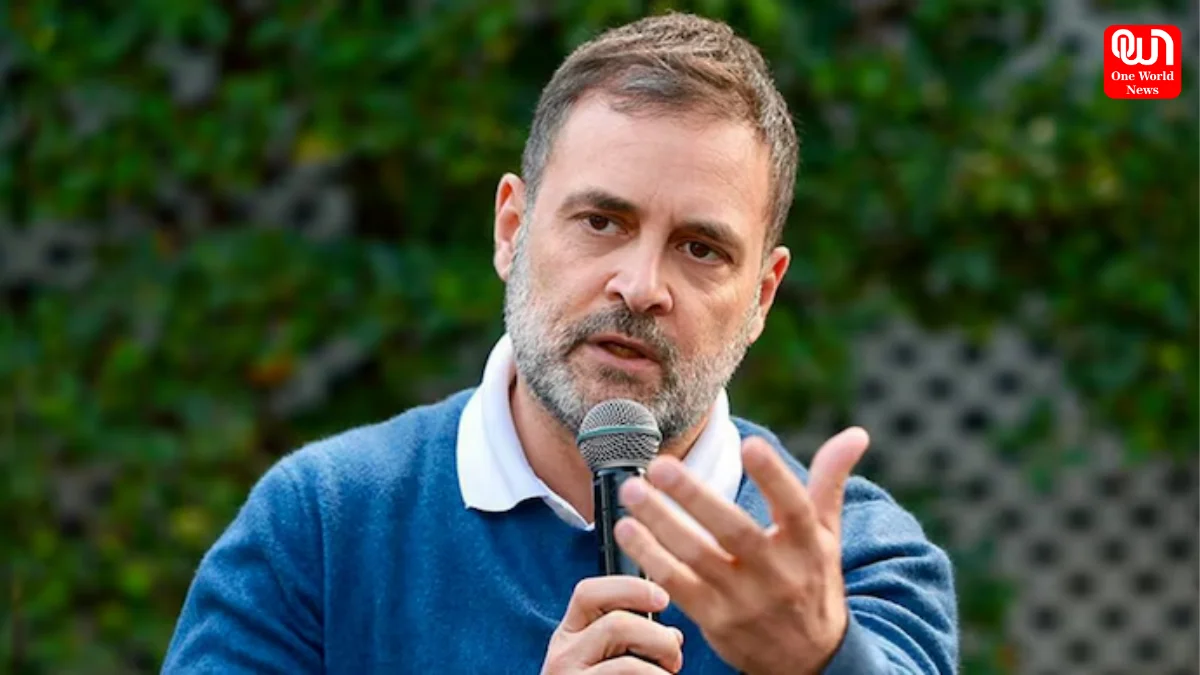
Rahul Gandhi vs PM Modi: Who Answers the Questions?
Indian politics is once again witnessing a heated debate over foreign policy, Pakistan and political accountability. This time, the spotlight is on Congress leader Rahul Gandhi and Prime Minister Narendra Modi. A recent interaction by Rahul Gandhi at the University of Chicago has triggered sharp reactions from the BJP, while a video featuring PM Modi at the Quad Summit has reignited discussions about his interactions with journalists.
But what exactly happened? Why did Rahul Gandhi receive the label of a “Pakistan Fan Boy” despite strongly criticising Pakistan’s support for terrorism? And why is PM Modi’s response during an international media interaction being discussed? Let’s understand the controversy.
Rahul Gandhi’s University of Chicago Interaction: What Did He Say About Pakistan?
During an interaction with students at the University of Chicago, Rahul Gandhi was asked whether India and Pakistan could move beyond their historical disagreements and work together for mutual benefits.
Instead of avoiding the question, Rahul Gandhi gave a direct response. He explained that India would prefer peaceful relations with its neighbouring countries, but Pakistan’s support and encouragement of terrorism remained a major obstacle.
He made it clear that India could not continue diplomatic conversations with Pakistan while innocent Indian citizens were being killed in terrorist attacks. According to him, meaningful dialogue could potentially begin only when Pakistan stopped supporting terrorism against India.
His response reflected a clear position: peaceful relations are desirable, but national security cannot be compromised for diplomatic engagement.
Why Did Rahul Gandhi Call India a Side Player in Global Politics?
The controversy did not end with his comments about Pakistan. Rahul Gandhi also raised questions about India’s position in international diplomacy.
During the same interaction, he expressed surprise that Pakistan was involved in discussions involving the United States and Iran, while India appeared to be watching from the sidelines.
He argued that India, considering its population, history, international relationships and geopolitical importance, should have a stronger voice in global conversations.
Rahul Gandhi described India as a “side player” in international affairs and suggested that the country should become more actively involved in important diplomatic developments.
His criticism was primarily directed at India’s foreign policy approach and its role in global decision-making. However, his reference to Pakistan’s diplomatic involvement quickly became a political flashpoint.
BJP’s Reaction: Why Was Rahul Gandhi Called a Pakistan Fan Boy?
The BJP wasted little time responding to Rahul Gandhi’s remarks. BJP national spokesperson Pradeep Bhandari criticised the Congress leader and described him as a “Pakistan Fan Boy” in a post on X.
Bhandari questioned Rahul Gandhi’s repeated references to Pakistan during international engagements. He also argued that Gandhi was overlooking India’s diplomatic contributions, including its peace-related efforts involving Russia and Ukraine.
The BJP spokesperson further brought up the Congress-led UPA government’s handling of relations with Pakistan following the 26/11 Mumbai terror attacks and the Sharm el-Sheikh joint statement.
The political disagreement has now become another example of how India’s foreign policy can turn into a domestic political battle.
However, an important distinction deserves attention: Rahul Gandhi’s criticism of India’s diplomatic position and his statement that Pakistan must stop supporting terrorism before talks can resume are two separate parts of his argument. Both need to be considered before judging his position.
PM Modi’s Quad Summit Video: What Does ‘Shall We Move?’ Mean?
While Rahul Gandhi’s Chicago remarks were attracting political attention, another video involving Prime Minister Narendra Modi was generating discussion on social media.
During a media interaction at the Quad leaders’ gathering in Manila, Philippines, PM Modi was standing alongside US President Donald Trump and other international leaders.
During the interaction, journalists began asking Donald Trump questions about international developments and other important issues. As Trump continued responding to reporters, Modi appeared to suggest moving ahead, with the words, “Shall we move?”
The moment quickly attracted attention, particularly because journalists were asking questions and Trump appeared willing to continue answering them.
The video reignited discussions about Modi’s approach towards unscripted media interactions and his willingness to face difficult questions from journalists.
Rahul Gandhi vs Modi: The Debate Over Press Conferences and Media Accountability
One of the biggest questions emerging from this controversy concerns political accountability.
Rahul Gandhi has repeatedly criticised the government over its communication with the media and has participated in interactions with students and audiences during overseas visits. His University of Chicago appearance is another example of him answering questions on sensitive subjects, including Pakistan, terrorism and India’s international position.
On the other hand, PM Modi’s media interactions have frequently attracted scrutiny because he has not held a solo, unscripted press conference in India as Prime Minister. His overseas media appearances have also generated discussions about the extent to which he takes spontaneous questions from journalists.
The Quad Summit video has brought this issue back into the spotlight. However, it is important to distinguish between answering questions at a public event, participating in a moderated discussion and holding a formal press conference. These are different forms of media engagement.
Ultimately, voters have a legitimate interest in knowing how their political leaders respond to difficult questions, whether those questions concern foreign policy, national security, economic challenges or international relations.
Is Asking Questions About India’s Foreign Policy Anti-National?
This controversy also raises a larger question about political discussions in a democracy.
Criticising the government’s foreign policy does not automatically mean supporting another country. Similarly, questioning India’s position in global diplomacy should not be confused with defending Pakistan.
Rahul Gandhi’s statement about terrorism was direct: Pakistan must stop supporting terrorism before meaningful dialogue can resume. His separate criticism concerned India’s perceived absence from important international diplomatic conversations.
At the same time, the BJP has every right to challenge his assessment and present its own arguments about India’s diplomatic achievements.
A healthy democracy requires political leaders to defend their positions with facts, arguments and accountability rather than relying entirely on personal attacks or political labels.
The public should also examine the complete statements made by leaders instead of forming opinions based on selected clips or isolated headlines.
Who Answers the Tough Questions: Rahul Gandhi or PM Modi?
The Rahul Gandhi vs PM Modi debate is not simply about one Chicago interaction or one Quad Summit video. It represents a much bigger discussion about transparency, political communication and accountability in Indian democracy.
Rahul Gandhi’s remarks have opened a debate about India’s role in global diplomacy, while the BJP has challenged his interpretation and questioned his references to Pakistan.
Meanwhile, PM Modi’s Quad Summit video has renewed public discussion about his approach to media questions and unscripted press interactions.
Both leaders face different expectations from the public. Rahul Gandhi must explain his foreign policy criticism with clarity, while PM Modi must continue engaging with questions about the government’s decisions and international relationships.
Neither political slogans nor viral videos should replace meaningful public scrutiny.
Read more: Canada Declares Goldy Brar Its Most-Wanted Fugitive, Announces $250,000 Reward
Final Take: Democracy Needs Questions and Answers
At the end of the day, asking questions is an essential part of democracy, and answering them is equally important. If Rahul Gandhi questions the government’s foreign policy, he should be judged on the substance of his arguments. Likewise, PM Modi’s leadership should remain open to public and media scrutiny.
Calling someone a “Pakistan Fan Boy” without considering the complete context does little to improve political debate. India deserves leaders who can defend their decisions, explain their positions and confidently answer difficult questions.
Because democracy becomes stronger not when leaders avoid questions, but when they are ready to answer them!
We’re now on WhatsApp. Click to join.
Like this post?
Register at One World News to never miss out on videos, celeb interviews, and best reads