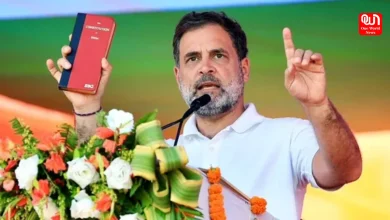
1962 War to ‘Hindu Rate of Growth’: Kiren Rijiju’s Four Questions to Congress After Rahul Gandhi’s PM Jibe
Kiren Rijiju questions Rahul Gandhi over the 1962 war, poverty and Hindu rate of growth, escalating the BJP-Congress row over foreign policy.

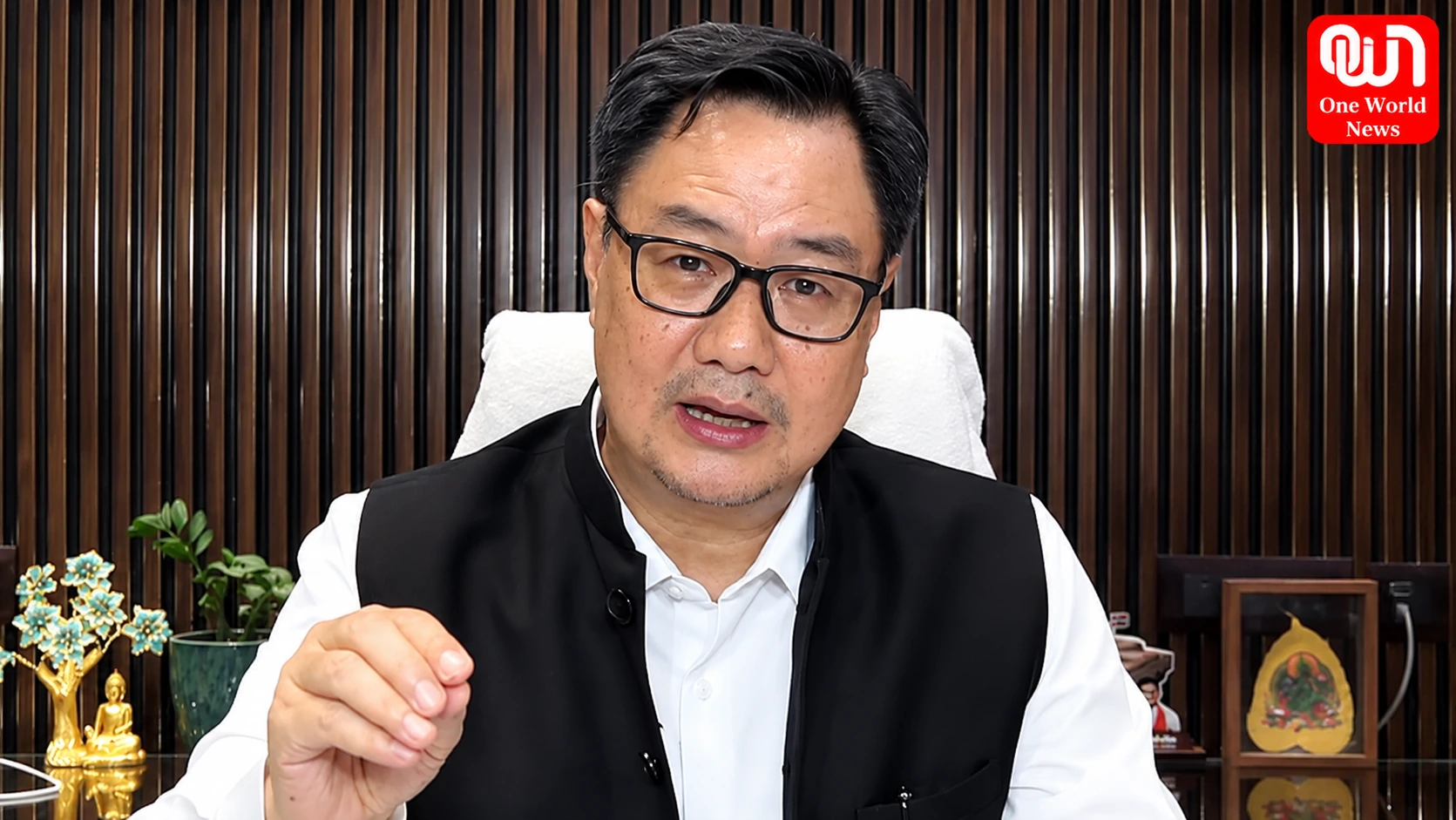
1962 War to ‘Hindu Rate of Growth’: Kiren Rijiju Questions Rahul Gandhi as BJP-Congress Row Escalates Over ‘Compromised Prime Minister’ Remark Against Narendra Modi and India’s Foreign Policy
India’s political atmosphere has heated up following a fresh exchange between the Bharatiya Janata Party (BJP) and the Congress. Union Parliamentary Affairs Minister Kiren Rijiju has launched a sharp attack on Congress leader Rahul Gandhi after his controversial ‘compromised Prime Minister’ remark against Prime Minister Narendra Modi. Bringing historical and economic issues into the debate, Rijiju raised four questions for Congress, referring to the 1962 India-China war, poverty, India’s international image and the country’s economic growth.
The latest BJP Congress row has brought India’s political history, foreign policy and diplomatic position into the spotlight. Rijiju’s questions have also reignited discussions about the Congress government’s historical record and the country’s development journey.
Why Did Kiren Rijiju Target Rahul Gandhi?
The political controversy started after Rahul Gandhi criticised Prime Minister Narendra Modi over his absence from a high-profile trilateral meeting involving US President Donald Trump, Chinese President Xi Jinping and Russian President Vladimir Putin.
The meeting reportedly took place in Shenzhen, China, on November 19, 2026, on the sidelines of the Asia-Pacific Economic Cooperation (APEC) summit.
Sharing a photograph of the three world leaders, Rahul Gandhi took a dig at the Prime Minister. He suggested that if Congress were in power, India’s Prime Minister would have been present at the table. He further described Modi as a ‘compromised PM’, questioning his ability to participate in important international discussions.
His remarks quickly attracted criticism from BJP leaders, who accused him of questioning India’s international standing for political purposes.
Kiren Rijiju’s Four Questions to Congress
Responding to Rahul Gandhi’s statement, Kiren Rijiju posted four questions on social media on November 20. He asked Congress to address several issues connected with India’s history and economic performance.
Here are the four major questions raised by the Union Minister:
1. Will Congress Apologise for the 1962 India-China War?
Rijiju referred to the 1962 India-China war and mentioned that his village was occupied by China during the conflict. He questioned whether Congress would apologise for what he described as the humiliation India faced during the war.
The 1962 conflict remains an important chapter in India’s history and continues to influence discussions about national security and relations with China.
2. Why Did India Remain a Poor Nation?
The second question focused on India’s economic condition during the decades when Congress governed the country. Rijiju questioned why India continued to struggle with poverty despite being an independent nation for several decades.
His criticism brought attention to historical economic policies, development priorities, industrial growth and the challenges faced by successive governments.
3. Why Was India Called the Land of Snake Charmers?
Rijiju’s third question addressed India’s historical international image. The description of India as the ‘land of snake charmers’ was often associated with outdated stereotypes about Indian society and its traditional practices.
By raising this issue, Rijiju questioned how India was represented internationally during earlier decades and highlighted the country’s transformation into a modern economy with growing global influence.
4. Why Was India’s Economy Called the ‘Hindu Rate of Growth’?
His fourth question focused on the controversial economic expression ‘Hindu rate of growth’.
The term was used by economist Raj Krishna to describe India’s relatively slow economic growth, generally around 3.5 per cent annually during the decades following independence. The expression became associated with debates about India’s economic policies and development model.
Rijiju questioned why India’s economic performance was described using this phrase and brought the country’s earlier growth record into the political discussion.
BJP-Congress Row Over India’s Foreign Policy
The latest exchange is not limited to the Prime Minister’s absence from one international meeting. It reflects a broader disagreement between the BJP and Congress over India’s foreign policy and its position in global geopolitics.
Rahul Gandhi has previously questioned India’s influence in international discussions, arguing that the country should have a stronger role in shaping global decisions. He has also expressed concerns about India’s diplomatic position compared with neighbouring countries.
The BJP, meanwhile, has defended the Modi government’s foreign policy and highlighted India’s growing engagement with major global powers.
It is also important to note that India is not a member of APEC. Therefore, its absence from the forum’s official membership discussions is different from its participation in other international diplomatic engagements.
Kiren Rijiju’s Strong Message to Rahul Gandhi
Speaking to reporters, Rijiju also criticised Rahul Gandhi for making statements about India while travelling abroad or participating in international discussions. He alleged that Gandhi’s comments were damaging to the country’s image.
The minister argued that political disagreements with Narendra Modi should not become criticism of India’s institutions, democracy or international reputation.
Congress and the BJP have continued to exchange criticism, making India’s diplomatic influence and historical political decisions major subjects of debate.
Read more: World’s Tallest Ganesha Statue in Bali Sets Guinness World Record With 50-Foot Sculpture
Conclusion
The latest confrontation between Kiren Rijiju and Rahul Gandhi has turned into another major political debate between the BJP and Congress. While Gandhi questioned Narendra Modi’s international standing through his ‘compromised Prime Minister’ remark, Rijiju responded by raising four questions about the 1962 war, poverty, India’s historical image and the Hindu rate of growth.
The controversy highlights how India’s political history and foreign policy continue to influence present-day political arguments. Whether these questions lead to a detailed response from Congress or further political exchanges, the debate has once again placed India’s global position and economic journey at the centre of national attention.
We’re now on WhatsApp. Click to join.
Like this post?
Register at One World News to never miss out on videos, celeb interviews, and best reads.