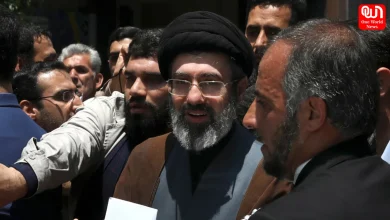
How Balen Shah Defeated KP Sharma Oli: The Rise of an Independent Leader
Balen Shah shocked Nepal politics by defeating KP Sharma Oli’s influence. Learn how Balen Shah rose as a powerful independent leader.


How Balen Shah Defeated 4-Time Prime Minister KP Sharma Oli and Changed Nepal’s Political Landscape
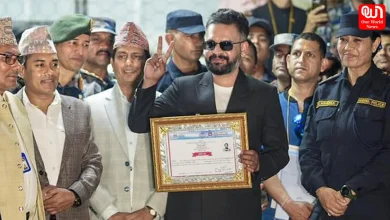
On May 13, 2022, Nepal witnessed a political moment that surprised many observers. In the local elections held that year, Balen Shah, a rapper, engineer, and independent candidate, achieved a historic victory in Kathmandu. His rise challenged traditional political dominance associated with veteran leaders like KP Sharma Oli, who had served as Nepal’s Prime Minister four times and remained one of the most influential figures in the country’s politics.
The election outcome symbolized a shift in voter sentiment, particularly among young voters who were seeking change from long-established political structures. Balen Shah’s victory was not simply an electoral win—it represented a generational transformation in Nepal’s political narrative.
Read more: Political Roundup: Top Developments on March 9
The Rise of Balen Shah
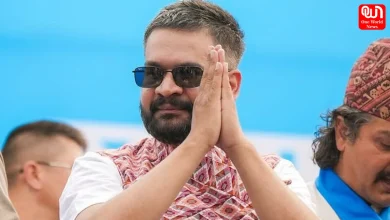
Before entering politics, Balen Shah was widely known in Nepal as a rapper and civil engineer. His music often addressed social issues, corruption, and the frustrations of young people navigating a challenging political system. Over time, this outspoken voice earned him recognition as someone unafraid to question authority.
When Balen Shah announced his candidacy for Mayor of Kathmandu as an independent candidate, many political analysts initially viewed it as symbolic rather than competitive. Nepal’s political environment had traditionally been dominated by established parties such as the CPN-UML and Nepali Congress. However, Shah’s campaign quickly gained momentum, especially on social media platforms where young voters rallied around his message of transparency and accountability.
Challenging Political Establishment
While KP Sharma Oli was not directly contesting the Kathmandu mayoral race, his party—the Communist Party of Nepal (Unified Marxist–Leninist), or CPN-UML—remained a powerful force in national politics. The victory of Balen Shah against candidates backed by major political parties indirectly challenged the political influence associated with leaders like Oli.
For decades, Nepal’s political leadership had largely been shaped by senior politicians who dominated party structures. Balen Shah represented the opposite: a new face outside the traditional party hierarchy. His campaign emphasized practical governance, better urban management, and stronger anti-corruption measures.
This contrast between an independent reform-oriented candidate and the long-standing political establishment became a central theme of the election.
Youth Power and Digital Campaigning
One of the most important factors behind the rise of Balen Shah was the power of youth participation. Nepal has a large young population, many of whom had grown frustrated with slow infrastructure development, traffic congestion, and governance challenges in Kathmandu.
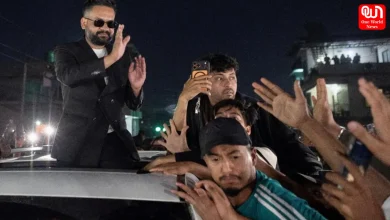
Balen Shah’s campaign used digital platforms, creative messaging, and grassroots engagement to connect directly with voters. His approach felt fresh compared to the conventional campaign styles used by traditional political parties.
The message resonated strongly. Thousands of volunteers supported his campaign, spreading his ideas through social media, street outreach, and community discussions. This digital-first strategy helped Shah reach voters who previously felt disconnected from politics.
A Symbol of Political Change
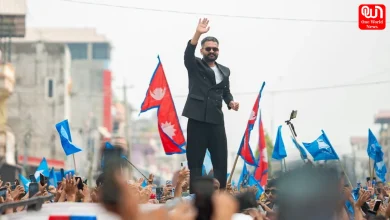
The victory of Balen Shah became symbolic far beyond the boundaries of Kathmandu. Many observers interpreted the election as a sign that voters were willing to challenge established political power structures represented by figures like KP Sharma Oli and other long-time leaders.
For younger citizens especially, Shah’s success showed that independent candidates could compete against major political parties if they built strong grassroots support.
It also demonstrated a broader trend emerging across many democracies: voters increasingly demanding transparency, accountability, and new leadership perspectives.
Governance After Victory
After taking office as Mayor of Kathmandu, Balen Shah began focusing on urban governance challenges, including waste management, city planning, and enforcement of municipal regulations. His administration also emphasized transparency and citizen engagement.
Read more: Gold and Silver Prices Today Show Mixed Trend Between MCX and Global Markets
While governing a complex city like Kathmandu presents many challenges, Shah’s leadership continues to attract attention both inside and outside Nepal. His rise from musician to mayor has made him one of the most talked-about political figures in the country.
Why the Story Matters
The story of Balen Shah is not simply about one election. It reflects a broader transformation in Nepal’s political culture. Citizens, especially younger voters, are increasingly willing to support leaders who emerge outside traditional party structures.
Although veteran leaders like KP Sharma Oli remain significant figures in Nepal’s national politics, the emergence of leaders like Shah shows that the political landscape is evolving.
His journey demonstrates that determination, public trust, and grassroots support can challenge even the most established political systems.
In the end, the rise of Balen Shah reminds us that democracy is constantly evolving—and sometimes, the most unexpected candidates become the voices of change.
We’re now on WhatsApp. Click to join.
Like this post?
Register at One World News to never miss out on videos, celeb interviews, and best reads.