‘3rd World Aliens’: MAGA Activist’s Remarks Over Hanuman Statue in Texas Spark Row
A MAGA activist’s “3rd World Aliens” comment about a Hanuman statue in Texas fuels controversy over immigration, religion, and cultural diversity.

‘3rd World Aliens’: MAGA Activist’s Remarks Over Hanuman Statue in Texas Spark Row and Broader Debate
A political controversy has ignited online and offline discussions in the United States after a prominent MAGA (Make America Great Again) activist used the phrase “3rd World Aliens” in a viral post about a large Hindu statue in Texas, triggering widespread backlash and a broader debate about immigration, multiculturalism, and religious tolerance.
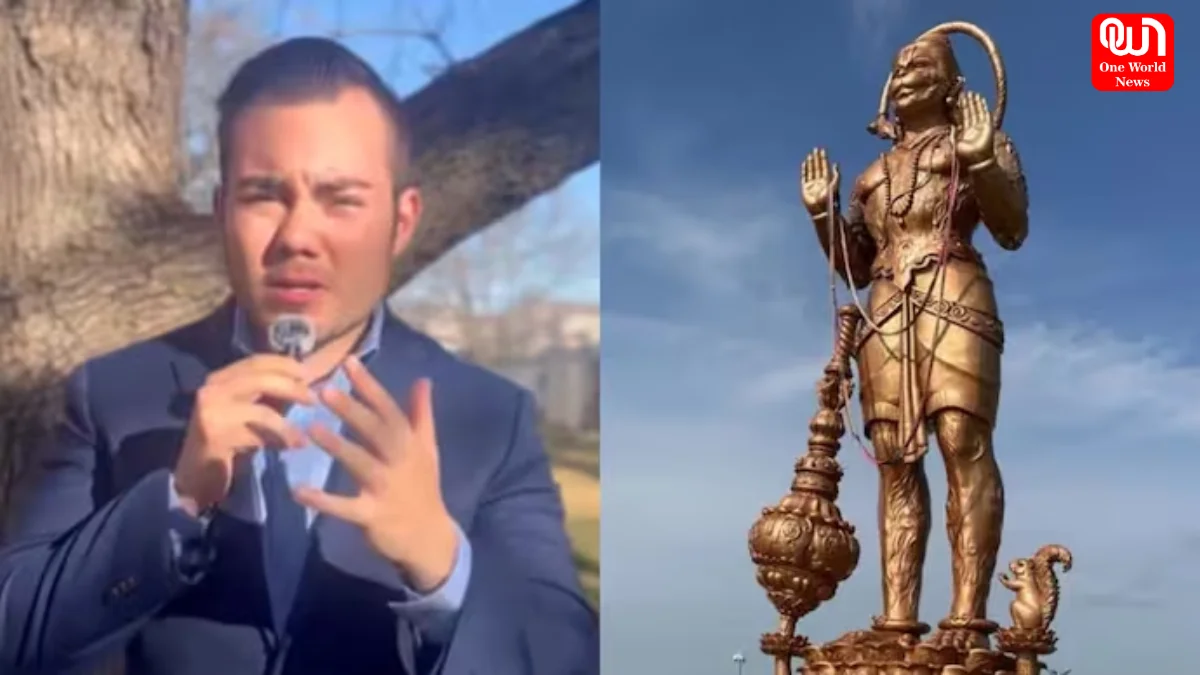
The controversy centers on a 90-foot-tall statue of Lord Hanuman — known as the Panchaloha Abhaya Hanuman or “Statue of Union” — installed at the Shri Ashtalakshmi Temple in Sugar Land, Texas. Unveiled in 2024, the statue ranks among the tallest Hindu monuments in the United States and symbolizes strength, virtue, and devotion for devotees.
Controversial Social Media Post
The row began when Carlos Turcios, a Texas Republican activist aligned with the MAGA movement, shared a video of the Hanuman statue on social media platform X. In his post, Turcios wrote that “Third World aliens are slowly taking over Texas and America” and questioned why such a monumental statue stood in the state, calling on followers to “stop the invasion.”
The wording was widely interpreted as referring to immigrants and minority communities, framing demographic and cultural change as an “invasion” rather than a reflection of America’s diverse makeup. Critics immediately condemned the language as xenophobic and inflammatory, arguing that it unfairly targeted faith communities and immigrant groups.
Read more: AI Summit 2026 India: Vision for India Among Top Three AI Superpowers by 2047
Backlash and Defense of Religious Freedom
Responses to the post poured in from social media users and community advocates alike. Many defended the Hindu temple and its supporters, emphasizing that the statue is situated on private property built and funded by members of the Indian-American community as an expression of faith and cultural identity. Some voices highlighted that similar large religious monuments exist across the U.S., from church spires to crosses and Buddhist sculptures, underscoring the country’s constitutional protection of religious diversity.
One commentator noted that calling religious minorities “aliens” feeds harmful stereotypes, while others pointed out that immigrant communities have long contributed to American society in fields ranging from technology to academia and small business ownership.
Broader Immigration and Identity Debate
The dispute taps into larger national conversations in the U.S. around immigration policy, cultural integration, and identity politics. Turcios — who has previously criticised H-1B visas and Indian immigration in other posts — framed the Hanuman statue as part of demographic shifts linked to immigrant communities, drawing attention to ongoing debates over skilled worker visas and community growth in states like Texas.
However, opponents of this narrative argue that framing religious and cultural landmarks as threats reflects broader political polarization rather than legitimate concern. They stress that the U.S. tradition of religious freedom, enshrined in the Constitution, protects the right of all faiths to build places of worship and symbols of devotion.
What the Statue Represents
For Hindu devotees, the Hanuman statue in Sugar Land is a focal point of spiritual life and community cohesion. Its name — Statue of Union — reflects ideals of unity and devotion found in Hindu tradition, and the site at the Shri Ashtalakshmi Temple serves as both a place of worship and cultural gathering.
Supporters also underline that America’s landscape features religious monuments from many traditions, and that respect for diversity has long been part of the national ethos.
Previous Controversies
This is not the first time the statue has attracted criticism. In September 2025, another Texas Republican leader publicly questioned why a large statue of a Hindu deity was allowed in the state, calling it a “false god” and contending that the nation should prioritise Christian symbols. That earlier remark was met with criticism from civil rights organizations, which labelled it anti-Hindu and inconsistent with constitutional protections of religion.
Read more: Indus Water: India to Stop Ravi Waters to Pakistan As Shahpur Kandi Dam Nears Finish
Public Discourse Continues
The latest incident has sparked broader discussion across social media and news platforms about how public figures address cultural change and how rhetoric about immigration and identity is shaping political discourse. Many have urged public figures to focus on respectful dialogue rather than divisive language that risks marginalising communities.
As the debate unfolds, the Hanuman statue stands unchanged in Sugar Land, serving as both a spiritual landmark for devotees and a flashpoint in national conversations about diversity, freedom, and belonging in the United States.
We’re now on WhatsApp. Click to join.
Like this post?
Register at One World News to never miss out on videos, celeb interviews, and best reads.