
Indian Rupee Slips Past 90/$ as Trade Deal Uncertainty and FPI Outflows Hit Market Sentiment
Indian Rupee Under Pressure as FPI Outflows and Global Factors Hit Market Sentiment

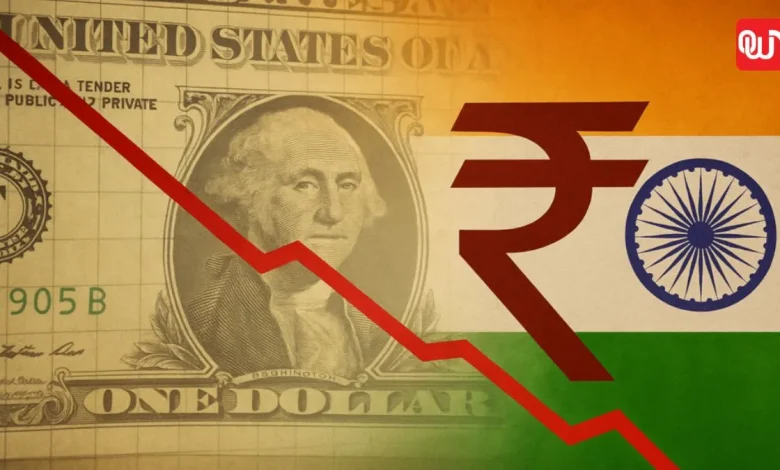
Indian Rupee Slips Past ₹90/$ Amid Trade Deal Uncertainty
The Indian rupee breached the ₹90 per US dollar mark on Thursday, reflecting rising concerns over trade deal uncertainties and continued foreign portfolio investor (FPI) outflows. Analysts warn that a combination of domestic and global factors is exerting pressure on the local currency, impacting market sentiment and investor confidence.
Trade Deal Uncertainty Weighs on Markets
Uncertainty surrounding ongoing trade negotiations, particularly with key partners, has contributed to the rupee’s decline. Investors remain cautious as ambiguous timelines and pending approvals create doubts about the short-term prospects for exports and overall economic stability.
Market experts note that delays in critical trade deals could affect India’s current account balance, potentially increasing reliance on foreign capital and putting additional pressure on the rupee.
FPI Outflows Add Pressure
The Indian equity and debt markets have witnessed significant FPI outflows in recent weeks, driven by global market volatility and rising interest rates in developed economies. FPIs pulled out billions of dollars, prompting concerns about liquidity and currency depreciation.
“Foreign investors are increasingly cautious amid global uncertainty, and the rupee is reflecting this sentiment,” said Ramesh Kumar, a senior analyst at a leading brokerage firm. “Until clarity emerges on trade agreements and global conditions stabilize, the rupee is likely to remain under pressure.”
Impact on Domestic Economy
A weaker rupee has direct implications for importers, particularly in sectors such as crude oil, electronics, and machinery, as import costs rise. Consumers may feel the pinch through higher prices for fuel, electronics, and other imported goods.
Exporters, however, could benefit slightly from a weaker rupee, as Indian goods become more competitive in international markets. Still, the overall market sentiment remains fragile due to uncertainty in global trade and investment flows.
Read More : BSF: Pakistan Reactivates 72 Terror Launchpads Along Jammu Border After Operation Sindoor
Government and RBI Response
The Reserve Bank of India (RBI) has maintained that it will monitor currency movements and intervene as needed to ensure stability. Meanwhile, government officials have urged stakeholders to remain calm and emphasized ongoing efforts to finalize trade agreements and maintain macroeconomic stability.
Analysts expect the rupee to continue experiencing volatility in the near term, influenced by global interest rate trends, trade deal developments, and FPI investment flows.
Read More : MCD Bypoll Results: Counting Begins in 12 Wards Amid Three-Way Fight Between BJP, AAP and Congress
Conclusion
The rupee’s slip past the ₹90 mark highlights the complex interplay of global economic uncertainty, trade negotiations, and investor behavior. While short-term volatility may continue, experts stress the importance of policy clarity, investor confidence, and trade deal finalizations to stabilize the currency and strengthen market sentiment.
We’re now on WhatsApp. Click to join.
Register at One World News to never miss out on videos, celeb interviews, and best reads.