Workers Protest In Noida Turns Violent Over Pay Hike Demand
Workers Protest In Noida turns violent as employees demand pay hike; stones pelted, vehicles torched, traffic disrupted across Phase-2.

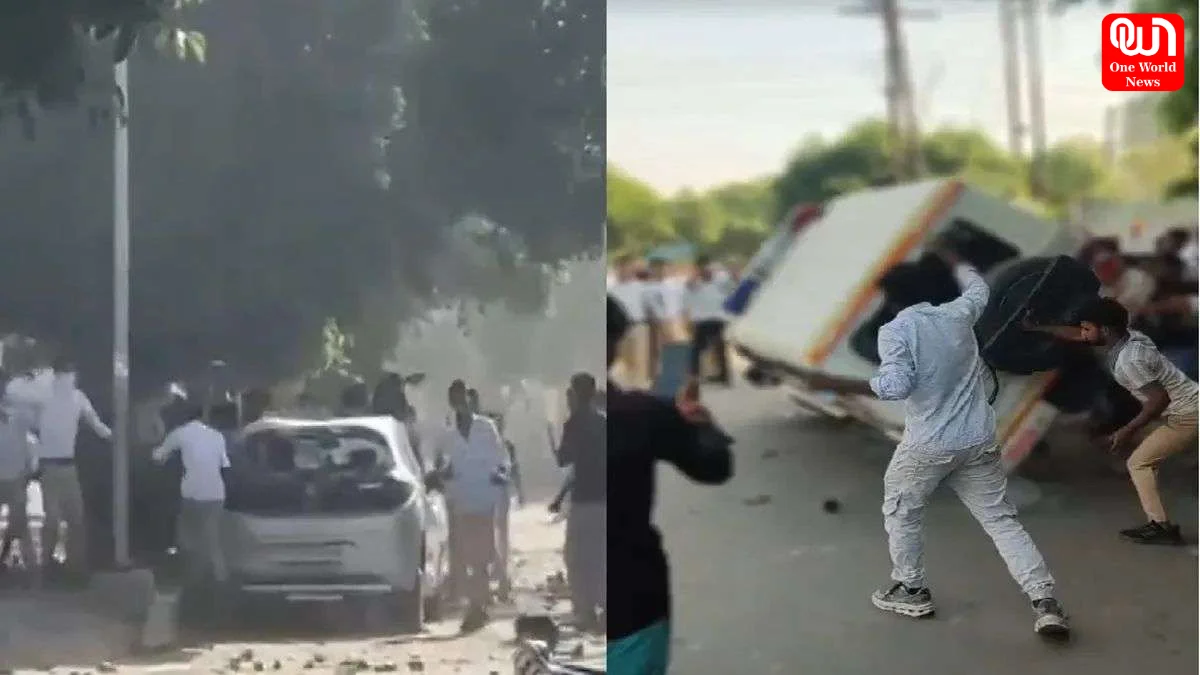
Workers Protest In Noida Escalates Into Violence As Pay Hike Demand Leads To Stone Pelting, Arson And Vehicle Damage
A massive Workers Protest In Noida over salary hike demands turned violent on Monday, triggering chaos across the industrial hub of Phase-2. What began as a peaceful demonstration by factory workers soon escalated into clashes, stone-pelting, and widespread property damage, raising serious concerns about labour unrest in the region.
According to reports, hundreds of workers from multiple industrial units gathered to demand higher wages and better working conditions. Their primary grievance revolved around stagnant salaries and disparities compared to neighbouring states, where recent wage hikes have been implemented.
Protest Turns Violent
The situation quickly spiralled out of control as protesters resorted to aggressive actions. Several vehicles were vandalised, and at least one car was set ablaze during the unrest. Incidents of stone-pelting were also reported, with protesters targeting both private and police vehicles.
Eyewitnesses described scenes of chaos as mobs blocked roads, damaged property, and clashed with authorities. The violence led to a heavy deployment of police forces to bring the situation under control and prevent further escalation.
Read more: Pakistan On High Alert For US-Iran Dialogue: Islamabad Red Zone Sealed
Traffic Disruption And Public Impact
The Workers Protest In Noida not only disrupted industrial operations but also caused massive traffic jams across key routes connecting Noida and Delhi. Commuters were stranded for hours, and many reported difficulty reaching offices due to blocked roads and diverted traffic.
Public transport was severely affected, with cab and auto fares surging due to reduced availability. The ripple effect of the protest extended beyond Noida, impacting nearby areas like Faridabad as well.
Reasons Behind The Protest
The root cause of the protest lies in long-standing dissatisfaction among workers regarding wages, working conditions, and delayed benefits. Many workers alleged that despite rising living costs, their salaries have remained unchanged for years.
Another major trigger was the wage gap between Uttar Pradesh and neighbouring Haryana, where recent increases in minimum wages have highlighted disparities. This has intensified frustration among workers in Noida, leading to continuous protests over the past few days before the situation turned violent.
Government And Administrative Response
Authorities acted swiftly to contain the unrest. Senior officials and law enforcement agencies were deployed in large numbers to disperse the crowd and restore order. The administration has also warned of strict action against those involved in vandalism and violence.
In response to the agitation, officials have initiated discussions on worker welfare measures. These include timely payment of salaries, annual bonuses, improved workplace safety, and better grievance redressal mechanisms.
Additionally, a control room has been set up to monitor the situation and address worker concerns, indicating that authorities are attempting to resolve the issue through dialogue.
Wider Implications
The Workers Protest In Noida highlights deeper structural issues within India’s industrial workforce. Rising inflation, wage disparities, and lack of adequate labour protections continue to fuel unrest among workers.
Experts believe that unless these concerns are addressed through policy reforms and consistent wage revisions, similar protests could erupt in other industrial regions as well.
Read more: Iran Announces Alternate Transit Routes For Strait Of Hormuz After Closure Over Israel Strikes
Conclusion
The violent turn of the Workers Protest In Noida serves as a stark reminder of growing tensions between labour forces and industrial management. While the immediate situation appears to be under control, the underlying issues remain unresolved.
Going forward, a balanced approach involving dialogue, policy changes, and fair wage structures will be essential to prevent such incidents and ensure industrial harmony in one of India’s key manufacturing hubs.
We’re now on WhatsApp. Click to join.
Like this post?
Register at One World News to never miss out on videos, celeb interviews, and best reads.