‘Golden Gate For India…’: Tehran Urges Chabahar Investments Despite US Sanctions
Tehran Urges Chabahar Investments as Iran asks India to continue backing the strategic port despite renewed US sanctions pressure.

‘Golden Gate For India…’: Tehran Urges Chabahar Investments Despite US Sanctions As Strategic Port Remains Key To India-Central Asia Connectivity
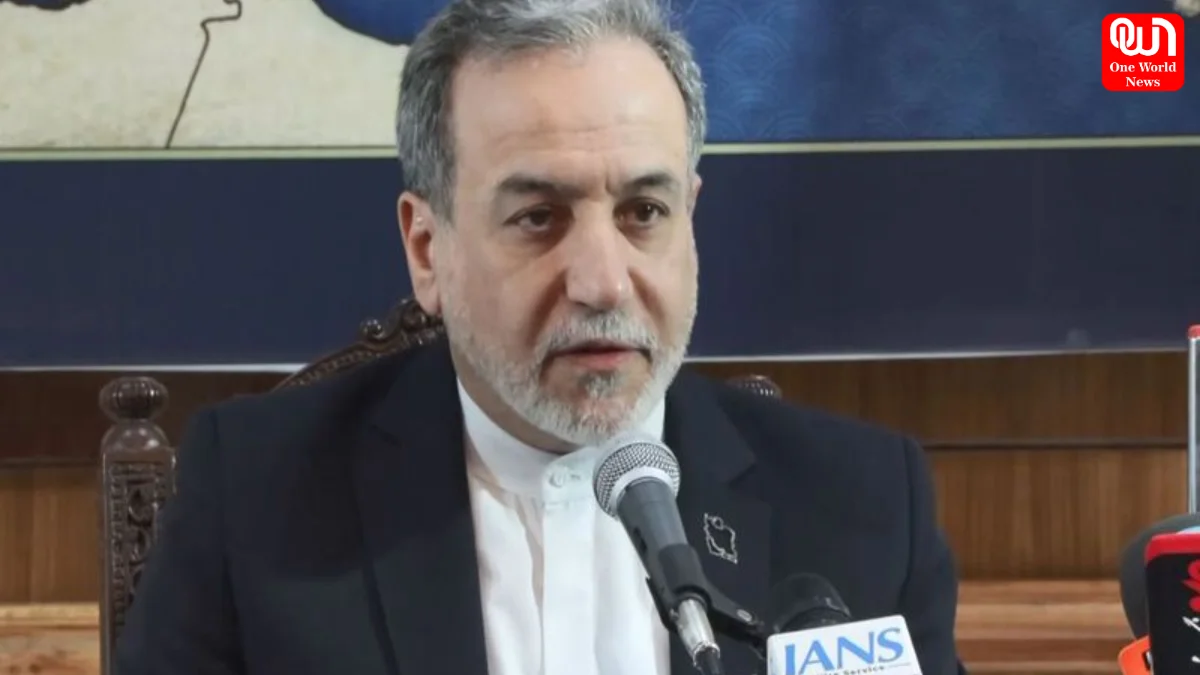
Iran has once again urged India to continue investing in the strategically important Chabahar Port project despite growing uncertainty caused by renewed US sanctions on Tehran. Calling Chabahar a “golden gateway” to Central Asia and Europe, Iranian Foreign Minister Abbas Araghchi described the port as a major symbol of India-Iran cooperation and regional connectivity.
The development comes at a critical time for India’s foreign policy and trade ambitions. Chabahar Port, located in southeastern Iran on the Gulf of Oman, has long been seen as India’s answer to Pakistan’s Gwadar Port, which is being developed with Chinese support. More importantly, the port gives India direct access to Afghanistan, Central Asia, and Russia without depending on Pakistan for land transit.
Speaking after the BRICS Foreign Ministers’ meeting in New Delhi, Araghchi said Iran hopes India will “continue its investments” in the Chabahar project despite the complications arising from US sanctions.
For India, Chabahar is much more than just a port project. It is a strategic trade corridor that forms a key part of the International North-South Transport Corridor (INSTC), a multi-modal route aimed at connecting India with Central Asia, Russia, and Europe through Iran. The project significantly reduces transit time and costs for Indian exports heading toward Eurasian markets.
However, the future of the port has become uncertain after the expiration of the US sanctions waiver on April 26, 2026. The waiver had allowed India to continue operating and developing the port despite broader American sanctions on Iran.
Reports suggest that India has been exploring temporary arrangements, including transferring operational control to an Iranian entity to avoid direct sanctions exposure. Yet, officials in both Tehran and New Delhi continue to stress the long-term strategic importance of the project.
Iran has repeatedly emphasized that Chabahar remains essential for regional economic integration. Iranian officials believe the port can emerge as one of the most significant connectivity hubs linking South Asia with Central Asia and Europe.
Read more: Gold and Silver Prices Crash Today: Massive Fall in Bullion Market Shocks Investors
Experts say India now faces a difficult balancing act between maintaining strong ties with the United States and protecting its strategic interests in Iran and Central Asia. Chabahar has always occupied a unique geopolitical space because even Washington previously acknowledged its importance for Afghanistan’s economic stability by granting India sanctions exemptions since 2018.
Despite sanctions concerns, India has continued to show commitment toward the project. Earlier reports indicated that New Delhi fulfilled its $120 million financial obligation related to the development of the Shahid Beheshti terminal at Chabahar.
The port’s strategic value has become even more important amid rising geopolitical competition in the region. China’s growing influence through the Belt and Road Initiative (BRI), especially in Pakistan’s Gwadar Port, has increased pressure on India to secure alternative trade and connectivity routes.
For Afghanistan and Central Asia, Chabahar also serves as a crucial trade lifeline. The port enables the movement of humanitarian aid, food supplies, and commercial goods while bypassing traditional regional bottlenecks. Analysts believe abandoning the project could weaken India’s influence in the region and strengthen rival geopolitical players.
Meanwhile, India’s Ministry of External Affairs has confirmed that discussions regarding Chabahar are ongoing with both Iran and the United States. Officials have acknowledged that the evolving geopolitical tensions in West Asia are making negotiations more complex.
Interestingly, Iran has not only urged India to stay invested but has also encouraged New Delhi to play a larger diplomatic role in stabilizing West Asia. Tehran sees India as a trusted regional partner capable of balancing economic cooperation with strategic diplomacy.
read more: NEET UG 2026 Re-Exam On June 21: NTA Announces Fresh Date After Paper Leak Row
As uncertainty over sanctions continues, the Chabahar project now stands at the center of a larger geopolitical test. For India, the decision is not merely about trade or infrastructure—it is about maintaining strategic autonomy, protecting regional influence, and ensuring long-term access to Central Asia and beyond.
Whether New Delhi chooses to deepen its involvement or adopt a cautious approach, Chabahar will remain a defining element of India’s regional connectivity ambitions for years to come.
We’re now on WhatsApp. Click to join.
Like this post?
Register at One World News to never miss out on videos, celeb interviews, and best reads.