Jantar Mantar Protest on 20 July 2026: India Black Day, Student March, Police Action, Injuries and Latest Updates
Thousands of students, youth activists, and supporters gathered at Delhi's Jantar Mantar on 20 July 2026 for a protest that coincided with the opening day of Parliament's Monsoon Session.

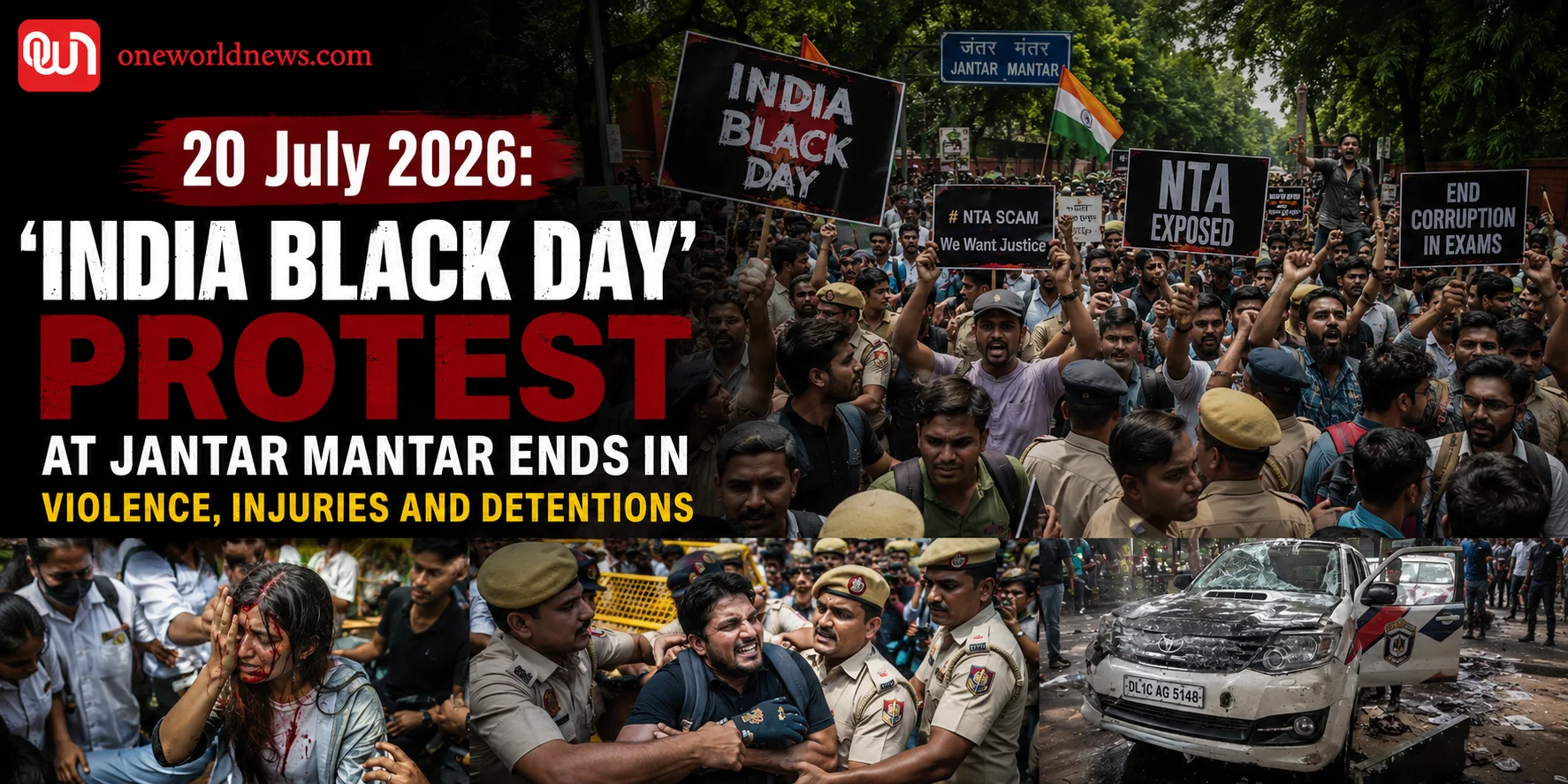
Thousands of students, youth activists, and supporters gathered at Delhi’s Jantar Mantar on 20 July 2026 for a protest that coincided with the opening day of Parliament’s Monsoon Session. The demonstration, promoted under the slogans “India Black Day” and “Sansad Chalo”, focused on allegations of examination paper leaks, demands for accountability in public recruitment, and calls for changes to India’s examination system. The protest drew participants from several states and became one of the largest youth-led demonstrations in the capital in recent years.
Organizers urged protesters to march from Jantar Mantar towards Parliament despite Delhi Police denying permission for the march. Authorities cited security concerns because Parliament was in session and deployed large numbers of police and paramilitary personnel around central Delhi. Barricades were placed on roads leading towards Parliament, and police repeatedly appealed to demonstrators to remain within the designated protest area.
As the crowd attempted to move beyond the barricades, confrontations broke out between protesters and police. Images and videos circulating throughout the day showed pushing, barricades being breached in some places, and police attempting to disperse crowds. Protest organizers alleged excessive use of force, while Delhi Police said officers acted to prevent an unauthorized march into a high-security zone. Reports later confirmed injuries among both protesters and police personnel, although the exact sequence of events and responsibility for the violence remained disputed.
The events at Jantar Mantar quickly became a national political issue. Opposition leaders criticized the handling of the protest, while the government defended security measures and indicated that representatives of the movement would be heard through official channels. The protest also generated widespread discussion across social media platforms, with videos, eyewitness accounts, and competing narratives spreading rapidly throughout the day.
View this post on Instagram
Why Was the Jantar Mantar Protest Held?
The 20 July protest grew out of months of demonstrations over alleged examination paper leaks and concerns about the integrity of competitive examinations. Student groups argued that repeated controversies surrounding entrance and recruitment examinations had affected the future of millions of candidates preparing for government jobs and higher education.
The movement demanded accountability from authorities responsible for conducting examinations and sought action against those involved in alleged paper leak networks. Protesters also called for reforms to recruitment systems, greater transparency during examinations, stronger anti-cheating mechanisms, and protection for students whose careers had been affected.
Another demand centered on the resignation of Union Education Minister Dharmendra Pradhan, whom organizers held politically responsible for the handling of the examination controversies. Government representatives did not accept that demand but later indicated they were willing to receive a memorandum from protest leaders.
The protest date was chosen deliberately because Parliament’s Monsoon Session opened on 20 July. Organizers argued that lawmakers should address the examination issue during the session and sought to draw national attention by marching towards Parliament. Delhi Police refused permission for that march, citing security arrangements around the Parliament complex.
What Is India Black Day?
“India Black Day” was the campaign name adopted by organizers to describe the nationwide protest held on 20 July. According to protest organizers, the phrase reflected their belief that repeated examination controversies and alleged paper leaks had damaged students’ confidence in the education and recruitment system.
Supporters wore black clothing, carried black flags and banners, and displayed placards demanding justice for students. Social media campaigns using the phrase circulated in the days leading up to the protest, encouraging participants from different states to travel to Delhi for the demonstration.
The campaign was linked with the broader Sansad Chalo call, which urged protesters to assemble at Jantar Mantar before attempting to march towards Parliament. Organizers described the march as a peaceful demonstration intended to present their demands to elected representatives. Police maintained that no permission had been granted for such a procession.
View this post on Instagram
Who Organized the Protest?
The demonstration was coordinated primarily by the youth-led Cockroach Janta Party (CJP) movement, which emerged earlier in 2026 through social media campaigns before expanding into nationwide protests over examination paper leaks. Despite its satirical name, the movement attracted students, job aspirants, educators, activists, and civil society supporters.
The campaign also gained momentum after environmental activist Sonam Wangchuk began supporting demands for examination reforms through a hunger strike. His hospitalization by police two days before the protest became another rallying point for participants traveling to Delhi.
Opposition political leaders, student unions, and independent activists expressed support for the protest, although not every participating group endorsed identical demands. Some focused on examination reforms, while others raised broader concerns about employment opportunities, recruitment delays, and public accountability.
Thousands Gather at Jantar Mantar
Crowds began assembling at Jantar Mantar before sunrise. Some participants had arrived in Delhi the previous night, while others traveled from neighboring states during the early morning. Protesters carried banners criticizing examination paper leaks and demanding action against those responsible.
Speakers addressed the gathering from a temporary stage, urging demonstrators to remain peaceful while reiterating the call for a march to Parliament. Volunteers coordinated crowd movement, distributed drinking water, and briefed participants on the planned route.
The atmosphere remained largely orderly during the morning hours. Protesters raised slogans, formed human chains in some sections, and displayed placards calling for transparent examinations and recruitment reforms. Police maintained a visible presence but initially allowed the assembly to continue within the designated protest area.
Heavy Security Arrangements Across Delhi
Delhi Police implemented extensive security measures because the protest coincided with the first day of Parliament’s Monsoon Session. Multiple layers of barricades were installed on roads connecting Jantar Mantar with Parliament, and additional police and paramilitary personnel were deployed throughout central Delhi.
Authorities said the restrictions were intended to prevent unauthorized entry into high-security areas around Parliament. Officers repeatedly announced that the march did not have official permission and asked protesters to remain within the approved demonstration site.
Traffic movement around parts of central Delhi slowed because of security arrangements and road diversions. Police monitored crowd movement throughout the morning as organizers continued urging supporters to participate in the proposed Sansad Chalo march.
Protesters Begin March Towards Parliament
By late morning on 20 July 2026, organizers called on participants to begin the planned Sansad Chalo (March to Parliament) procession. The march had been announced in advance as part of the nationwide “India Black Day” campaign, with organizers saying they intended to submit a memorandum to Members of Parliament on examination reforms and recruitment issues.
Groups of protesters moved from Jantar Mantar toward Parliament Street carrying banners, black flags, and placards demanding action against examination paper leaks. Many chanted slogans calling for transparent recruitment processes, accountability for alleged irregularities, and dialogue with the Union government.
Delhi Police had already informed organizers that permission had been granted only for a gathering at Jantar Mantar and not for a march toward Parliament. Police repeatedly announced through loudspeakers that the area around Parliament was under heightened security because the Monsoon Session had begun the same day. Officers instructed protesters to remain within the designated protest site and warned that attempts to cross security barricades would violate the conditions of the assembly.
As the front rows of demonstrators continued moving toward Parliament Street, police personnel positioned behind multiple layers of barricades prepared to stop the procession.
Delhi Police Stop the March
The march came to a halt when protesters reached police barricades installed on roads leading toward Parliament. Officers formed security lines and blocked further movement, citing security protocols in place during the parliamentary session.
According to Delhi Police, the restrictions were necessary to prevent unauthorized entry into a high-security zone and to maintain public order. Police officials stated that they had communicated these restrictions to organizers before the protest began.
Protest leaders argued that they intended to conduct a peaceful march and submit their demands to elected representatives. They accused authorities of preventing students from exercising their democratic right to protest.
Television footage and photographs from the scene showed large crowds gathered behind metal barricades while police and protest representatives attempted to negotiate. The situation remained tense as additional demonstrators reached the front of the procession.
Clashes Break Out During the Protest
The confrontation escalated after sections of the crowd attempted to move beyond the barricades. Video footage verified by multiple news organizations showed pushing and shoving between protesters and police personnel as security forces tried to hold their positions.
Several media outlets confirmed that clashes occurred during the afternoon, although the exact sequence of events differed across eyewitness accounts. Protest organizers alleged that police used excessive force while dispersing demonstrators. Delhi Police maintained that officers responded only after protesters attempted to breach security barriers and refused repeated instructions to stop.
At the time of publication, there was no independent official inquiry establishing responsibility for every incident recorded during the clashes. News organizations therefore continued to attribute competing claims to their respective sources rather than presenting them as established facts.
Some social media posts claimed that tear gas shells and baton charges were used extensively. While videos showed physical confrontations between police and protesters, not every viral claim could be independently verified. Readers should distinguish verified reporting from unconfirmed social media content.
Students Injured During the Protest
Hospitals and first-aid teams treated injured participants after the clashes. Reuters reported that the youth movement organizing the protest claimed approximately 180 people were injured during confrontations with police. The organization said many sustained injuries while attempting to continue the march toward Parliament.
Delhi Police also reported injuries among police personnel deployed during the operation. Authorities stated that officers were hurt while preventing protesters from crossing security barricades.
Independent verification of the exact number of injured people remained unavailable at the time of reporting. Medical assessments continued after the protest, and official figures could change as additional reports were compiled.
Video footage from the protest showed volunteers assisting injured demonstrators, providing drinking water, and helping people move away from congested areas. Ambulances were also seen transporting injured individuals for further medical examination.
Several students interviewed by news organizations described the confrontation as sudden after negotiations failed. Police officials disputed allegations of unnecessary force and said officers acted in accordance with security procedures.
View this post on Instagram
Protesters Detained by Police
Police detained a number of demonstrators after clashes intensified near the barricades. Officials said the detentions were carried out to restore order and prevent unauthorized access to restricted areas surrounding Parliament.
At the time this article was prepared, authorities had not released a final verified figure for the number of people detained. Protest organizers argued that peaceful participants had also been taken into custody, while police maintained that action was limited to individuals violating security restrictions or creating public disorder.
Those detained were transported to different police facilities for processing before many were released later in accordance with legal procedures. Rights groups called for transparency regarding the detentions and urged authorities to ensure that all detainees had access to legal assistance where required.
Because official numbers continued to change, responsible reporting requires distinguishing confirmed information from estimates circulated on social media.
View this post on Instagram
Videos From the Jantar Mantar Protest Go Viral
Within hours of the clashes, videos from the protest spread widely across X, Instagram, Facebook, and YouTube. Clips showed crowds marching through central Delhi, protesters raising slogans, police forming barricades, and physical confrontations near Parliament Street.
Some videos received millions of views within a short period and generated intense political debate. News organizations verified several widely circulated clips by comparing visual landmarks, timestamps, and eyewitness footage.
At the same time, fact-checkers warned that a number of viral posts either lacked context or recycled footage from unrelated demonstrations. Some videos shared online were found to be from previous protests and were incorrectly presented as events from 20 July 2026.
Readers were advised to rely on verified reporting from established news organizations rather than isolated social media posts.
View this post on Instagram
Claims and Counterclaims
Protesters’ Claims
Protest organizers alleged that police used excessive force while dispersing students attempting to march toward Parliament. They claimed demonstrators suffered injuries after being pushed back at barricades and accused authorities of restricting peaceful protest.
Organizers also alleged that several students required hospital treatment and called for an independent investigation into police conduct during the operation.
Delhi Police Statement
Delhi Police rejected allegations that officers acted unlawfully. Officials stated that the gathering at Jantar Mantar had been permitted but that no approval had been granted for a march toward Parliament because of security arrangements during the Monsoon Session.
Police said officers repeatedly warned demonstrators before intervening and maintained that action was taken only after protesters attempted to breach barricades and enter a restricted security zone.
Authorities also reported injuries among police personnel and said maintaining public order remained their priority throughout the operation.
Unverified Claims
A number of claims circulated online during and after the protest that had not been independently verified at the time of publication. These included allegations regarding the extent of property damage, damage to government vehicles, and several viral videos claiming to show incidents from the protest.
Responsible reporting requires treating such claims as unverified until supported by official investigations, verified visual evidence, or reporting from multiple reliable sources. Readers should exercise caution before sharing unconfirmed content on social media.
View this post on Instagram
Political Reactions
The protest triggered sharp political reactions both inside and outside Parliament.
Opposition parties accused the government of failing to address concerns raised by students over examination paper leaks and recruitment irregularities. Several opposition leaders criticized the police action during the Parliament march, arguing that peaceful protesters should have been allowed to present their demands.
The Union government defended the security arrangements, stating that the restrictions were necessary because Parliament was in session and the surrounding area is designated as a high-security zone. Government leaders maintained that law enforcement acted to prevent an unauthorized march rather than to suppress peaceful protest.
On the evening of 20 July, BJP President J.P. Nadda met representatives of the protest movement to hear their demands. The meeting, however, ended without a breakthrough. Protest leaders said their primary demand—the resignation of Union Education Minister Dharmendra Pradhan—remained unresolved.
View this post on Instagram
Home Minister Amit Shah also held a meeting with Education Minister Dharmendra Pradhan and senior ministers to review the situation following the clashes near Parliament. Government sources indicated that some demands related to examination reforms could be considered, but there was no indication that the Education Minister would resign.
View this post on Instagram
Current Status (21 July 2026)
As of 21 July 2026, the protest has not ended. Demonstrators returned to Jantar Mantar the morning after the clashes, although the gathering is considerably smaller than the previous day’s march.
According to Reuters, around 150–200 protesters assembled at Jantar Mantar on Tuesday under heavy police deployment. Security personnel remained stationed across central Delhi, with barricades continuing to restrict movement toward Parliament.
Leaders of the Cockroach Janta Party (CJP) announced that the movement would continue through peaceful demonstrations but would not organize another march toward Parliament immediately. Founder Abhijeet Dipke said the decision was taken to avoid further injuries after Monday’s confrontation with police.
Delhi Police have registered cases in connection with the violence reported during the 20 July march and stated that legal action would continue against those accused of violating prohibitory orders, damaging public property, or attacking police personnel. Protest organizers dispute those allegations and continue to demand an independent investigation into the police response.
Activist Sonam Wangchuk remains associated with the movement while continuing his hunger strike under medical supervision. Protest leaders have said demonstrations at Jantar Mantar will continue until their core demands are addressed.
Main Demands Raised During the Protest
The protest movement has consistently raised the following demands:
- Resignation of Union Education Minister Dharmendra Pradhan.
- Action against those responsible for alleged examination paper leaks.
- Independent investigation into examination irregularities.
- Transparent recruitment and examination systems.
- Compensation for students allegedly affected by cancelled or compromised examinations.
- Stronger safeguards to prevent future paper leaks.
- Accountability of examination agencies.
- Structured dialogue between the government and student representatives.
Timeline of the Jantar Mantar Protest (20–21 July 2026)
8:00 AM (20 July) – Protesters begin gathering at Jantar Mantar.
10:00 AM – Student leaders and activists address the gathering.
12:00 PM – Protesters begin the announced “Sansad Chalo” march.
1:00 PM – Delhi Police stop the procession using multiple barricades near Parliament.
1:30 PM – Clashes break out between protesters and police.
2:00 PM – Injuries are reported among protesters and police personnel.
3:00 PM – Police detain dozens of demonstrators.
5:00 PM – Political leaders react to the incident as videos circulate online.
Evening – BJP President J.P. Nadda meets representatives of the protest movement while Home Minister Amit Shah reviews the situation with senior ministers.
21 July, Morning – Protesters regroup at Jantar Mantar under heavy security.
21 July, Afternoon – Organizers announce that protests will continue peacefully but without another Parliament march for now.
Key Highlights
- Thousands assembled at Jantar Mantar on 20 July.
- The protest focused on examination paper leaks and education reforms.
- Protesters attempted to march toward Parliament.
- Delhi Police stopped the march citing security restrictions.
- Clashes resulted in injuries to both protesters and police personnel.
- Police detained several demonstrators and registered criminal cases.
- Government leaders held meetings with ministers and protest representatives.
- The protest continued at Jantar Mantar on 21 July with a smaller gathering and heightened security.