PM Modi Hails ISRO’s GSLV-F17 Launch, Calls EOS-05 Mission A ‘Proud Moment’
PM Modi hails the GSLV-F17 EOS-05 launch by ISRO from Sriharikota, marking a proud moment for India’s space technology and Earth observation.

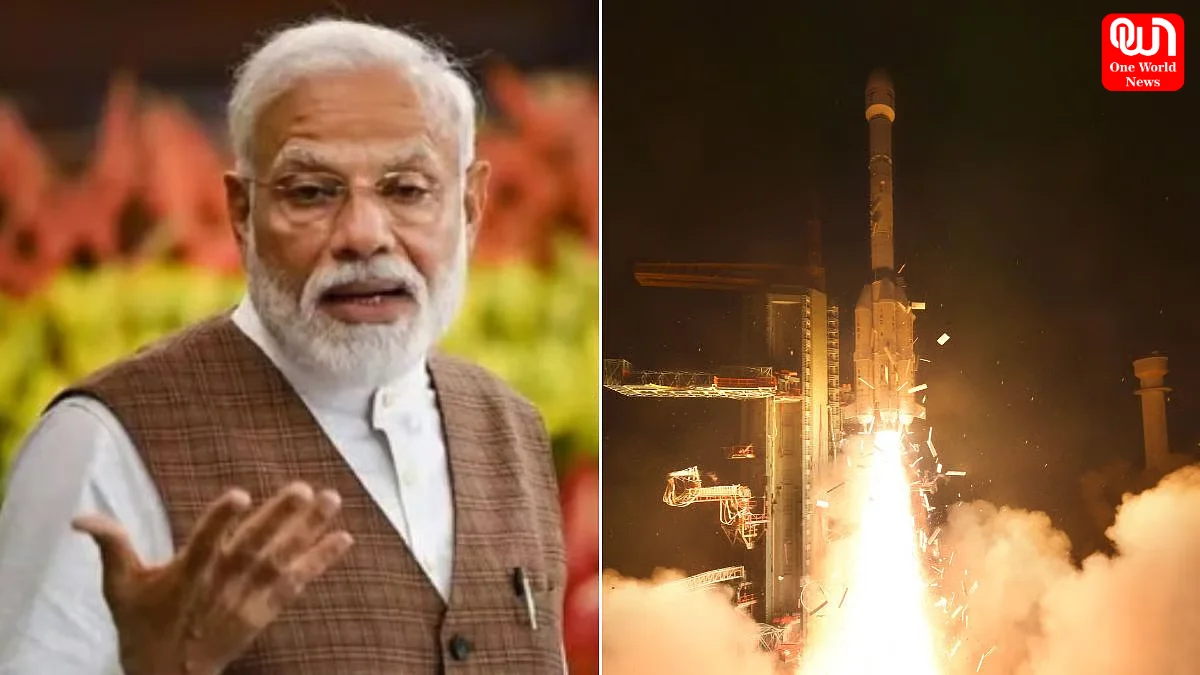
PM Modi Hails ISRO’s GSLV-F17 EOS-05 Launch as a Proud Moment for India’s Space Technology and Earth Observation
Prime Minister Narendra Modi has congratulated the Indian Space Research Organisation (ISRO) following the successful GSLV-F17 EOS-05 launch, describing the achievement as a proud moment for India. The mission marks another important step in the country’s growing capabilities in space technology and Earth observation.
The GSLV-F17 rocket lifted off from the Second Launch Pad at the Satish Dhawan Space Centre in Sriharikota at 2:55 AM IST on September 4, 2026. The mission successfully placed the EOS-05 Earth observation spacecraft into a Sub-Geosynchronous Transfer Orbit. ISRO confirmed that the mission was accomplished successfully.
EOS-05 Marks A Major Milestone For India
EOS-05 is a state-of-the-art Earth observation satellite and has particular significance because it is designed to become India’s first imaging satellite operating from a geosynchronous orbit.
According to ISRO, the satellite was successfully injected into its intended Sub-GTO orbit by GSLV-F17. Once it reaches its operational orbit, EOS-05 is expected to provide an extended view of the Indian region, strengthening the country’s ability to collect valuable Earth observation data.
This capability can support applications that depend on timely and reliable imagery, including agriculture, water-resource management, urban planning, environmental monitoring, forestry, ocean-resource management and disaster management.
GSLV-F17 Demonstrates India’s Growing Space Technology
The GSLV-F17 mission represents the 19th flight of India’s Geosynchronous Satellite Launch Vehicle. The rocket uses a three-stage configuration combining solid, liquid and cryogenic propulsion.
The successful mission demonstrates the continued development of India’s launch capabilities and its ability to deploy sophisticated satellites into higher orbits. The vehicle carried a 2,367-kg EOS-05 spacecraft, making the mission an important achievement for the GSLV programme.
The launch also highlights the importance of indigenous technologies in India’s space programme. With increasingly sophisticated satellites and launch vehicles, India space capabilities are expanding across research, Earth observation, communications and other strategic applications.
PM Modi Highlights ISRO-Industry Collaboration
In his message congratulating ISRO, PM Modi emphasized not only the technical success of the mission but also the broader development of India’s space ecosystem.
He highlighted the growing partnership between ISRO and Indian industry, noting that this collaboration is adding greater strength and scale to the national space programme. Such cooperation is becoming increasingly important as India seeks to expand its presence across the wider space sector.
Read more: Nvidia CEO Jensen Huang Recalls PM Modi’s AI Push, Says India Must Move Faster
The Prime Minister described the GSLV-F17 mission as an example of the excellence, innovation and growing capabilities that are shaping India’s space sector.
Why Earth Observation Matters
Earth observation satellites play an important role in understanding changes taking place on and around the planet. Satellite imagery can provide information that supports agriculture, infrastructure development, environmental monitoring and emergency response.
EOS-05 is particularly significant because its planned geosynchronous positioning can enable continuous observation of a particular region. Unlike many satellites in lower Earth orbits that periodically pass over a location, a geosynchronous satellite can maintain a consistent view of a selected area.
This makes the mission strategically valuable for applications where frequent or near-real-time observations are important.
Sriharikota Once Again Hosts A Historic Launch
The successful mission from Sriharikota adds another milestone to the long history of India’s spaceport. The Satish Dhawan Space Centre continues to serve as the primary launch facility for India’s major orbital missions.
After a smooth 27-hour countdown, GSLV-F17 lifted off precisely at 2:55 AM. Around 18 minutes after launch, the rocket placed EOS-05 into the targeted Sub-Geosynchronous Transfer Orbit. The spacecraft will subsequently undertake orbit-raising manoeuvres to reach its operational geosynchronous orbit.
A Proud Moment For India’s Space Programme
The GSLV-F17 EOS-05 launch is more than another successful rocket flight. It demonstrates the growing maturity of India’s space technology and its ability to develop and deploy advanced Earth observation systems.
PM Modi’s praise reflects the wider national significance of the mission. With ISRO continuing to develop advanced launch vehicles and satellites, while Indian industry increasingly participates in the space ecosystem, India is strengthening its position in the global space sector.
EOS-05 is expected to contribute valuable observation capabilities once operational, while the success of GSLV-F17 further reinforces confidence in India’s ability to undertake increasingly demanding space missions. The achievement from Sriharikota therefore stands as an important milestone for ISRO, space technology, Earth observation and India’s expanding role in space.
We’re now on WhatsApp. Click to join.
Like this post?
Register at One World News to never miss out on videos, celeb interviews, and best reads.