FCRA Amendment Bill 2026: India Busts Myths Over Foreign Funding Law Amid India-US Relations Debate
FCRA Amendment Bill 2026 explained: India addresses Foreign Contribution, NGO funding, charities and India-US relations after US criticism.

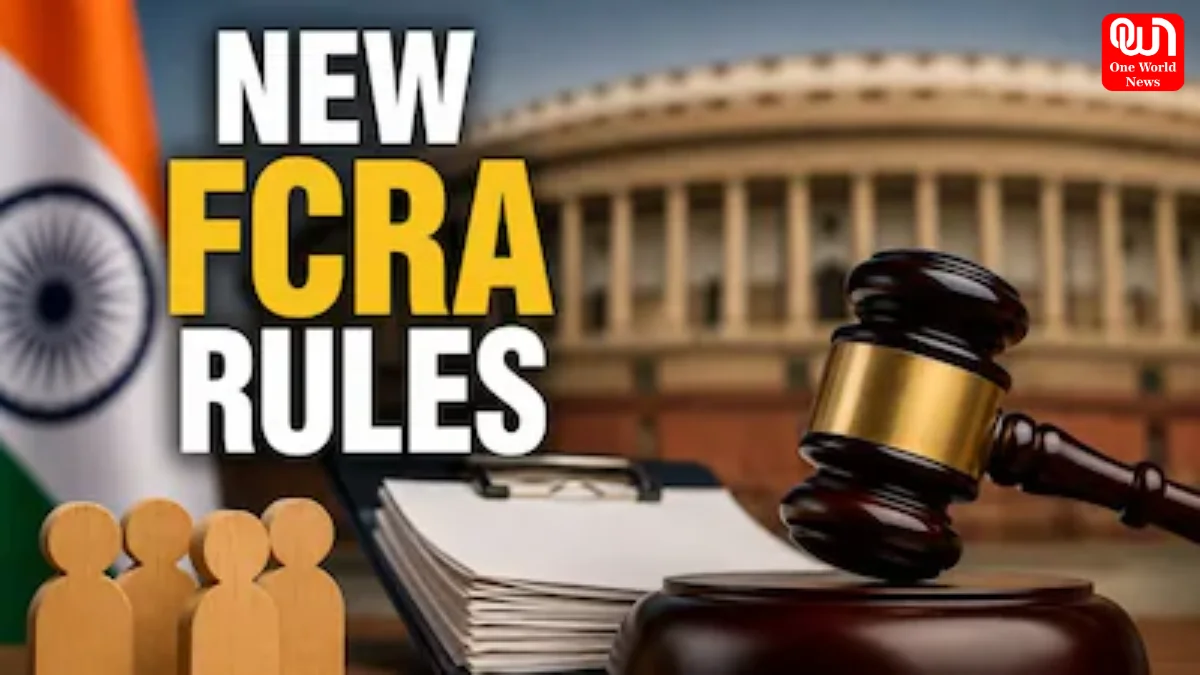
FCRA Bill: India Busts ‘Myths’ Over Foreign Funding Law After US Lawmaker’s Criticism
India’s proposed FCRA Amendment Bill 2026 has triggered a fresh debate over foreign funding, NGO regulation, religious organizations and India-US relations. The controversy intensified after US Congressman Riley Moore criticised the proposed changes, calling them an attack on Christians and warning that the issue could become significant for bilateral relations. India, however, has rejected the allegations and described the FCRA changes as an internal legislative matter focused on transparency, accountability and national interests.
What Is the FCRA Amendment Bill 2026?
The Foreign Contribution (Regulation) Amendment Bill, 2026 was introduced in the Lok Sabha on March 25, 2026. It seeks to amend the Foreign Contribution (Regulation) Act, 2010, which regulates how eligible organisations receive and use money or other contributions from foreign sources.
The government says the proposed changes address operational gaps in the existing framework. One of the most important proposals is the creation of a Designated Authority to supervise, manage and dispose of foreign-funded assets when an organisation’s FCRA registration ends through cancellation, surrender or non-renewal.
At the same time, the revised FCRA Rules, 2026 have already been notified and are in force. They introduce more specific requirements concerning activities, geographical areas, reporting and foreign-funded operations.
Why Did the Foreign Funding Debate Begin?
The controversy largely centres on what happens to assets created using foreign contributions if an organisation loses its FCRA registration.
Under the proposed framework, foreign-funded assets can initially come under provisional control. If registration is restored within the prescribed period, the assets and unused funds can be returned. Permanent vesting would apply only if registration is not restored within the specified period. The Bill also provides for a mechanism for revision and judicial appeal.
Critics, however, are concerned about the extent of government authority and the possible impact on NGOs, charities, educational institutions and religious organisations that depend partly on foreign contributions.
India Busts Myths About FCRA and NGO Funding
The government has strongly rejected the claim that the FCRA is a blanket ban on foreign donations.
According to the government’s explanation, FCRA does not generally prohibit NGOs and civil society organisations from receiving Foreign Contribution. Eligible organisations can receive foreign contributions after obtaining registration or prior permission, subject to compliance with the law. Government data cited in its FAQ says around 16,200 associations were actively registered in 2024-25 and received approximately ₹22,963 crore in foreign contributions.
The government has therefore argued that describing the framework as a “ban” on foreign funding is misleading. Instead, it says the purpose is to ensure that overseas money is properly received, accounted for, utilised and reported.
What About Religious Organizations and Charities?
Another major issue involves Religious organizations and charities.
Government material says the FCRA framework does not specifically target one religion or community. The rules provide for permissible faith-based activities, including religious education, maintenance of places of worship, moral instruction and preservation of faith traditions. These provisions apply across communities rather than being restricted to one particular faith.
This point has become important following criticism that the proposed changes could disproportionately affect Christian organisations. India has rejected that interpretation, maintaining that the legislation applies to organisations covered by the FCRA framework irrespective of religion or ideology.
India-US Relations and US Lawmaker’s Criticism
The controversy has also brought India-US relations into focus.
US Congressman Riley Moore criticised the proposed amendments and raised concerns about their possible effect on churches and Christian charities in India. India’s Ministry of External Affairs responded that the legislation is an internal matter and rejected the suggestion that the Bill was designed to target a particular religious community.
read more: Gold & Silver Rate Veronica: Today’s Gold & Silver Prices, Market Update and Latest Rates
The debate is notable because India and the United States are simultaneously strengthening cooperation in areas such as defence, technology, artificial intelligence and critical supply chains. India’s Ambassador to the US, Vinay Mohan Kwatra, has highlighted the expanding strategic partnership between the two countries, including cooperation in emerging technologies.
Therefore, while the FCRA dispute has generated diplomatic attention, it is only one issue within a much broader bilateral relationship.
How the 2026 Rules Affect NGO Funding
The revised rules place greater emphasis on precise disclosure and monitoring. FCRA registration must now identify specific purposes and States or Union Territories of operation from prescribed categories. Organisations also face enhanced reporting requirements, including project-wise and activity-wise utilisation details and information concerning foreign donors.
For organisations receiving NGO funding, this means stronger compliance systems will become increasingly important. Proper accounting, documentation and reporting can help organisations demonstrate that foreign contributions are being used for approved purposes.
The government has also introduced a minimum utilisation requirement for organisations seeking renewal, requiring them to demonstrate utilisation of at least ₹10 lakh in foreign contributions during the preceding two years.
A Debate Between Transparency and Institutional Autonomy
The FCRA debate ultimately reflects a broader question: how should India balance national security and financial transparency with the independence of civil society?
Supporters argue that foreign contributions must be transparent because overseas financial flows can potentially influence sensitive areas of public life. The government has also pointed out that other countries have their own frameworks for regulating foreign influence and funding.
Opposition parties and several civil society groups, meanwhile, have raised concerns that stricter provisions could increase government control over legitimate organisations. Recent political opposition has focused particularly on the possible impact on NGOs and charitable institutions.
What Happens Next?
The FCRA Amendment Bill 2026 remains under parliamentary consideration, while the revised FCRA Rules are already operational. This distinction is important when discussing the current legal position.
reasd more: CM Rekha Gupta To Launch Four Eco-Friendly Delhi Tourism Circuits At Akshardham Temple: Check Details
For charities, religious organisations and other entities dependent on foreign contributions, the key priority will be compliance with reporting, registration and utilisation requirements. For policymakers, the challenge will be to maintain effective oversight without creating unnecessary barriers for legitimate social, educational, humanitarian and charitable activities.
The controversy surrounding the Bill shows why accurate information is important. The FCRA framework does regulate foreign funding, but the government disputes claims that it constitutes a general prohibition or is directed at a particular religion. As parliamentary discussions continue, the balance between transparency, national interest, civil society independence and India’s international relationships will remain at the centre of the debate.
We’re now on WhatsApp. Click to join.
Like this post?
Register at One World News to never miss out on videos, celeb interviews, and best reads