Delimitation Bill 2026: Kiren Rijiju Slams Opposition Amid Criticism, Says ‘No Need To Worry’
Delimitation Bill 2026 sparks debate as Kiren Rijiju hits back at opposition criticism, urging calm and dismissing fears over seat redistribution.

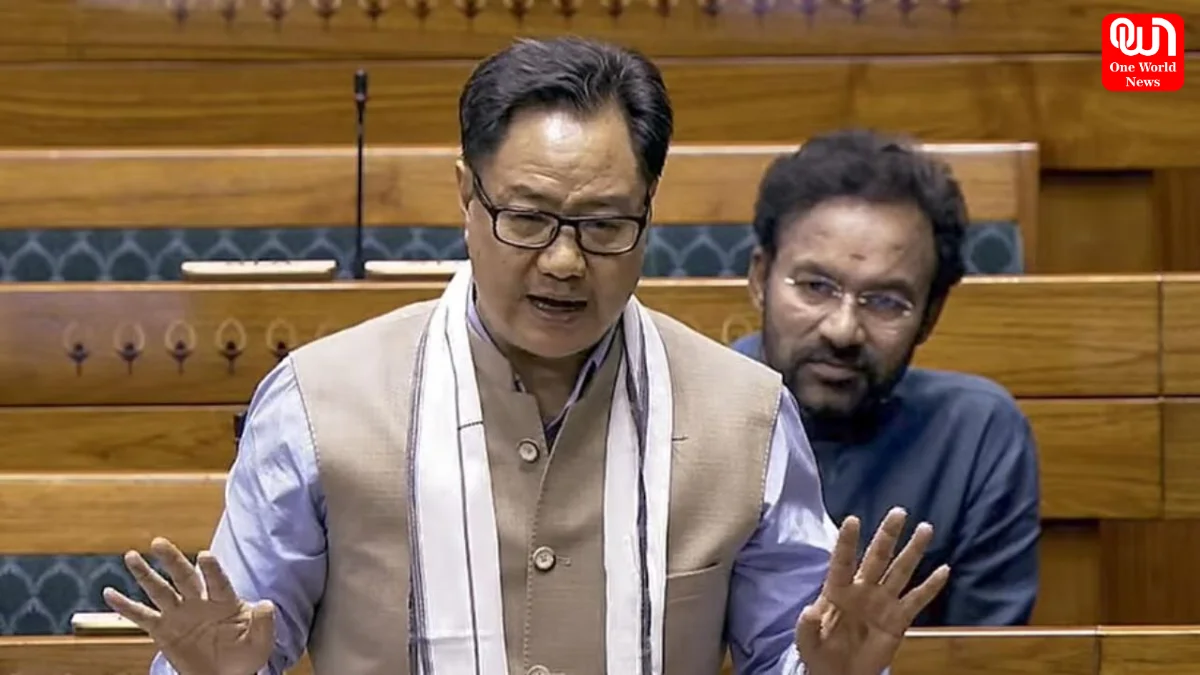
Delimitation Bill 2026 Row: Kiren Rijiju Assures Fair Process, Criticizes Opposition for Spreading Misconceptions
The Delimitation Bill 2026 has emerged as one of the most debated political developments in India, triggering sharp reactions from both the government and opposition parties. As the bill was introduced in Parliament, Union Minister Kiren Rijiju strongly criticized opposition leaders, accusing them of spreading misinformation and unnecessarily alarming the public.
The proposed legislation aims to redraw parliamentary and assembly constituencies based on updated population data. It is also linked to broader reforms, including the implementation of women’s reservation and a possible increase in Lok Sabha seats. However, these changes have sparked intense political debate, especially over concerns of regional imbalance and political advantage.
Rijiju, defending the government’s move, urged opposition parties to act responsibly and avoid creating confusion. He emphasized that there is “no need to worry” about the delimitation exercise and insisted that the process would be carried out transparently and fairly. According to him, the bill is intended to strengthen democratic representation rather than distort it.
At the heart of the controversy is the fear that delimitation based on population could shift political power toward states with higher population growth. Southern states, in particular, have raised concerns that they may lose representation despite better population control measures. This has led to accusations that the bill could upset the federal balance of the country.
Opposition parties, including leaders from the INDIA bloc, have united in their criticism of the bill. They argue that the delimitation formula may be politically motivated and could disproportionately benefit certain regions. Some leaders have even described the move as “unconstitutional” and warned of long-term consequences for India’s democratic framework.
Read more: BCCI Punished Kolkata Knight Riders: Why Ajinkya Rahane Faced Action
Despite the criticism, the government maintains that the delimitation process is a constitutional requirement and a necessary step to ensure equal representation. Rijiju highlighted that linking the bill to political motives is misleading and urged parties not to derail important reforms like women’s reservation by mixing issues.
Another key aspect of the Delimitation Bill 2026 is its connection to the proposed expansion of Lok Sabha seats, potentially increasing the total number to accommodate population changes. This move is seen as a major structural reform in India’s parliamentary system. Additionally, the bill includes provisions related to constituency delimitation in regions like Pakistan-occupied Jammu and Kashmir, reinforcing India’s territorial stance.
The timing of the bill has also become a point of contention. Opposition leaders have questioned why such a significant reform is being introduced close to elections, suggesting it could influence electoral outcomes. Rijiju dismissed these claims, stating that governance decisions cannot be indefinitely delayed due to the election cycle, as elections occur frequently across states.
Read more: After 34 Years: Trump Announces Historic Israel-Lebanon Meeting
The ongoing debate reflects deeper tensions in Indian politics regarding representation, federalism, and electoral fairness. While the government positions the bill as a progressive reform, the opposition views it with suspicion, fearing unintended consequences. Regional parties, particularly from southern India, have been vocal in expressing concerns about losing political influence under the new framework.
In conclusion, the Delimitation Bill 2026 has opened a major political debate that goes beyond constituency boundaries. It touches upon fundamental questions about fairness, representation, and the future of India’s democratic structure. As Parliament continues to deliberate on the bill, all eyes remain on how the government addresses concerns and whether a consensus can be achieved.
For now, Kiren Rijiju has made the government’s stance clear: the opposition’s fears are unfounded, and citizens have “no need to worry” about the changes ahead.
We’re now on WhatsApp. Click to join.
Like this post?
Register at One World News to never miss out on videos, celeb interviews, and best reads.