BJP Eyes Support From Samajwadi Party And NCP(SP) On Delimitation: Fresh Political Challenge Tests Opposition Unity Ahead Of Parliament Session
BJP seeks SP and NCP(SP) support on delimitation as a proposed 50% Lok Sabha seat increase puts Opposition unity to a fresh test.

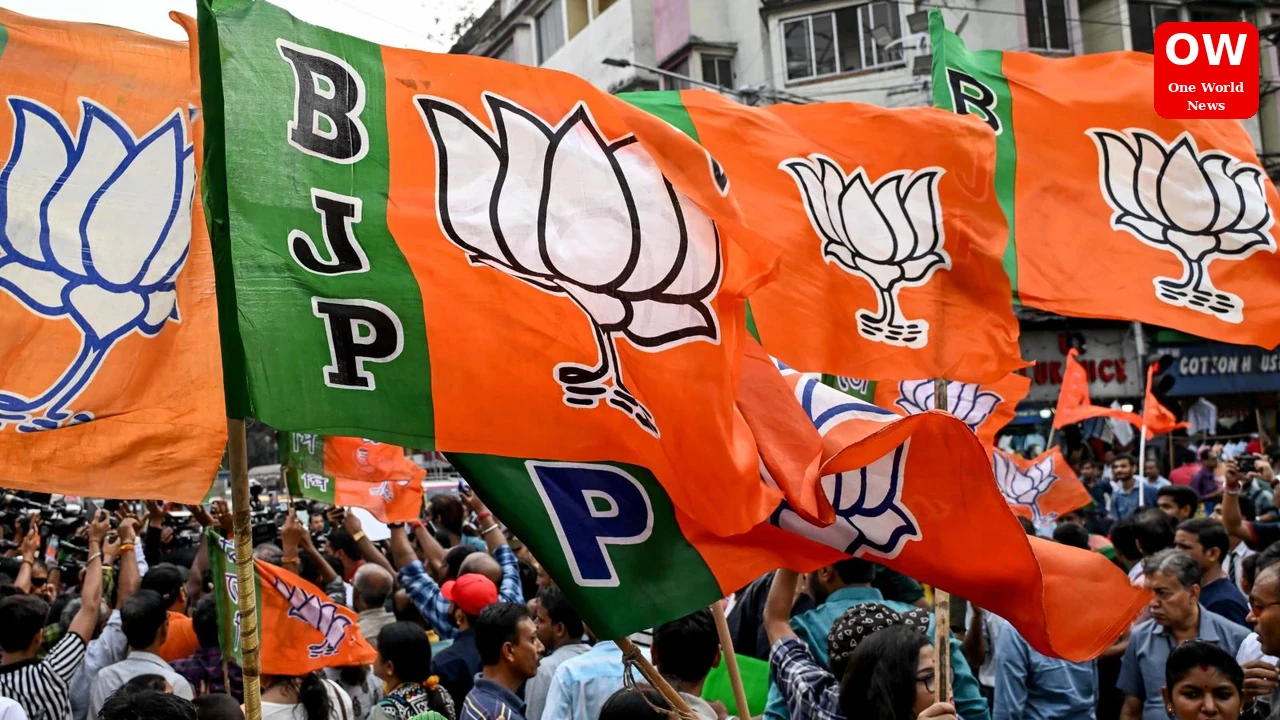
BJP Delimitation Strategy: BJP Looks To Make Inroads Into Samajwadi Party And NCP(SP) As Support For 50% Lok Sabha Seat Increase Creates Fresh Challenges For INDIA Opposition Alliance
The Bharatiya Janata Party (BJP) is making fresh efforts to secure support from opposition parties for its proposed delimitation exercise, creating a new political challenge for the INDIA alliance. The ruling party is reportedly reaching out to leaders of the Samajwadi Party (SP) and the Sharad Pawar-led Nationalist Congress Party (NCP-SP) to build broader support for the proposed changes in Lok Sabha representation.
The political developments have gained attention ahead of the upcoming Parliament session, as the government looks to secure the numbers required to pass constitutional amendments linked to delimitation and women’s reservation.
The proposed plan includes increasing the number of Lok Sabha seats by 50% across all states. While some opposition leaders have shown interest in the proposal under certain conditions, the issue has exposed differences within the opposition camp.
For the BJP, gaining support beyond its National Democratic Alliance (NDA) partners could prove strategically important. However, whether these discussions translate into formal parliamentary support remains a major question.
Why Is The BJP Reaching Out To Opposition Parties?
The BJP’s outreach comes after its earlier attempt to pass the constitutional amendment legislation failed to secure the required majority in the Lok Sabha in April 2026.
A constitutional amendment requires a special majority of two-thirds of members present and voting in each House of Parliament, along with support from more than half of the total membership of each House.
The earlier Lok Sabha vote saw 298 members supporting the proposal and 230 voting against it, falling short of the required threshold.
This time, the BJP is attempting to build a wider political consensus by approaching regional parties and opposition leaders. Support from parties such as the SP and NCP-SP could strengthen the government’s parliamentary position.
The strategy also has a political dimension. If opposition parties agree to parts of the proposal, it could weaken the INDIA alliance’s ability to maintain a united position against the government’s legislative agenda.
NCP(SP) Shows Conditional Openness To The Delimitation Proposal
The Sharad Pawar-led NCP(SP) has emerged as an important factor in the BJP’s efforts to gather support. Party working president and Baramati MP Supriya Sule has indicated that her party is open to considering the delimitation proposal if Lok Sabha seats are increased uniformly by 50% across every state.
Sule has argued that increasing the number of parliamentary constituencies could improve representation and make it easier for MPs to address the needs of growing populations.
She has also stressed that women’s reservation should be implemented alongside the delimitation exercise. However, the party has not announced a final decision to support the legislation and is awaiting the official draft.
The NCP(SP) has eight Lok Sabha MPs, making its position relevant to the government’s efforts to secure the required parliamentary numbers.
Samajwadi Party Support Could Change Political Calculations In Uttar Pradesh
The Samajwadi Party is another important opposition party that the BJP is reportedly trying to bring on board.
According to political reports, some SP leaders have shown interest in the proposed 50% increase in Lok Sabha seats. However, this should not be confused with an official party decision to support the legislation.
Uttar Pradesh is particularly important in this discussion because it currently has 80 Lok Sabha constituencies. Under the proposed uniform increase, the state’s representation could rise to 120 seats.
Such an expansion could significantly change the state’s political calculations, creating additional constituencies and fresh electoral opportunities for political parties.
For the BJP, gaining support from even some Samajwadi Party leaders could become a major political advantage. It would also make it difficult for the opposition to present a completely united front against the proposal.
Delimitation And Women’s Reservation Become Major Political Issues
Delimitation refers to the process of redrawing constituency boundaries and determining the number of seats allocated to different regions based on constitutional provisions.
The exercise is important because population changes over time can create differences in voter representation across constituencies.
The government has linked its proposed delimitation exercise with the implementation of 33% women’s reservation in legislatures.
However, opposition parties have raised concerns about the possible political consequences of changing parliamentary representation. Some leaders believe that the process requires greater transparency and discussions involving all political parties.
The Congress has been particularly critical of the government’s approach and has called for women’s reservation to be implemented without making it dependent on a fresh delimitation exercise.
Opposition Unity Faces A Fresh Test
The latest developments have created another challenge for the INDIA opposition alliance, which includes several regional and national political parties.
While the Congress has maintained its opposition to the proposed legislation, the conditional openness expressed by NCP(SP) leaders has introduced differences within the alliance.
There is also growing political discussion about whether regional parties will prioritise their individual state-level interests over the collective position of the opposition alliance.
The BJP’s outreach strategy could therefore have consequences beyond the immediate parliamentary numbers. It may also influence relationships between opposition partners ahead of important state elections.
The NCP(SP)’s internal differences over the proposal have further highlighted the difficulty of maintaining a common political position.
What Happens Next?
The coming weeks will be important for the BJP as it attempts to secure support for its proposed constitutional amendments.
The government will need to convince opposition parties that the delimitation exercise will ensure fair representation and that the proposed seat expansion will not disadvantage any state.
The Samajwadi Party’s official position, the NCP(SP)’s final decision and the Congress’s response will remain important developments to watch.
For now, the BJP’s attempt to reach beyond the NDA has placed fresh pressure on the opposition alliance.
Conclusion
The BJP’s efforts to secure support from the Samajwadi Party and NCP(SP) on delimitation have opened a new chapter in Indian parliamentary politics. While the proposed 50% increase in Lok Sabha seats has received conditional support from some opposition leaders, major questions remain about its implementation and political implications.
The debate is no longer limited to the government and the opposition. It has also become a test of coordination among INDIA alliance partners.
Whether the BJP succeeds in building the required parliamentary majority or the opposition manages to restore a common position will become clearer as discussions move forward.
We’re now on WhatsApp. Click to join.
Like this post?
Register at One World News to never miss out on videos, celeb interviews, and best reads.