Jamia Millia Islamia Students, Guards Clash Amid ‘Free Kashmir’ Graffiti Row, Classes Moved Online
Jamia Millia Islamia shifts classes online after student protests and guard clashes amid controversial posters, student union election demands and Delhi Police action.

Jamia Millia Islamia Students Clash With Security Guards Amid ‘Free Kashmir’ and ‘Free Sharjeel Imam’ Graffiti Controversy; Online Lectures Ordered as Student Union Elections Protest Intensifies
Jamia Millia Islamia in New Delhi has shifted classes for all courses to online mode with immediate effect following escalating campus tensions and a clash between protesting students and security guards. The university announced the decision on October 24, 2026, citing concerns over campus safety and the need to protect students while maintaining academic activities.
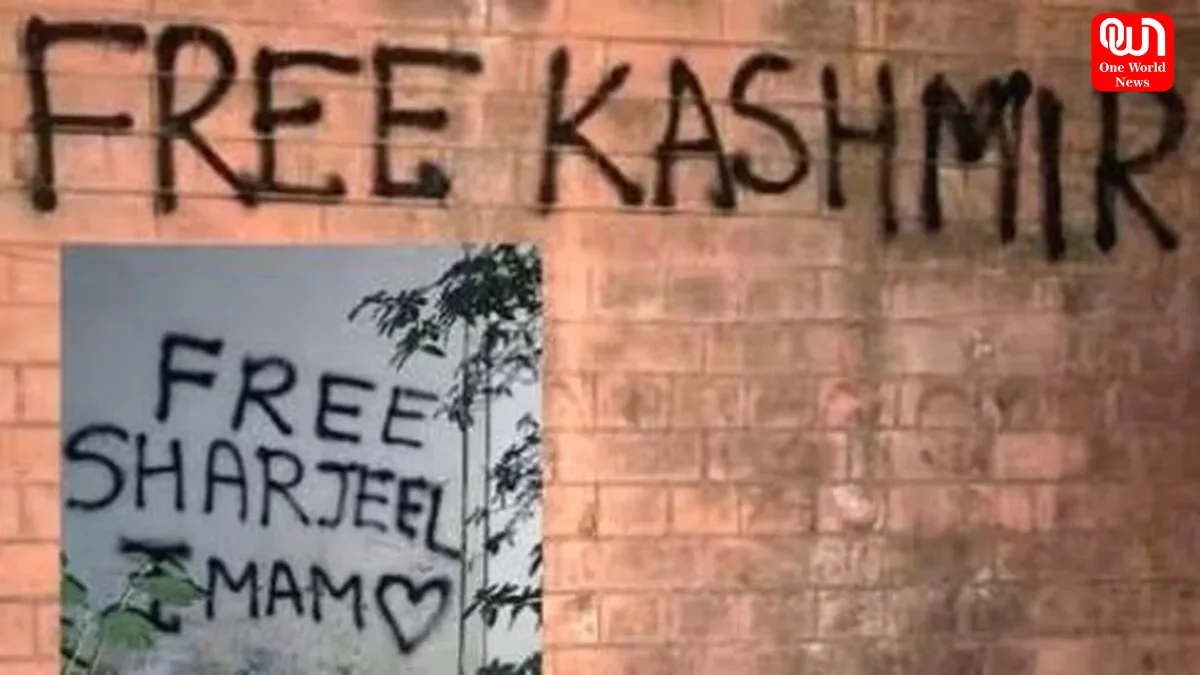
The development comes amid ongoing student protests demanding the restoration of student union elections. The situation has become more sensitive following reports of controversial graffiti on campus walls carrying slogans such as “Free Kashmir” and “Free Sharjeel Imam”.
According to reports, the university administration has instructed faculty members and students to follow the online lecture schedule until further notice. Teachers have also been asked to make the necessary arrangements to ensure that classes continue without unnecessary disruption.
Why Are Jamia Students Protesting?
The central demand behind the ongoing student protests is the restoration of the Jamia Millia Islamia Students’ Union (JMISU). The university has not held student union elections since 2005, and the union was dissolved in 2006.
Students began an indefinite hunger strike on October 12, demanding an official announcement regarding the election schedule. They have also raised concerns about disciplinary action against protesters, campus facilities, attendance rules, scholarships and research stipends.
The university has initiated steps towards drafting a constitution for the proposed student union. However, protesters remain dissatisfied because a definite election date has not been announced.
Five students were reported to be continuing their hunger strike on October 24, marking the 13th day of the agitation. Students have maintained that their demand for elected representation must be addressed through a clear and time-bound process.
‘Free Kashmir’ Graffiti Triggers Fresh Controversy
The campus dispute intensified after photographs circulated showing slogans reportedly painted on university walls. These included “Free Kashmir”, “Free Palestine”, “Free Sharjeel Imam”, “VC Go Back” and “RSS Go Back”.
The graffiti prompted strong reactions from political organisations, with the Vishva Hindu Parishad (VHP) demanding that the university administration and police identify those responsible and take appropriate action.
However, the authenticity of the photographs shared publicly was not independently verified by the Press Trust of India in its report. Therefore, the responsibility for the graffiti remains an important question requiring investigation.
Student protesters have denied involvement in writing the slogans. They have argued that the controversy risks diverting attention from their primary demand for student union elections. Protesters have also called for CCTV footage to be examined to establish who was responsible.
Read more: Train vs Flight Travel in India: Which One’s Better for You?
The university administration has condemned the defacement of campus walls and indicated that efforts are underway to identify those involved. The controversy has added a political dimension to an agitation that initially focused on student representation and disciplinary concerns.
Delhi Police Action and Imran Masood’s Detention
The protests have also drawn the attention of political leaders and Delhi Police. On October 23, Congress MP Imran Masood was detained by police near the university while attempting to meet students involved in the agitation. Reports also stated that Samajwadi Party MP Mohibbullah Nadvi was detained during the unfolding events.
Masood defended the students’ demand for elected representation and condemned slogans suggesting that Kashmir should be separated from India. He argued that the demand for student union elections should not be overshadowed by the graffiti controversy.
The police action and detention of political representatives have further intensified the debate over how the protest should be handled. The situation has raised questions about campus security, the right to peaceful protest and the role of political figures in university disputes.
Meanwhile, the controversy surrounding Sharjeel Imam has added to the political sensitivity of the slogans. The appearance of a person’s name in graffiti, however, does not by itself establish who wrote it or indicate that the protesters endorsed the message.
University Administration Faces Pressure to Restore Normalcy
The administration is facing the dual challenge of maintaining campus security and addressing students’ demands. It has formed committees to examine issues related to the student union and work towards preparing a constitution.
The administration’s position is that an election process requires an appropriate constitutional and organisational framework. Protesters, meanwhile, want a clear timeline and have argued that continued discussions without an announced election date are insufficient.
The dispute has also brought attention to the relationship between students and campus security personnel. Allegations and counterclaims surrounding the handling of demonstrations have made dialogue between the university administration and protesters increasingly important.
The shift to online lectures is intended to allow academic activities to continue while the campus situation remains tense. However, the university has not announced when physical classes will resume.
What Happens Next at Jamia Millia Islamia?
The immediate priority is to restore a safe learning environment and prevent further escalation. Students are expected to attend online classes until the university issues fresh instructions.
Read more: Mussoorie To Kasauli: Most Romantic Winter Getaways Near Delhi For Couples
The next steps will likely depend on discussions between the administration and student representatives, progress towards drafting the student union constitution, and the response to demands for a formal election schedule.
An impartial investigation into the controversial posters and graffiti could also help establish responsibility and prevent unverified allegations from deepening divisions on campus.
For now, the dispute at Jamia Millia Islamia reflects a wider challenge for universities: balancing campus discipline and security with students’ demands for democratic representation and peaceful dissent. Whether the administration and protesters can reach an agreement will determine how quickly normal academic life returns to the university.
We’re now on WhatsApp. Click to join.
Like this post?
Register at One World News to never miss out on videos, celeb interviews, and best reads.